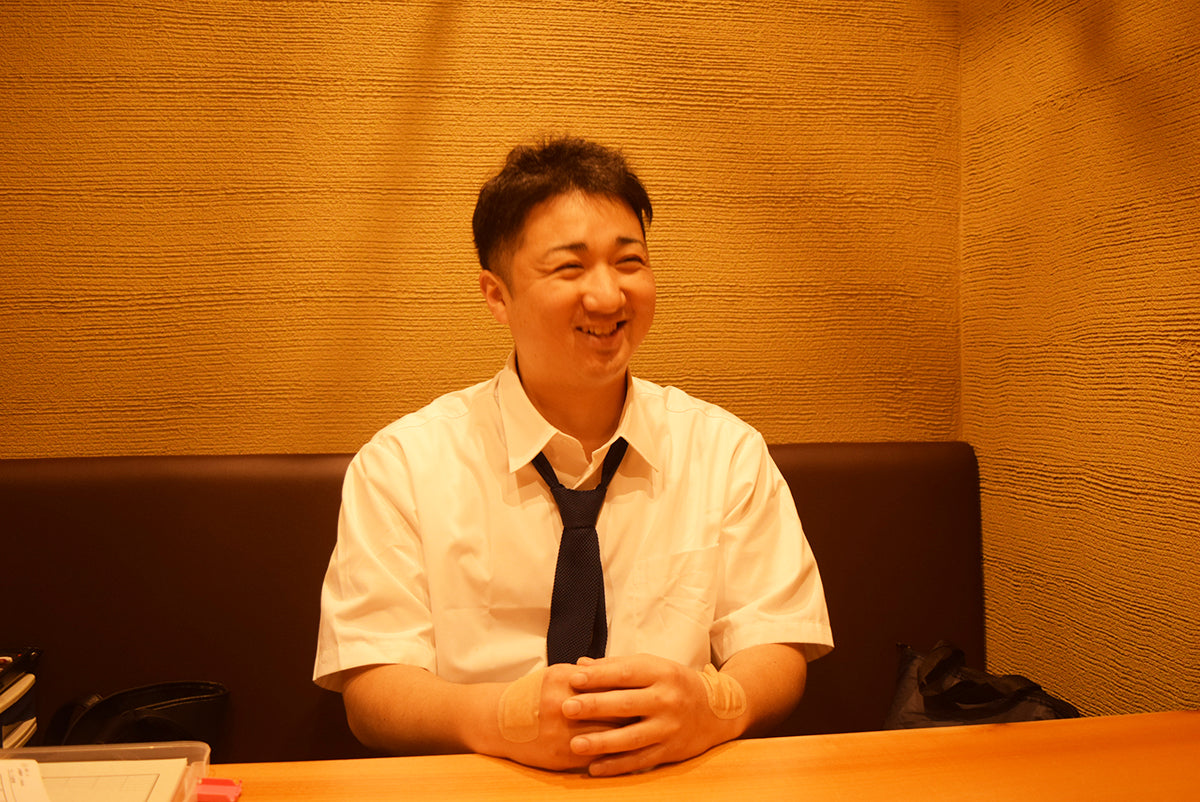
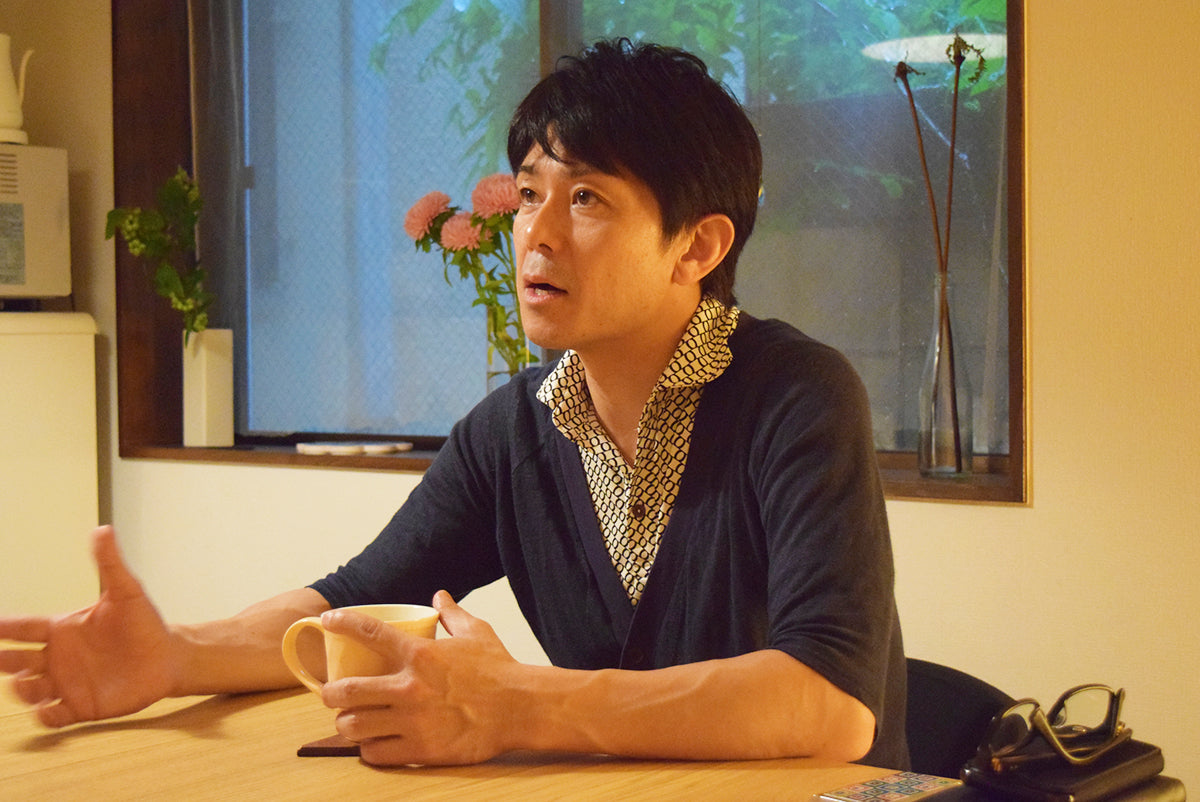
Masayuki Watanabe is a popular TV personality who started practicing kendo in junior high school and has a fifth-degree black belt.
Watanabe says the key to success is "steady effort," so what did he learn through kendo?
We interviewed him, including some details about his unique job. (August 2017)
profile
While attending university, he joined the theater company Theatre Echo. He met LaSalle Ishii and Takayasu Komiya and formed the comedy group "Conto Akashingo." He became a regular on the then-popular show "Oretachi Hyokinki-zoku," solidifying his popularity. He is active mainly in variety shows such as "Sekiguchi Hiroshi's Tokyo Friend Park II." He is affectionately known as "Leader." His comedy live show "La Mama Newcomer Comedy Tournament," which he hosts, is said to be a "stepping stone for young comedians" and has produced many currently active comedians, including Ucchan Nanchan, Bananaman, and Cream Stew. Since 2003, he has demonstrated his multifaceted talents by producing his own stage productions. He began kendo in junior high school and holds a fifth-degree black belt.

What led you to pursue a career in comedy?
-You continued practicing kendo up until high school. Did you ever consider continuing kendo in college?
Watanabe : "When I was in high school, I saw the strong kendo clubs in the Kanto region and thought, 'There's no way I can win against people this strong.' If they're this strong in the Kanto region, there must be even more skilled people all over the country. I couldn't imagine continuing in college."
-Please tell us what led you to pursue a career in comedy.
Watanabe : "It all started with the Rakugo Study Group at Meiji University. I met and was inspired by Miyake Yuji, Tatekawa Shinosuke, and Komiya-kun, who was in a trio with me. I hadn't thought about going into showbiz, but I decided that it was something I wanted to pursue."
Your success as a comedian is well known. You have been hosting a comedy competition for young comedians at Shibuya La Mama for over 30 years.
Watanabe : "Ucchan Nanchan, Bakusho Mondai, Neptune, Bananaman, Audrey... all kinds of comedians have been nurtured here. Not only do we provide a platform for them, but we also give advice to the younger generation."
-It's the spirit of altruism.
Watanabe : Yes, that's true. I think it helps me hone my skills.
What made you start kendo?
 -Please tell us what made you start kendo.
Watanabe
-Please tell us what made you start kendo.
Watanabe : "I started kendo in junior high school. I was invited by a senior in the kendo club because I was tall. I joined the baseball club at first because I was influenced by the manga Star of the Giants, but after joining, I was made to do bunny hops for a week. I realized that this was no good, so I quit after a week."
-So you first joined the baseball club.
Watanabe : "I rejoined the kendo club, but in the end it was a bunny hop (laughs). I thought about quitting again, but my childish mind told me, 'It's not good to be someone who gives up easily,' so I continued with kendo."
-If you continued, does that mean you found enjoyment in kendo?
Watanabe : "I don't know (laughs). My middle school coach was a graduate of the powerful Kokushikan University. The training was tough, but once I got stronger and started winning matches, it became fun."
-You joined the kendo club in high school too, right?
Watanabe : "I was in the kendo club in junior high, so I thought it would be okay to join the kendo club in high school too."
-Please tell us about an episode from high school.
Watanabe : "My theme during my school days was how to 'legally skip kendo'. In junior high school, I would just skip to the bathroom, which was a low-level thing, but in high school I ran for a spot on the executive committee and legally skipped. I guess my skipping skills improved (laughs). But joking aside, kendo training was tough. Maybe it was because of the training that my high school was the first to compete in the Kanto region."
-That's amazing!
Watanabe : "My high school teacher also graduated from Kokushikan University. He was even stricter than my middle school advisor. I'm grateful for the strict guidance he gave me."
What prompted me to resume kendo?
 -What made you decide to start kendo again?
Watanabe
-What made you decide to start kendo again?
Watanabe : "It all started with a program called 'Honoo no Taiikukai TV' (Flaming Sports Association TV)," which was a segment on obtaining a fourth-dan. I was surprised when I took the exam. There were so many people taking the exam, and I realized how popular kendo is."
-After the program project ended, why did you decide to continue practicing kendo?
Watanabe : "I took part in a tournament in Arakawa Ward, and from there I became even more addicted to kendo. I discovered the joy of competition. You have to concentrate for four minutes, so it's a different kind of fatigue than training."
-It's completely different.
Watanabe : "The desire to win the Arakawa Ward tournament began to grow, and I started to train more enthusiastically. I barely paid any attention to my TV work, and started to put my all into my training."
-What were the results?
Watanabe : "In the end, I was able to win the Arakawa Ward tournament. My opponent in the final was a strong player from International Budo University, but I hardly remember how I won. It was a match where I was able to go in with a clear mind."
-It's amazing that you've been able to achieve results despite having a gap in your career!
Kendo taught me the value of hard work
 -Do you think kendo has had an influence on shaping your personality?
Watanabe
-Do you think kendo has had an influence on shaping your personality?
Watanabe : "I realized the value of hard work. I was able to compete in the Kanto tournament because I worked hard in high school. I continued to work hard even after entering the world of comedy. I may not look like this, but I am a hard worker (laughs). I learned through kendo that if you work hard enough, you will get results, so I spared no effort in comedy."
-The other day I had the opportunity to listen to a Rakugo performance, and it was very impressive.
Watanabe : "Just like kendo, practice is important. Preparation practice is important, but you also get to perform your material in front of an audience. You learn a lot by doing that. Things you thought wouldn't be funny turn out to be surprisingly well-received, and things you thought would be well-received turn out to be surprisingly poorly-received."
-In kendo, you also learn a lot through matches.
Watanabe: "The live reactions are invaluable."
-Of course, effort is important to improve your manzai skills.
Watanabe : "In manzai, timing, word timing, and naturalness are important. Manzai is a comedy duo, so combination is also important. Basic storytelling is also important. It's not something you can learn overnight."
-Are there any similarities between the "Kendo room" and the "Comedy room"?
Watanabe : "Sorry, I don't think so (laughs). Speaking of which, Ogawa Naoya practices martial arts and judo, and he has an incredible sense of distance. He has a first-degree black belt in kendo, but it's interesting to see how he puts to good use the skills he's developed through other martial arts and combat sports. He even won a match on Sports TV."
(laughs) I guess there are similarities between "Judo/Martial Arts" and "Kendo."
Set small goals
 -I feel that Mr. Watanabe is good at setting goals.
Watanabe
-I feel that Mr. Watanabe is good at setting goals.
Watanabe : "It's important to set small goals and work hard at them consistently."
-What have been your goals recently?
Watanabe : "Winning the Arakawa Ward Tournament and obtaining my 5th Dan. Thanks to you, I was able to achieve both."
-That's wonderful, congratulations.
Watanabe : "I stopped practicing kendo from the age of 18 until I was 55, so it's difficult for me to catch up with people who continued practicing kendo all the time. No matter which dojo I go to for training, I always practice thinking that I'm the lowest. It's important to be aware of the need to work hard and steadily towards your own goals."
-What is your next goal?
Watanabe : "My next goal is to obtain my 6th dan. I have about five years until my next exam, so I want to prepare thoroughly. Five years is a long time. I want to take on small challenges, like achieving results in matches."
Mr. Watanabe is humble but never loses his challenging attitude. I feel that his success in his work is due to the fact that he has come to understand the value of hard work through kendo. Thank you for today.

Interviewed by Go Ueshima and Yusuke Kudo
Text: Kamijima Go
Photo: Takuya Sogawa
Announcement from BUSHIZO

We will send you
new articles, new product information, and special offers via email newsletter.
If you register as a new member,
you will also receive 300 yen worth of points to use at BUSHIZO!
Registration will take just 3 minutes. If you would like to register, we would appreciate it if you would do so.


 Armor Set
 面
面
 Kote
Kote
 胴
胴
 垂
垂
 Dogi
Dogi
 袴
袴
 bamboo sword
 wooden sword
 armor bag
 Bamboo sword bag
 Small items
 gift
gift
 Books/DVDs
 cleaning
 Armor repair
 Kendo mask
 Iaido
Iaido
 Japanese swords and art swords
 Mitsuboshi
 Tozando
 Matsukan
 Japan Kendo Equipment Factory
 West Japan Martial Arts Equipment
 Glory Martial Arts Equipment
 Nobutake
 Busougi
 Hakataya
 Shokodo
 Flag Ito
 メールお問い合わせ
 LINEお問い合わせ


 Value Set
 Armor Set
 面
面
 Kote
Kote
 胴
胴
 垂
垂
 Dogi
Dogi
 袴
袴
 bamboo sword
 wooden sword
 armor bag
 Bamboo sword bag
 Small items
 gift
gift
 Books/DVDs
 cleaning
 Armor repair
 Kendo mask
 Outlet
 Iaido
Iaido
 Japanese swords and art swords
 Mitsuboshi
 Tozando
 Matsukan
 Japan Kendo Equipment Factory
 West Japan Martial Arts Equipment
 Glory Martial Arts Equipment
 Nobutake
 Taiyo Industry
 Busougi
 Hakataya
 Shokodo
 Flag Ito
 Interviews Useful Articles
 Size Measurement Guide
 User Guide
 GLOBAL SHIPPING GUIDANCE
 Frequently Asked Questions Q&A
 Company Profile