Armor Set
 面
面
 Kote
Kote
 胴
胴
 垂
垂
 Dogi
Dogi
 袴
袴
 bamboo sword
 wooden sword
 armor bag
 Bamboo sword bag
 Small items
 gift
gift
 Books/DVDs
 cleaning
 Armor repair
 Kendo mask
 Iaido
Iaido
 Japanese swords and art swords
 Mitsuboshi
 Tozando
 Matsukan
 Japan Kendo Equipment Factory
 West Japan Martial Arts Equipment
 Glory Martial Arts Equipment
 Nobutake
 Busougi
 Hakataya
 Shokodo
 Flag Ito
 メールお問い合わせ
 LINEお問い合わせ


 Value Set
 Armor Set
 面
面
 Kote
Kote
 胴
胴
 垂
垂
 Dogi
Dogi
 袴
袴
 bamboo sword
 wooden sword
 armor bag
 Bamboo sword bag
 Small items
 gift
gift
 Books/DVDs
 cleaning
 Armor repair
 Kendo mask
 Outlet
 Iaido
Iaido
 Japanese swords and art swords
 Mitsuboshi
 Tozando
 Matsukan
 Japan Kendo Equipment Factory
 West Japan Martial Arts Equipment
 Glory Martial Arts Equipment
 Nobutake
 Taiyo Industry
 Busougi
 Hakataya
 Shokodo
 Flag Ito
 Interviews Useful Articles
 Size Measurement Guide
 User Guide
 GLOBAL SHIPPING GUIDANCE
 Frequently Asked Questions Q&A
 Company Profile

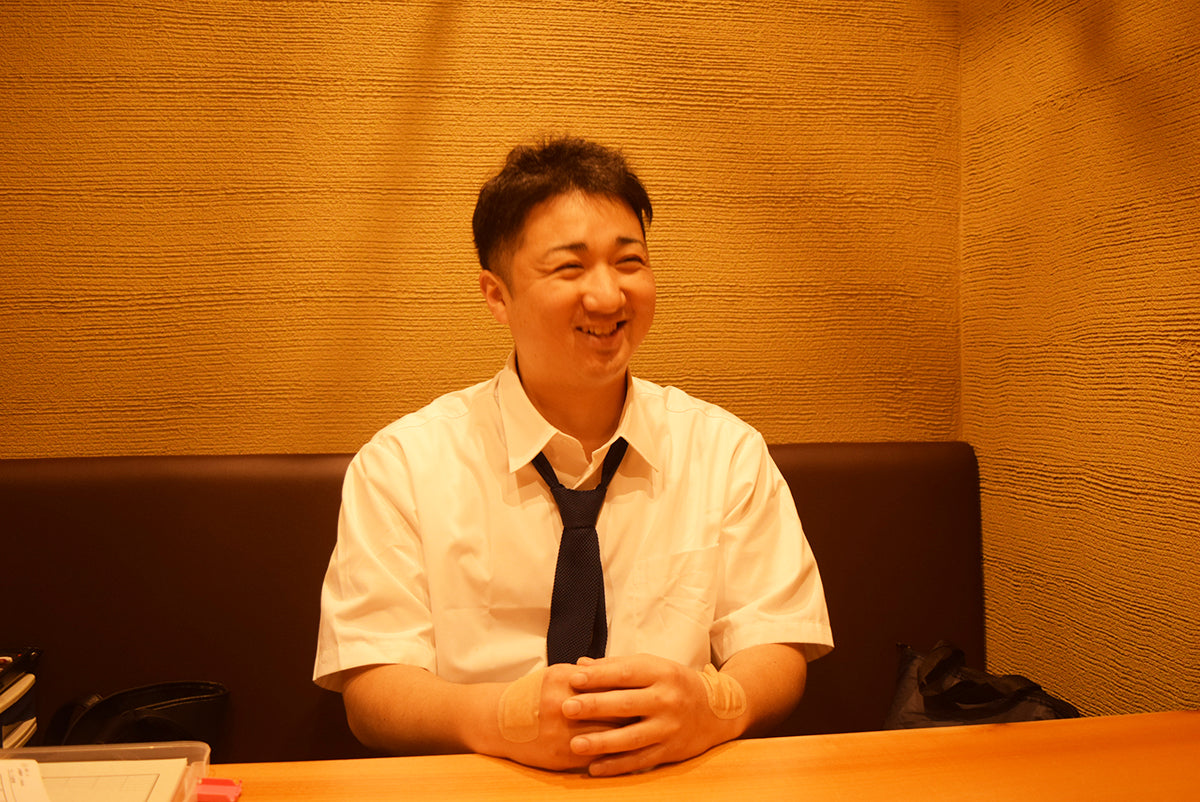
Director Fujii is also the director of the popular AbemaTV drama "The Company Is Not a School." He has expanded his horizons beyond film to a variety of other genres. Director Fujii was so devoted to kendo that he practiced it 360 days a year until he was in high school. What did Director Fujii gain from kendo? We were able to hear his valuable story despite his busy schedule!
profile
Michihito Fujii
Born in 1986 in Tokyo.
Graduated from the screenwriting course at Nihon University College of Art, Department of Film. Studied under screenwriter Kenji Aoki. Made his debut with "Oh! Father," based on the novel by Kotaro Isaka.
Since then, he has consistently released works such as "Phantom Limb" and "7s/Seventh." At the same time, he has also worked on advertising projects for the TV drama "Nostalgia," based on the novel by Kanae Minato, as well as Pokémon and American Express.
In 2017, he released the Netflix original series "Nobushi no Gourmet" (starring Naoto Takenaka and others) and "1 Million Yen Women" (starring Yojiro Noda of RADWIMPS and others).
Upcoming films include the Erina Mano film "Ao no Kaerimichi" and the Takayuki Yamada-produced film "Day and Night." "The Journalist" won three awards, including Best Picture at the 43rd Japan Academy Awards.

Sword ties in the entertainment industry
-You also practiced kendo at the dojo in Shibuya, right?
Fujii : "I was a member of the Shibuya dojo for a short period of time. I was at the same dojo as actor Tasuku Emoto. When we met on a drama last year, we had a conversation where he said, 'Do you remember we were at the same dojo?' (laughs)"
-That's an amazing conversation (laughs). What was the reaction?
Fujii : "They were surprised and said, 'Oh really?'
I recently worked with his younger brother, Tokio Emoto, on the AbemaTV drama "The Company Is Not a School," and I also worked with his father, Akira Emoto, on "Oh Father," based on the novel by Kotaro Isaka. We have a connection."
-That's an interesting connection!
Fujii : “I have met former kendo practitioners in the entertainment industry. One of them was Oishi-san, who was Okada Masaki’s personal stylist at the time.
Nakamura Kazuto, who was the assistant producer for the recently released film "Bukkyo," also participated in the Inter-High School Championships while at Takanawa High School.
Kendo career

-There are many people involved in kendo in the entertainment industry! Could you tell us about your kendo history, Mr. Fujii?
Fujii : "My impression is that I gradually got weaker. I started kendo at the age of three, and attended Shudokan in Tokyo for elementary and junior high school. When I was in fifth grade, I was the runner-up in the Tokyo tournament."
-Being the individual runner-up in Tokyo is an amazing achievement!
Fujii : “In team matches, I was always the vanguard. The captain was my classmate, Nakamura Issei, who was a member of Takanawa High School that won the Inter-High School Championships.
When I went on to high school, I was fortunate enough to receive many scholarship offers, but most of the strong schools were boys' schools, so I had to turn them down (laughs). However, my dojo teacher was a graduate of Rissho High School, so I thought it was fate and decided to go to Rissho High School."
-That's an important issue during adolescence (laughs).
Fujii : "In high school, the seniors in the year above me were very strong. Thanks to them, I was able to participate in the Kanto Tournament in my second year. My highest ranking in the Tokyo Tournament was the top four in the Autumn Freshmen Tournament. I spent 360 days devoted to kendo."
-So you competed in the Kanto Tournament in high school. You've achieved success in almost every age group! Why did you decide to become a film director when your life was immersed in kendo?
Fujii: "I started watching movies every day when I was in high school. There was a TSUTAYA just a two-minute walk from my house, so it was the perfect environment for watching movies."
-When did you start thinking about becoming a film director?
Fujii: "I think I started thinking about becoming a film director around my third year of high school. My father was a salaryman, so I vaguely thought, 'I don't want to be a salaryman.' I didn't think I could handle the lifestyle of getting up early in the morning and riding crowded trains."
-You went on to Nihon University College of Art.
Fujii : "In university, I joined a film club and spent all my time making films. I'm really someone who can only do one thing. Until I was 18, I only did kendo. From 19 to 31, I only made films. I feel like my work today is an extension of the film club. The company I founded, BABEL LABEL, was made by gathering together friends from university."
-Starting a company right after graduating from university is an impressive feat!
Fujii : "The company's management wasn't smooth from the start. Now we have 25 employees, but at the time we had no money, no connections, and we were so focused on making films that we didn't know anything about management... There was a time when we were completely lost."
-I imagine you had some difficulties when you first started.
Fujii : "I had zero know-how about running a company. That's how I started the company. It's been a roller coaster ride, but now a classmate of mine is running the company. I'm able to focus on creating my work."
-What kind of company is BABEL LABEL?
Fujii : "We undertake all aspects of video production. We started out as a directors' company, but now we have six directors, so we do a lot of work as a commercial production company."
At the age of 27, he made his debut as a commercial film director.

Image source: BABEL LABEL (http://babel-pro.com/members/fujiimichihito/)
Fujii: "I was 27 when 'Oh Father' was released. At the time, I was working as a scriptwriter for a producer. I wrote the script for 'Oh Father' when I was about 23 years old, and Kotaro Isaka recognized it, which led to my debut as a screenwriter. But because of the earthquake disaster, I decided to wait a little while before making the film."
-You were originally planning to debut as a screenwriter.
Fujii : "The story goes, the director stepped down six months before the release, and the offer suddenly came to me. I had directed a lot of independent films, so I think the producer appreciated that kind of work."
-So you were prepared to respond if an opportunity arose.
Fujii : "I made my debut as a commercial film director at the age of 26, but personally I have a lot to regret.
Of the 50 staff members, I am the third youngest. The cameraman is around 50 years old and a veteran. I didn't have the ability to bring such veterans together at 26 years old."
-It must be no easy task to bring together veterans who are more than twice your age...
Fujii: "After directing 'Oh Father,' I intentionally stayed away from commercial films. I wanted to improve my skills by directing many independent films, and then do work that I could be satisfied with in commercial films."
- To make a big leap, you have to take a step back. Do you have any plans to direct major films in the future?
Fujii : "Starting this year, I'll be getting more major work."
-Having made many independent films, have you noticed anything?
Fujii : "If you're not in an environment where you can demonstrate your abilities, you won't be able to motivate the staff. I'm often asked to direct suddenly when there's little time, but I turn down those kinds of projects because I don't feel any attachment to them. You can't motivate people unless you have convictions, goals, and a vision. I think it's important to prepare so that you can confidently say, 'Follow me! '"
-That's very encouraging! What specific skills does a film director need to have in terms of direction?
Fujii : "What color cup do you need? How much water should you pour into that cup? It's the skill of being able to verbalize all of that.
Of course, everyone is human, so it's important to treat them in a way that makes them glad to be part of the Fujii Group. I didn't understand that at 26 years old."
-I see, that's very enlightening... The emotional aspect is very important, isn't it?
Fujii: " Filmmaking is the process of putting your emotions into pictures. It's important to express your thoughts and beliefs. When you become a veteran director, the staff will read the mood and work without you having to verbalize it. I'm still a young director, so if I mumble, people will think, 'Young people are no good after all' (laughs)."
-What specifically did you do?
Fujii : "I've done a variety of jobs, like commercials and music videos. I think I've been able to develop skills even in jobs outside of film."
The fun of filmmaking

Fujii : "I find filmmaking enjoyable because it's a process of working together with colleagues to create something from nothing. We hit all sorts of obstacles, but we share them as an organization and overcome them, and grow. It's similar to a team match in kendo.
The process of creating a film while struggling with people who have completely different upbringings and ways of thinking is difficult, but fun. I'm really glad I entered the film industry."
-The process seems particularly rewarding! How do you feel after the film is released?
Fujii: "I don't generally rewatch the films I've made for other people. Even when I'm asked, 'What was your intention in shooting that scene?' I sometimes can't remember. I aim for 100 points at the time, with the passion I have at the time. I don't look back, I always look forward."
-It's a Zen state of mind. You're focused only on the present moment.
Fujii : "I don't do it consciously. I'm the type of person who can only focus on one thing at a time, so it just happens naturally."
-That's a testament to Director Fujii's talent.
What is good about doing kendo?

Fujii : " If I hadn't done kendo, I don't think I would have had the opportunity to become a coach at such a young age. Because I did kendo, I naturally had the ability to respect people. I've had the routine of bowing to people since I was three years old, so it came naturally to me. I owe it all to kendo to be able to respect people from the heart, not in a contrived way."
-So you benefited from the aspect of courtesy. Is there anything else?
Fujii : "I've gained patience. The hurdles for what I find difficult are so high that no matter what happens, I don't feel it's difficult. Compared to the training, it's nothing compared to the training (laughs)."
Future goals

Fujii : "In my 30s, I want to take on the challenge in Asia. As a first step, I have launched a new group called BABEL ASIA. This feeling may be related to my roots as my grandfather was Taiwanese. For a while, I had doubts about staying in Japan. Now, I want to work with many people from different countries. The other day, I shot a music video for a Taiwanese artist."
-Will your base of operations be mainly overseas from now on?
Fujii : "I don't just want to be active overseas, but I also want to give back to the Japanese film industry the knowledge I've gained abroad. Director Kore-eda won the Palme d'Or at the Cannes Film Festival, and I think that will be a great inspiration for the Japanese film industry.
I hope to become someone who can spread Japanese culture to the world."
-What do you need to achieve this?
Fujii : I think you need both talent and hard work to succeed. In terms of talent alone, I think the talent needed in the 1940s will be different from the talent needed in 2040. I have tried to put in 100% effort so as not to blame it on talent alone. Whether I will succeed or not is up to God.
I made BABEL ASIA in my 30s, so I want to make BABEL EUROPE in my 40s. It would be fantastic if I could win the Academy Award for Best Foreign Language Film. If I win, I think I'll be approached by America. The reason Japanese directors aren't successful in America is because they aren't wanted. If they are wanted, there's a chance they could be successful. So it would be great to win an award that would get me approached by America."
- In modern times, Director Koreeda is close to that status, but in the past, Director Akira Kurosawa was respected in the global film industry.
Fujii : "Like my predecessors, I want to be active around the world and spread Japanese culture."
BUSHIZO Ueshima's thoughts
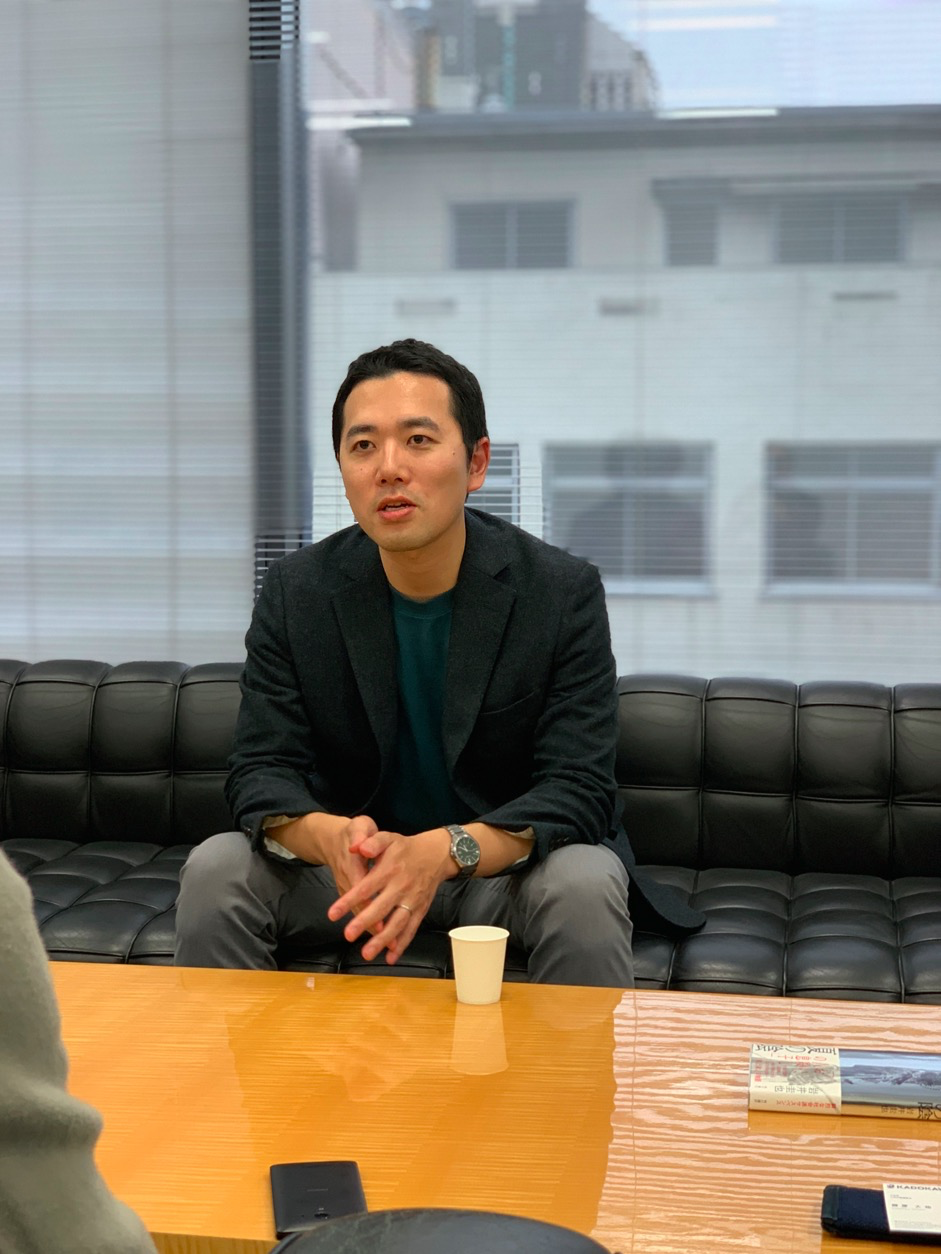
- Director Fujii is the same age as me (Kamishima) (born in 1986), so I was really looking forward to interviewing him.
Although Director Fujii has achieved success at a young age, he is not at all arrogant, and it was easy to imagine that he is well-liked by the staff as a director.
I learned a lot from your idea of not blaming your talent and instead putting in 100% effort.
I sincerely hope that Coach Fujii will continue to make great strides on the world stage. Thank you for today!
Director Fujii's latest work
"Newspaper reporter"
Starring: Tori Matsuzaka, Shim Eun-kyung, Tsubasa Honda
It won three awards, including Best Picture, at the 43rd Japan Academy Awards.