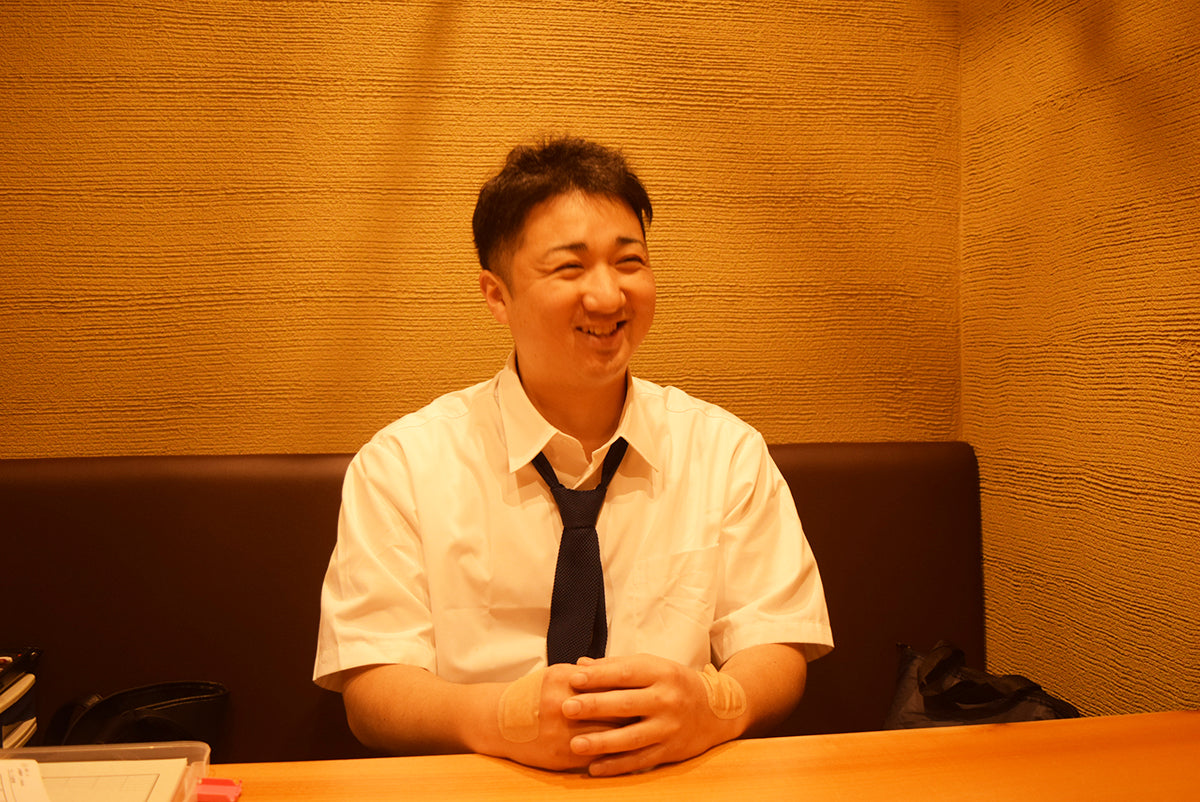
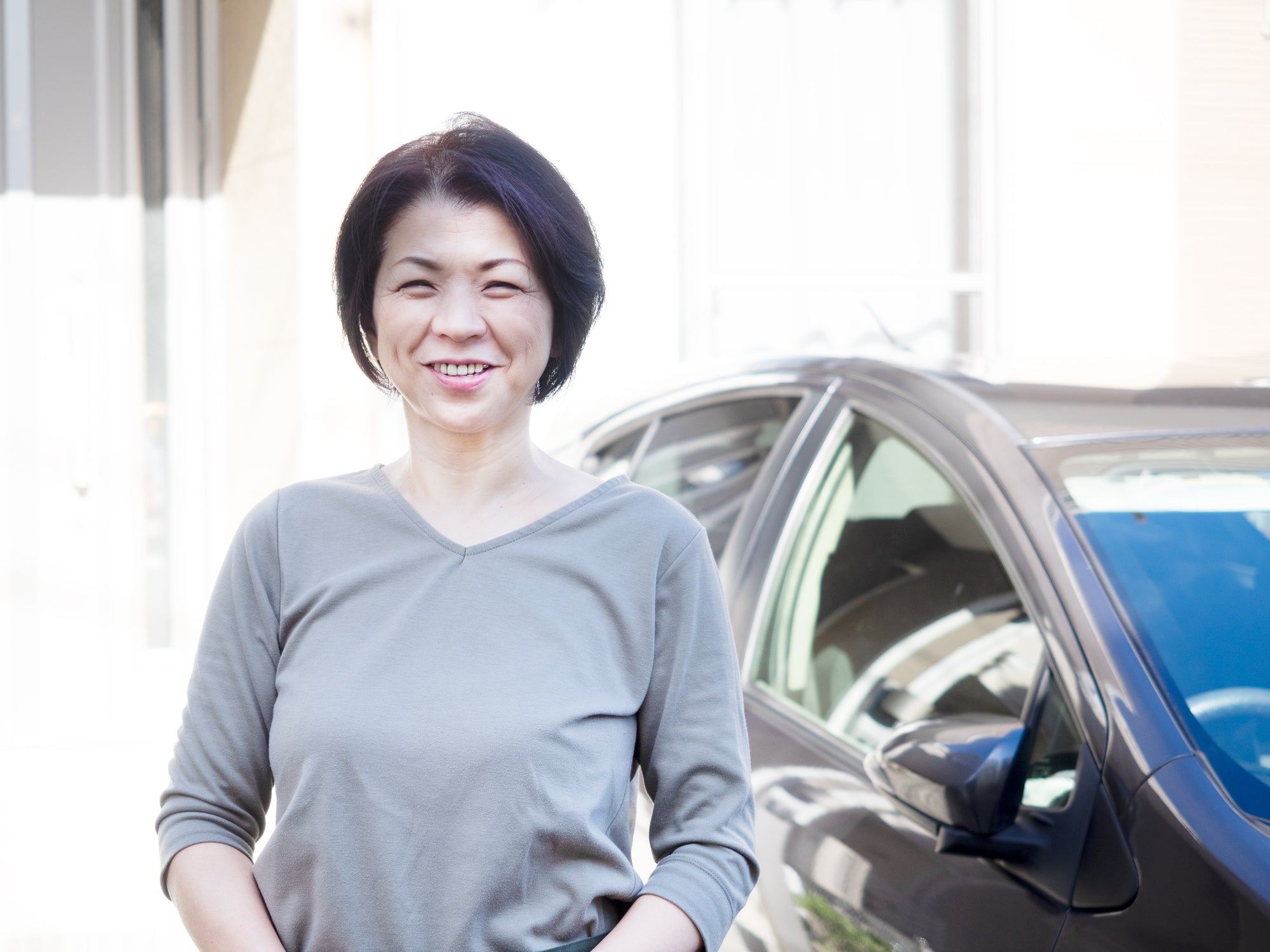
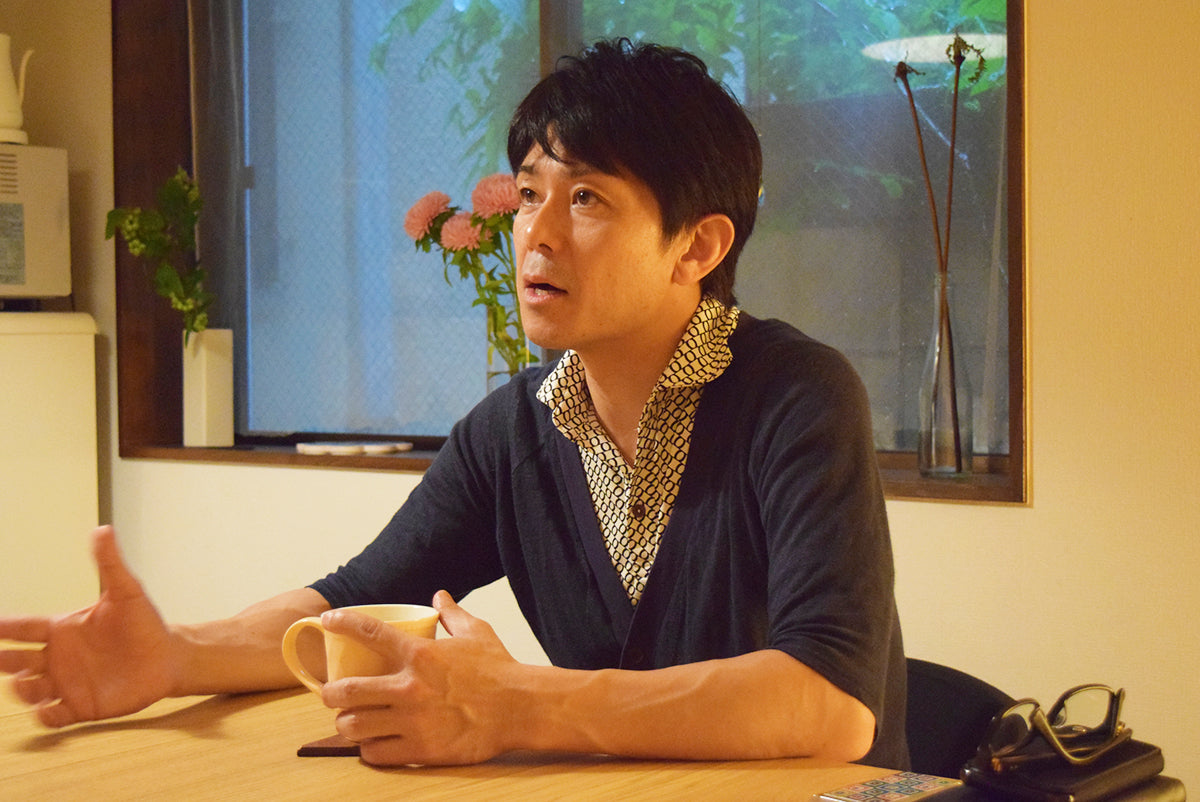
Takahiro Nabeyama sensei is admired by many as a legendary player. Not only has he achieved brilliant results as a player, but he also has an impressive track record as a coach. But did you know that he is also involved in kendo instruction overseas?
In this interview, we asked him about the spread of kendo overseas and his thoughts on kendo.
profile
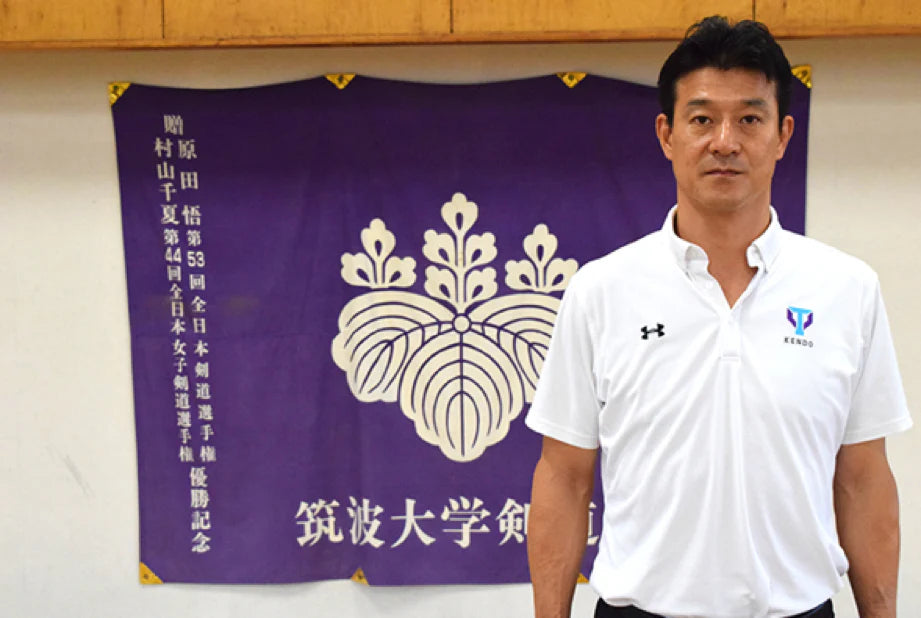
Professor Takahiro Nabeyama
He was born in Fukuoka City, Fukuoka Prefecture. He won the Gyokuryu-ki Championship with Osaka PL Gakuen and won both the individual and team titles at the Inter-High School Championships. While at Tsukuba University, he twice won the All-Japan Student Team Championship. After graduating, he made it to the top eight at the All-Japan Championships and has competed in two world championships. He is currently an associate professor at the University of Tsukuba Graduate School and head coach of the University of Tsukuba Kendo Club. As a coach, he has led the team to four All-Japan team victories. He is still fresh in our minds as he led the team to victory at this year's Kanto Student Kendo Championship. He is also involved in reconstruction support activities and promoting kendo overseas.
Kendo instruction in the Netherlands
—Please tell us how you got involved in teaching in the Netherlands.
Nabeyama: "I've been giving instruction there for about 20 years now.
It all began when
Professor Edo Kokichi stayed in the Netherlands for a year about 40 years ago, and
Professor Iijima Akira has been teaching there ever since.
They reached out to me and I started helping out."
-Have you also been teaching for a long time, Professor Iijima?
Nabeyama: "I think Professor Iijima has been teaching for nearly 40 years.
Professor Iijima graduated from Chukyo University, so he seems to have had a connection with Professor Edo Kokichi."
-How often do you go to the Netherlands?
Nabeyama: "We teach once a year. We hold
a 'Summer Seminar' sponsored by the Dutch Kendo Federation , so we teach whenever that happens."
 -How many people attend the summer seminar?
Nabeyama: There are about 120 participants. The course lasts for three days. A promotion exam will be held on the final day.
The number of participants is on the rise.
The increase in participants means that the participants feel that the program is of some value, so we view this as a positive indicator.
What's important to me is
whether or not someone says, "Please come again next year."
Each and every session is a serious challenge , so I provide instruction that will ensure that students are evaluated highly.
Anyone from any country can take the course by applying. If you are interested, please join us.
Next year's event is scheduled for August.

Specific training content overseas
-Could you tell us the specific content of your instruction?
Nabeyama: "The most important thing is
what the participants want . I listen to that and then explain it in detail.
Overseas, many adults start kendo, and there are many
talented people who achieve results in their work.
Because they are such people, it is unlikely that their level of understanding or way of thinking is inferior to that of Japanese people."
-What kind of things do people overseas want to know?
Nabeyama: It's about how to move your body. There's a lot you already know about the theory behind it.
Even when it comes to something as simple as how to do a Suburi, they know the theory, but they don't seem to be able to put it into practice because they don't practice enough."
-So you're saying that you won't provide instruction based on our standards.
Nabeyama: "It's easy to get them to do it from the basics.
However, the number of days available for instruction is short. If we teach them from the basics, the instruction period will end in the blink of an eye.
We will ask you in advance what you would like to know in the three-day situation.
My stance is
to provide what is needed .
Of course, we need to be prepared to answer questions every day."
-I get the impression that most people there are logical.
Nabeyama: That's right. The teaching methods differ depending on the target audience. Let's think about university students and elementary school students.
Elementary school students' brains are still developing, so it's important for them to learn with their bodies. For university students, it's important for them to understand with their minds.
My policy
is to avoid using onomatopoeia ."
-That may be unusual for a kendo instructor.
Nabeyama: "I don't teach like, 'Attack hard and hit hard.' This is quite difficult.
You need to get into the habit of verbalizing how you distribute your center of gravity and how you bend your joints when you are doing kendo.
That's not to say that onomatopoeia is bad."
-Are the skills of people from overseas different?
Nabeyama: "It's also because
their motivations for kendo are different .
Some people want to study the Japanese spirit, while others see kendo as a sport; it's a diverse group.
What can be said across the board is that
everyone is interested in etiquette and culture ."
-Is there anything you pay particular attention to?
Nabeyama: "
I don't want to deny the way people overseas think , and
I don't want to force my way of thinking on them .
We respect foreign history.
For example, when practicing swings, in Japan, the commander will call out the number of swings, and someone other than the commander will usually call out the number of times to practice.
In other countries, it seems like everyone wants to shout "One, two, three" together.
It seems like he likes speaking in Japanese (laughs)."
Promoting Kendo overseas
 -You're going to America this year, right?
Nabeyama: "I went last year, and thankfully I was asked to do it again this year.
Chris Young, a member of the US national team, studied abroad at the University of Tsukuba for a year.
His younger brother, Denny, also studied abroad, and that's how he got the request.
He is a lawyer for Toyota Motor Corporation, and he is a wonderful person with a unique sensibility.
I went to Hong Kong in June. At the end of the year, my wife and I will be going to Bangkok."
-Did you consciously build connections with overseas companies?
Nabeyama: "That's not true. I treat each and every coaching session as a serious battle, so perhaps that attitude was appreciated."
-What do you think will be necessary for Southeast Asian and European countries to be able to compete on equal terms with Japan, South Korea, and the United States in the future?
Nabeyama: "I think it's all about
creating an environment .
Japanese police train every day. There are probably only a few countries that train that much.
Apart from Korea, there are probably almost no countries where people can make a living from kendo."
-There are probably very few countries where you can make a living from kendo.
Nabeyama: "Americans
often quit their jobs before the world championships.
They have an incredible determination to win .
It's not the technique that's impressive, it's the heart. At the world championships held in Taiwan, the Japanese team lost to the United States.
Before the World Championships, I practiced with the American team, and to be honest, they didn't have the strength to beat the Japanese team.
But they beat the Japanese team. I think it was
a victory of heart that transcended skill ."
-The atmosphere in America was intense. Is the environment for kendo in America good?
Nabeyama: "I think the way national team players approach things is changing.
Apparently, Chris Young visits the Metropolitan Police Department for about a month before the world championships."
-What is your impression of European kendo?
Nabeyama: “I have the impression that there are a lot of kendo practitioners in France. That means there are probably a lot of talented people on the team.
The instructor in Hungary is Mr. Abe, who graduated from the International Budo University and graduated from the graduate school at Tsukuba University.
They are well trained and perform beautiful kendo."
-What is your impression of kendo in Southeast Asia?
Nabeyama: There are still many countries in Southeast Asia that have not joined.
There are many Japanese companies stationed in Thailand, so they provide guidance during their stay."
Message to overseas kendo players
-Please give a message to overseas swordsmen.

Nabeyama: "
I think it's important to concentrate on kendo .
Many foreign students study kendo at the University of Tsukuba, and by focusing on kendo intensively, they make remarkable progress.
I hope that you will find a place in Japan that has an accepting environment and immerse yourself in kendo.
I hope you will come to Japan, eat delicious food, and practice kendo.
Japan has the image of being a dangerous country with many earthquakes, but it is actually very safe.
I would love for him to come to Japan and cross swords with a Japanese swordsman."
Announcement from BUSHIZO


 Armor Set
 面
面
 Kote
Kote
 胴
胴
 垂
垂
 Dogi
Dogi
 袴
袴
 bamboo sword
 wooden sword
 armor bag
 Bamboo sword bag
 Small items
 gift
gift
 Books/DVDs
 cleaning
 Armor repair
 Kendo mask
 Iaido
Iaido
 Japanese swords and art swords
 Mitsuboshi
 Tozando
 Matsukan
 Japan Kendo Equipment Factory
 West Japan Martial Arts Equipment
 Glory Martial Arts Equipment
 Nobutake
 Busougi
 Hakataya
 Shokodo
 Flag Ito
 メールお問い合わせ
 LINEお問い合わせ


 Value Set
 Armor Set
 面
面
 Kote
Kote
 胴
胴
 垂
垂
 Dogi
Dogi
 袴
袴
 bamboo sword
 wooden sword
 armor bag
 Bamboo sword bag
 Small items
 gift
gift
 Books/DVDs
 cleaning
 Armor repair
 Kendo mask
 Outlet
 Iaido
Iaido
 Japanese swords and art swords
 Mitsuboshi
 Tozando
 Matsukan
 Japan Kendo Equipment Factory
 West Japan Martial Arts Equipment
 Glory Martial Arts Equipment
 Nobutake
 Taiyo Industry
 Busougi
 Hakataya
 Shokodo
 Flag Ito
 Interviews Useful Articles
 Size Measurement Guide
 User Guide
 GLOBAL SHIPPING GUIDANCE
 Frequently Asked Questions Q&A
 Company Profile