Armor Set
 面
面
 Kote
Kote
 胴
胴
 垂
垂
 Dogi
Dogi
 袴
袴
 bamboo sword
 wooden sword
 armor bag
 Bamboo sword bag
 Small items
 gift
gift
 Books/DVDs
 cleaning
 Armor repair
 Kendo mask
 Iaido
Iaido
 Japanese swords and art swords
 Mitsuboshi
 Tozando
 Matsukan
 Japan Kendo Equipment Factory
 West Japan Martial Arts Equipment
 Glory Martial Arts Equipment
 Nobutake
 Busougi
 Hakataya
 Shokodo
 Flag Ito
 メールお問い合わせ
 LINEお問い合わせ


 Value Set
 Armor Set
 面
面
 Kote
Kote
 胴
胴
 垂
垂
 Dogi
Dogi
 袴
袴
 bamboo sword
 wooden sword
 armor bag
 Bamboo sword bag
 Small items
 gift
gift
 Books/DVDs
 cleaning
 Armor repair
 Kendo mask
 Outlet
 Iaido
Iaido
 Japanese swords and art swords
 Mitsuboshi
 Tozando
 Matsukan
 Japan Kendo Equipment Factory
 West Japan Martial Arts Equipment
 Glory Martial Arts Equipment
 Nobutake
 Taiyo Industry
 Busougi
 Hakataya
 Shokodo
 Flag Ito
 Interviews Useful Articles
 Size Measurement Guide
 User Guide
 GLOBAL SHIPPING GUIDANCE
 Frequently Asked Questions Q&A
 Company Profile

profile
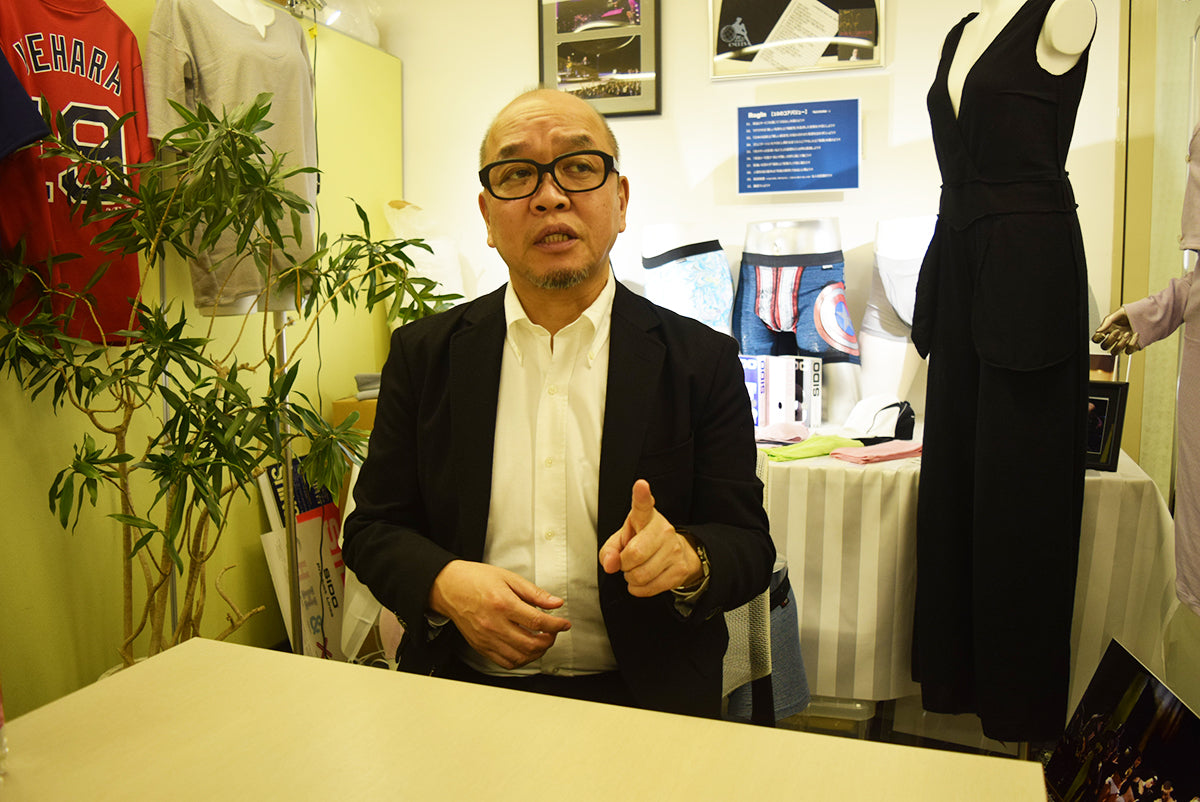
Eiko Martial Arts Equipment Co., Ltd. Managing Director Yoshiaki MadokoroThe roots of Eiko Budogu
-Please tell us about the history of Eiko Budogu. Managing Director : "My father founded the company in 1992, about 25 years ago. He didn't originally practice kendo, but as his sons and I started practicing it, he became interested in kendo and started practicing it himself." What was the trigger for this to become a business? "When he went to buy kendo equipment, he honestly felt that it was too expensive. So he thought that if he could sell good quality equipment at a lower price, more people would take up kendo. " —You didn't have any experience making kendo equipment, did you? Managing Director : "Yes. The current president's older brother practiced kendo up until high school, but instead of going to university he chose boxing. At that time, my father quit his job and chose to open a martial arts equipment store. It was reckless for someone with no knowledge or experience of kendo to start a martial arts equipment store (laughs)." *The president achieved the highest ranking in Japan. -Did you have difficulties when you first started the company? " At the time, it was common to buy kendo equipment after seeing advertisements in kendo magazines or through recommendations from local kendo teachers. Nowadays we have the convenient tool of the internet, but back then, my father apparently did business by using his own personal connections. We started selling our equipment at prices lower than the market rate, so I think it was a new style in the industry." -I'm sure your customers were very happy. Managing Director : "I agree. I don't know what the image of his peers was, but I think it was the best option for my father at the time. He must have thought of relationships with customers first. His concept of selling not just cheap products, but good quality products at reasonable prices is still relevant today." -When did you first become involved in management? Managing Director : "My brother was already working, but I started working at the age of 22, right after graduating from university. I was involved in sales and product development from the time I joined the company, but it wasn't until eight years ago, when my father retired and my brother became president, that I became heavily involved in management." -Which store did you start out in when you first started? Managing Director : "We were founded in Kawaguchi City, Saitama Prefecture. After operating with just one store in Kawaguchi for about 10 years, we opened a second store in Ueno, my father's hometown. We then opened an office in Koshigaya City, Saitama Prefecture, to serve as our headquarters and distribution center, and this is now our headquarters, Koshigaya store, and repair center. The Kawaguchi store that we opened in is now operating as the Omiya Station store."A martial arts equipment store whose management and staff are kendo practitioners
-Congratulations on your promotion at the recent 2017 7th Dan Examination. Managing Director: "Thank you." -I understand that you are a 7th dan kendo player and have participated in the National Athletic Meet and Prefectural Championships. Do you think that having employees who actually practice kendo helps with product development and provides benefits to users? Managing Director : "Of course. Personally, I'm often asked by customers about my experience using the product, so I think it's difficult to talk about a product without using it. Even if someone asks me, 'What are the features of this protective gear?' I can tell you the specifications, but I can't answer about ease of use. That means customers end up choosing based on price. We love kendo and kendo equipment, so we stock a selection of items that are actually good for use. We consider comfort when selecting not only armor but also uniforms and hakama, and we also select bamboo sword and armor bags after using them, so we think our sensibilities are close to those of our customers. I think the biggest benefit is being able to talk to our customers from the same perspective. I myself teach kendo at a local dojo, so I understand the needs and concerns of kendo practitioners of all ages, and I also naturally receive valuable feedback from parents." -It seems like other manufacturers develop their products by talking to special training athletes and kendo practitioners and starting from their concerns. Managing Director : "Of course, we also talk to these people as fellow kendo enthusiasts. For example, I hear about the concerns and hopes of such people regarding protective gear, but I think it's quite difficult to get to the point of knowing how to improve it. It's easy to simply seek ease of use, such as reducing the amount of core material or making it lighter... But if safety cannot be maintained as a result, then it's no good protective gear. The premise of protective gear is that it is meant to protect. Rather than focusing on weight itself, if it fits your body well it will feel lighter. Furthermore, ideally, wearing protective gear will improve your performance, and that has always been my concept.Weight is not important
Managing Director : "There was once a nationally famous craftsman named Saegusa Hirohiro, and when I saw his armor I was amazed at how heavy it was. It was armor from about 50 years ago, and the mask metal was heavy, so it was what we call heavy armor. It was a master armor, and the workmanship was so wonderful that I was simply impressed, but what's more, when I actually put it on, it didn't feel heavy at all. That's when I was reminded of the importance of balance. I don't really like using less core material to make something lighter or softer. I do respond to customer requests to some extent, but it's obvious that using less core material will make it softer, so it feels like I'm running away from the craftsmanship. I don't think armor makers should do that." - I think the balance of a bamboo sword changes depending on the position of the joints and the thickness, but what is the balance of armor? Managing Director : "The weight of the head accounts for a large proportion of the body. When wearing the mask, if the futon is light, the mengane will be heavy and the center of gravity will shift forward. Therefore, the balance between the mengane and the futon is important. A light mengane and a light futon may be well balanced, but it will not be strong. Kendo is said to be a lifelong sport, but this could lead to injuries to the neck or hearing loss. I worry about what will happen if I continue practicing kendo in what is called lightweight armor." —So you want to provide something that is both practical and safe. Managing Director : "That's right. The strength of a kote strike varies from person to person, but as a kendo practitioner, I can simply tell when a hit with this kote hurts and when it doesn't hurt, so I can put that into practice and my opinions are quickly reflected in the product. This is all the more true as many of our employees also practice kendo."About the Kendo Equipment Manufacturing Factory
 -Where is Eiko Budogu's kendo equipment currently manufactured?
Managing Director : "Of course, we also have products that are sourced from manufacturers, and some are made in China or Vietnam. However, our original brand products are mainly manufactured in the Philippines. The factory that preceded this one was founded by a famous craftsman who had trained for many years in Japan.
We met this craftsman about 20 years ago and began doing business with him. At the time, every domestic manufacturer would advertise their armor as the best. That was how outstanding their skills were."
-You mentioned that it was the predecessor factory, but what does that mean?
" At the time, every company was struggling with production issues and delivery delays. However, there were already more manufacturing processes than at other factories, and the work was done very carefully, so it was taking so long.
However, because we are a factory with high technology, some manufacturers were willing to wait for delivery dates. However, while we had no choice but to increase our staff to handle the huge number of orders, we were caught up in price wars with factories in China and Vietnam, which led to poor business performance.
-The business is becoming precarious.
Managing Director : "We were worried, but the company has actually gone bankrupt. It was a bolt from the blue for us, as we were preparing products for our year-end and New Year sales.
Of course, I was worried about the sale, but more than anything, I was worried that the high level of skill and craftsmanship that the factory possessed would be lost.
As the factory manager and other craftsmen remained, our president immediately went to the site and, working together with the factory manager, a new factory was established.
At that time, the local people had a lot of difficulties, but it was also really difficult for us, given the situation at the factory and the country we were in (laughs)."
-It sounds like a drama. You must have a strong bond with your employees.
Managing Director : "Without those people, we wouldn't exist. When I rushed over, there were naturally no smiles and the atmosphere was heavy. Even though we had built a new factory, everyone seemed to be feeling anxious.
We thought the only way to resolve this was for us to continue visiting the factory, so the president and I went there almost every month, and as we deepened our relationships, not only through work but also by attending Christmas parties and making curry, I felt that everyone's expressions started to change. Of course, this is all thanks to the efforts of the factory manager and the workers."
—Do people other than the management team also visit the factory?
Managing Director : "Our employees take turns working in order to fully understand what kind of people are doing what kind of work, so we sell the equipment while thinking about the people who make it.
The craftsmen at the factory don't cut corners, so much so that it feels like they don't need to go to such lengths. Some people look at us with a suspicious expression when we tell them that we manufacture our products outside of Japan, but that's a mistake. They have the technical skills and are serious people, so we all agree that we want to sell our products with pride."
—The entire company works together to sell highly reliable products.
-Where is Eiko Budogu's kendo equipment currently manufactured?
Managing Director : "Of course, we also have products that are sourced from manufacturers, and some are made in China or Vietnam. However, our original brand products are mainly manufactured in the Philippines. The factory that preceded this one was founded by a famous craftsman who had trained for many years in Japan.
We met this craftsman about 20 years ago and began doing business with him. At the time, every domestic manufacturer would advertise their armor as the best. That was how outstanding their skills were."
-You mentioned that it was the predecessor factory, but what does that mean?
" At the time, every company was struggling with production issues and delivery delays. However, there were already more manufacturing processes than at other factories, and the work was done very carefully, so it was taking so long.
However, because we are a factory with high technology, some manufacturers were willing to wait for delivery dates. However, while we had no choice but to increase our staff to handle the huge number of orders, we were caught up in price wars with factories in China and Vietnam, which led to poor business performance.
-The business is becoming precarious.
Managing Director : "We were worried, but the company has actually gone bankrupt. It was a bolt from the blue for us, as we were preparing products for our year-end and New Year sales.
Of course, I was worried about the sale, but more than anything, I was worried that the high level of skill and craftsmanship that the factory possessed would be lost.
As the factory manager and other craftsmen remained, our president immediately went to the site and, working together with the factory manager, a new factory was established.
At that time, the local people had a lot of difficulties, but it was also really difficult for us, given the situation at the factory and the country we were in (laughs)."
-It sounds like a drama. You must have a strong bond with your employees.
Managing Director : "Without those people, we wouldn't exist. When I rushed over, there were naturally no smiles and the atmosphere was heavy. Even though we had built a new factory, everyone seemed to be feeling anxious.
We thought the only way to resolve this was for us to continue visiting the factory, so the president and I went there almost every month, and as we deepened our relationships, not only through work but also by attending Christmas parties and making curry, I felt that everyone's expressions started to change. Of course, this is all thanks to the efforts of the factory manager and the workers."
—Do people other than the management team also visit the factory?
Managing Director : "Our employees take turns working in order to fully understand what kind of people are doing what kind of work, so we sell the equipment while thinking about the people who make it.
The craftsmen at the factory don't cut corners, so much so that it feels like they don't need to go to such lengths. Some people look at us with a suspicious expression when we tell them that we manufacture our products outside of Japan, but that's a mistake. They have the technical skills and are serious people, so we all agree that we want to sell our products with pride."
—The entire company works together to sell highly reliable products.
Development of the Dragonfly series
 -You have the Tonbo series, BAK Kendo equipment, TONBO armor bags and armor, and BAK underwear. Could you tell us the concept behind each line and how they were made?
Managing Director : "We are well known for our ability to make elaborate armor and our high level of technical skill, but we felt that ease of use needed improvement.
That's when I started making Tonbo. At the time, flashy armor was popular, but I saw a martial arts equipment store that was also making easy-to-use kote, and I thought that from now on, stores that made easy-to-use kote would become stronger. I thought that maybe the era of flashy armor was coming to an end.
However, the kote are three-dimensional and complex, so I thought it wouldn't be easy, so I took apart various kote from those I own and from products.
—Did you take off your gloves?
Managing Director : "When I made the mold, I gradually began to understand what it would turn out like. I recently spoke with a kote craftsman, and he told me that I couldn't possibly make a kote pattern if I wasn't a craftsman. But I started by making the pattern. I imagined what it would look like if I made this type of mold, and sent the pattern to the factory after imagining it many times.
The first sample was by no means satisfactory, but it gave me many hints. I learned about the finished product and areas for improvement, such as making the seam allowance wider. After repeating this process several times, I was able to determine to a certain extent what kind of gloves would be easy to use."
—What was difficult about it?
Managing Director : "For example, if you want to make the kote smaller, there are several patterns. You can make the hair inside more, change the size of the inside of the hand, or make the head on the outside smaller... It was difficult to know what to change and how, as there were so many parts.
By combining these elements, an equation becomes clear: for A's kote, the inside of the hand is made smaller, for B's kote, only the hair is increased, for C's kote, only the head is made larger, and for D's kote, the inside of the hand and the hair are increased. And so the Dragonfly was born. I think Dragonfly was the first easy-to-use armor we made."
-The concept was to make gloves that were easy to use.
Managing Director : "That's right. We started from there and paid particular attention to the futon. I know that not many people pay much attention to futons, but they are very important. We studied the core materials and shapes of the futon, and were able to create a good futon itself. If we could make this futon, we thought we should try making the mask and the tare as well, and that's how we came up with the set."
—So this is an application of the knowledge gained from manufacturing gloves.
Managing Director: "We ended up selling them as a set about 10 years ago. The concept was 'High strength and easy to use! But not lightweight.'
Everyone was surprised, but as I said earlier, by fitting it to the body it felt light. It's all about balance. It's protective gear that doesn't restrict movement and allows you to move smoothly and without stress.
We currently have armor bags and bamboo sword bags on sale, and they are easy to use, so we named them "TONBO."
—I see. That's very easy to understand.
Managing Director: "There are many products in the Dragonfly series, each with its own unique features, but the concept remains the same. As for the armor bag I mentioned earlier, I didn't create the mold myself, but I went through a lot of trial and error. When I thought about the situation in which it would be used, I wondered what kind of shape it would be, and how it would be easier to use, and I kept trying to come up with the result."
-You have the Tonbo series, BAK Kendo equipment, TONBO armor bags and armor, and BAK underwear. Could you tell us the concept behind each line and how they were made?
Managing Director : "We are well known for our ability to make elaborate armor and our high level of technical skill, but we felt that ease of use needed improvement.
That's when I started making Tonbo. At the time, flashy armor was popular, but I saw a martial arts equipment store that was also making easy-to-use kote, and I thought that from now on, stores that made easy-to-use kote would become stronger. I thought that maybe the era of flashy armor was coming to an end.
However, the kote are three-dimensional and complex, so I thought it wouldn't be easy, so I took apart various kote from those I own and from products.
—Did you take off your gloves?
Managing Director : "When I made the mold, I gradually began to understand what it would turn out like. I recently spoke with a kote craftsman, and he told me that I couldn't possibly make a kote pattern if I wasn't a craftsman. But I started by making the pattern. I imagined what it would look like if I made this type of mold, and sent the pattern to the factory after imagining it many times.
The first sample was by no means satisfactory, but it gave me many hints. I learned about the finished product and areas for improvement, such as making the seam allowance wider. After repeating this process several times, I was able to determine to a certain extent what kind of gloves would be easy to use."
—What was difficult about it?
Managing Director : "For example, if you want to make the kote smaller, there are several patterns. You can make the hair inside more, change the size of the inside of the hand, or make the head on the outside smaller... It was difficult to know what to change and how, as there were so many parts.
By combining these elements, an equation becomes clear: for A's kote, the inside of the hand is made smaller, for B's kote, only the hair is increased, for C's kote, only the head is made larger, and for D's kote, the inside of the hand and the hair are increased. And so the Dragonfly was born. I think Dragonfly was the first easy-to-use armor we made."
-The concept was to make gloves that were easy to use.
Managing Director : "That's right. We started from there and paid particular attention to the futon. I know that not many people pay much attention to futons, but they are very important. We studied the core materials and shapes of the futon, and were able to create a good futon itself. If we could make this futon, we thought we should try making the mask and the tare as well, and that's how we came up with the set."
—So this is an application of the knowledge gained from manufacturing gloves.
Managing Director: "We ended up selling them as a set about 10 years ago. The concept was 'High strength and easy to use! But not lightweight.'
Everyone was surprised, but as I said earlier, by fitting it to the body it felt light. It's all about balance. It's protective gear that doesn't restrict movement and allows you to move smoothly and without stress.
We currently have armor bags and bamboo sword bags on sale, and they are easy to use, so we named them "TONBO."
—I see. That's very easy to understand.
Managing Director: "There are many products in the Dragonfly series, each with its own unique features, but the concept remains the same. As for the armor bag I mentioned earlier, I didn't create the mold myself, but I went through a lot of trial and error. When I thought about the situation in which it would be used, I wondered what kind of shape it would be, and how it would be easier to use, and I kept trying to come up with the result."
Development of the BAK series
 —What was the development process for the BAK series?
Managing Director: "The BAK series started with underwear."
—How long ago was that?
Managing Director : "It was about six or seven years ago. It all started when our president went to consult with Kentaro Takahashi, an associate professor at Kanto Gakuin University, a senior at his high school, and a training coach for the Japanese national kendo team, about making underwear. In kendo, there was no concept of wearing anything underneath, but when you think about injuries, wouldn't it be good to evolve the products that provide more support? That's why he went to consult with him.
My senior agreed and we started manufacturing them. I thought about what makes kendo different from other sports in terms of injury prevention."
-How do the muscles of people who practice kendo develop?
Managing Director: "Kendo practitioners have a unique muscle development that is not common in other sports, with the left calf and right thigh being well developed. That's why BAK is an asymmetrical supporter. By using power net to reinforce the areas necessary for kendo movements, we have created a supporter that allows for smooth movement. The jacket has an X-shaped power net on the back, which is shaped so that when you assume a kamae, your chest sticks out naturally. This has the effect of reducing fatigue caused by stiffening the spine.
Also, if you support those areas, you will be less likely to get injured. Takahashi-senpai's philosophy is that players who don't get injured are strong, and players who don't get tired are strong."
—If you don't get tired or injured, are you strong?
Managing Director : "Strong players are those who can continue to perform at the same level, which means that not getting tired as easily = becoming stronger. Even if your opponent gets tired, if you don't, there will be a difference in strength. Also, if you get injured, you will need to rest, and it will take a long time to make up for that time lost, so it is very important to avoid injuries.
Takahashi-senpai has spoken about the importance of this to many kendo practitioners, and many have praised it, saying that it gives them a sense of relief and that they don't feel tired the next day.
BAK is a product that is created based on the exercise physiology known as biomechanics. As with BAK protective gear, the product I created together with Takahashi-senpai is Boost Ability For Kendo BAK.
—What was the development process for the BAK series?
Managing Director: "The BAK series started with underwear."
—How long ago was that?
Managing Director : "It was about six or seven years ago. It all started when our president went to consult with Kentaro Takahashi, an associate professor at Kanto Gakuin University, a senior at his high school, and a training coach for the Japanese national kendo team, about making underwear. In kendo, there was no concept of wearing anything underneath, but when you think about injuries, wouldn't it be good to evolve the products that provide more support? That's why he went to consult with him.
My senior agreed and we started manufacturing them. I thought about what makes kendo different from other sports in terms of injury prevention."
-How do the muscles of people who practice kendo develop?
Managing Director: "Kendo practitioners have a unique muscle development that is not common in other sports, with the left calf and right thigh being well developed. That's why BAK is an asymmetrical supporter. By using power net to reinforce the areas necessary for kendo movements, we have created a supporter that allows for smooth movement. The jacket has an X-shaped power net on the back, which is shaped so that when you assume a kamae, your chest sticks out naturally. This has the effect of reducing fatigue caused by stiffening the spine.
Also, if you support those areas, you will be less likely to get injured. Takahashi-senpai's philosophy is that players who don't get injured are strong, and players who don't get tired are strong."
—If you don't get tired or injured, are you strong?
Managing Director : "Strong players are those who can continue to perform at the same level, which means that not getting tired as easily = becoming stronger. Even if your opponent gets tired, if you don't, there will be a difference in strength. Also, if you get injured, you will need to rest, and it will take a long time to make up for that time lost, so it is very important to avoid injuries.
Takahashi-senpai has spoken about the importance of this to many kendo practitioners, and many have praised it, saying that it gives them a sense of relief and that they don't feel tired the next day.
BAK is a product that is created based on the exercise physiology known as biomechanics. As with BAK protective gear, the product I created together with Takahashi-senpai is Boost Ability For Kendo BAK.
The difference lies in the hands
--I'm sorry to go back to the previous topic, but you said that martial arts equipment stores that have easy-to-use kote products will be strong in the future. I'd like to ask why kote. Managing Director : "The gloves absolutely make a difference in ease of use. For track and field athletes, it's like spikes. So we started by researching gloves, but of course we research all protective gear. Among these, the one that I am personally very interested in right now is Tare. You may not be particularly interested in Tare, but as I have been researching Tare, I have become interested in many things about it. I am currently researching Tare and making samples, but when I wear the sample Tare, I exert a lot of strength. It feels as if someone is supporting my lower back." —Does this mean that you put more strength into your lower back? Managing Director : "That's right. For example, people who work standing up, such as greengrocers and fishmongers, have been wearing aprons since ancient times. When we get tired, we do the same thing, don't we? We do it because it's comfortable. This means that wearing aprons makes it possible to stand for long periods of time. We have incorporated this importance into the Tare of BAK Bogu, but we are currently researching it further. We have consulted with an osteopathic doctor to learn about the structure of bones and how to create the ideal Tare, and we are currently working on this. Tare has such an effect that it is an extremely important piece of kendo equipment . —To be honest, I didn't usually pay much attention to Taru.
"I think we need to make sure that the Tare is something that everyone can tell is different right away. It's no good if it's not obvious that it's different. The hands are sensitive and have many joints, and it's easy to tell that it's the part that directly controls the shinai, so I think other martial arts equipment stores are also putting a lot of effort into the Kote."
--I see, that certainly builds anticipation. Is there any final message you'd like to share?
"Kendo can be practiced by anyone , regardless of gender or age, so I think there are a variety of requests. I think our ability to respond to all of this wide range of customers is what makes our company unique. I think that the definition of what is good varies from person to person, but we want to be a company that has a manufacturing policy while also being flexible enough to respond to what each person considers good."
—I see. I understand very well. Thank you for taking the time to speak with us today.
Managing Director : "Thank you very much."
—To be honest, I didn't usually pay much attention to Taru.
"I think we need to make sure that the Tare is something that everyone can tell is different right away. It's no good if it's not obvious that it's different. The hands are sensitive and have many joints, and it's easy to tell that it's the part that directly controls the shinai, so I think other martial arts equipment stores are also putting a lot of effort into the Kote."
--I see, that certainly builds anticipation. Is there any final message you'd like to share?
"Kendo can be practiced by anyone , regardless of gender or age, so I think there are a variety of requests. I think our ability to respond to all of this wide range of customers is what makes our company unique. I think that the definition of what is good varies from person to person, but we want to be a company that has a manufacturing policy while also being flexible enough to respond to what each person considers good."
—I see. I understand very well. Thank you for taking the time to speak with us today.
Managing Director : "Thank you very much."
 Here is the product page of Eiko Budougu, the company we interviewed this time!
interviewer
◎ Representative Director: Go Ueshima
Here is the product page of Eiko Budougu, the company we interviewed this time!
interviewer
◎ Representative Director: Go Ueshima
 Born in Sendai in 1987. While in the Sendai High School Kendo Club, he studied under Mitsunobu Sato and made it to the top eight of the Inter-High School Championships.
After graduating from university, he worked as the business development manager for a restaurant chain with 200 stores across the U.S. He worked in sales at a foreign internet advertising company and as the head of the sales department and president's office at Innova Co., Ltd., before founding Bushizo Inc. in January 2017.
Born in Sendai in 1987. While in the Sendai High School Kendo Club, he studied under Mitsunobu Sato and made it to the top eight of the Inter-High School Championships.
After graduating from university, he worked as the business development manager for a restaurant chain with 200 stores across the U.S. He worked in sales at a foreign internet advertising company and as the head of the sales department and president's office at Innova Co., Ltd., before founding Bushizo Inc. in January 2017.
 ◎ Director Yusuke Kudo
Born in Hokkaido in 1984. Graduated from Rikkyo University's Faculty of Law. While in school, he launched a free magazine and provided marketing support for an apparel brand. In 2008, he joined Yahoo Japan Corporation, where he worked in sales of advertising products such as search advertising and display advertising. In January 2017, he founded Bushizo Inc. He began practicing kendo at the age of six and continues to practice it to this day.