Armor Set
 面
面
 Kote
Kote
 胴
胴
 垂
垂
 Dogi
Dogi
 袴
袴
 bamboo sword
 wooden sword
 armor bag
 Bamboo sword bag
 Small items
 gift
gift
 Books/DVDs
 cleaning
 Armor repair
 Kendo mask
 Iaido
Iaido
 Japanese swords and art swords
 Mitsuboshi
 Tozando
 Matsukan
 Japan Kendo Equipment Factory
 West Japan Martial Arts Equipment
 Glory Martial Arts Equipment
 Nobutake
 Busougi
 Hakataya
 Shokodo
 Flag Ito
 メールお問い合わせ
 LINEお問い合わせ


 Value Set
 Armor Set
 面
面
 Kote
Kote
 胴
胴
 垂
垂
 Dogi
Dogi
 袴
袴
 bamboo sword
 wooden sword
 armor bag
 Bamboo sword bag
 Small items
 gift
gift
 Books/DVDs
 cleaning
 Armor repair
 Kendo mask
 Outlet
 Iaido
Iaido
 Japanese swords and art swords
 Mitsuboshi
 Tozando
 Matsukan
 Japan Kendo Equipment Factory
 West Japan Martial Arts Equipment
 Glory Martial Arts Equipment
 Nobutake
 Taiyo Industry
 Busougi
 Hakataya
 Shokodo
 Flag Ito
 Interviews Useful Articles
 Size Measurement Guide
 User Guide
 GLOBAL SHIPPING GUIDANCE
 Frequently Asked Questions Q&A
 Company Profile

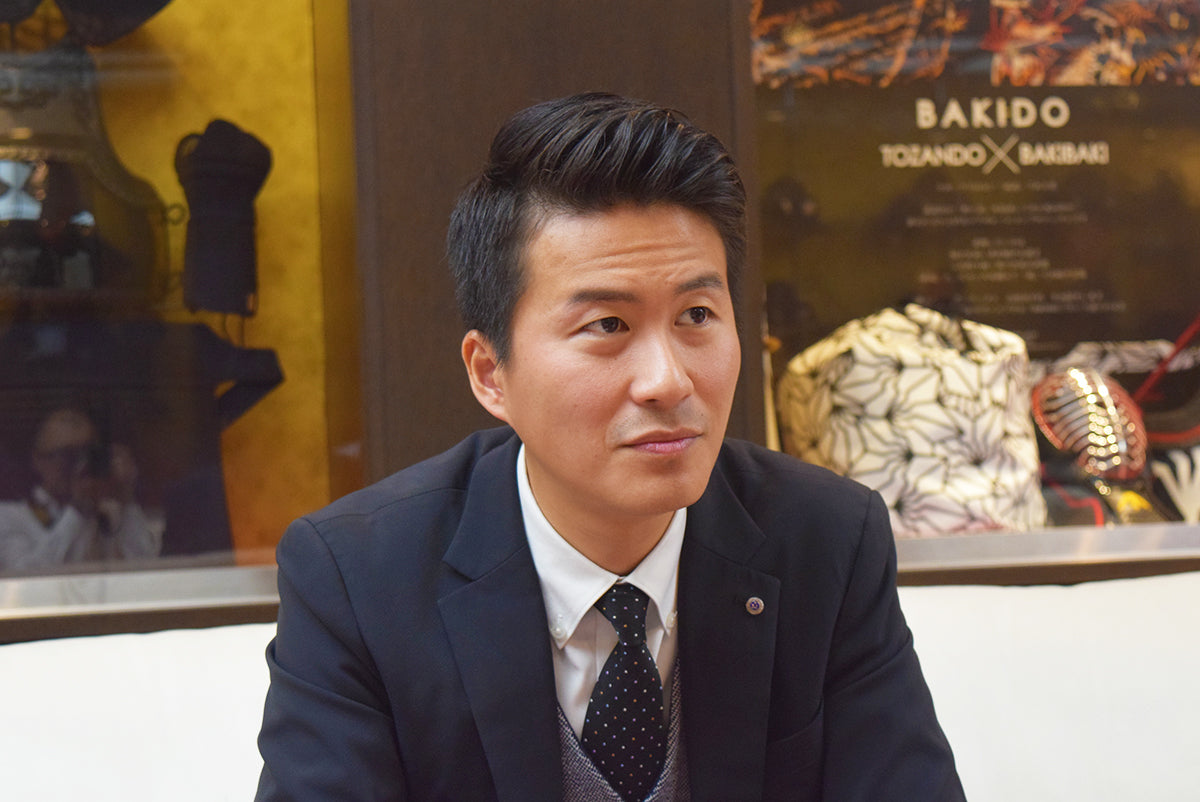
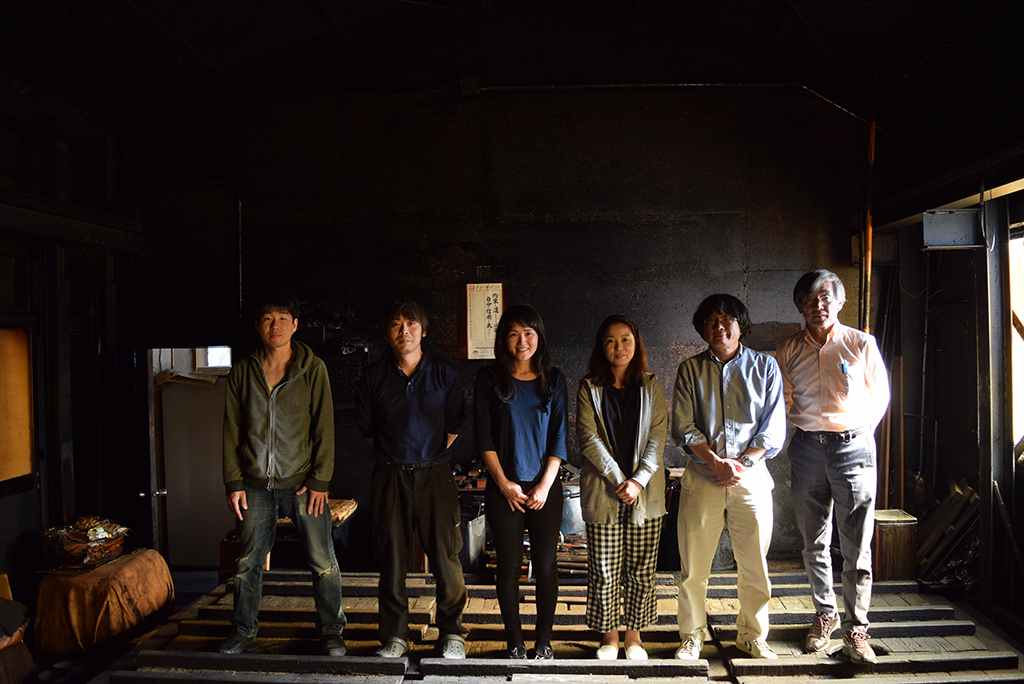
Tozando of Kyoto is taking the world by storm with its smash hit product "A-1α." It's arguably the most dynamic martial arts equipment manufacturer in Japan. In 2015, they merged with the long-established manufacturer Mitsuboshi, embodying the motto of "learning from the past to create something new." We had the opportunity to interview Chairman Kimura, who built the Tozando Group in one generation. Apparently, the impetus for starting the business came from a desire to help Italian swordsmen. It was a fun interview, and we found Chairman Kimura's childlike yet logical personality very appealing!
profile
Takahiko Kimura
1989 Tozando Co., Ltd. was established
2002: Opened the Kyoto showroom in Kamigyo-ku, Kyoto
2009: Biwako Logistics Center established
2010: Established Nippon Budogu Manufacturing in Kuji City, Iwate Prefecture
2014: Mitsuboshi Co., Ltd. merged with the company
2015: Opened the Tokyo showroom in Shinjuku, Tokyo
2017: Nippon Budo Holdings Co., Ltd. was established
2017: Hiei Logistics Center opened
2018: Opened the Sapporo showroom in Sapporo, Hokkaido

The reason for founding Tozando

Image source: Tozando (http://jp.tozando.com/corporation/profile)
- Tozando is a company founded by Chairman Kimura. Could you tell us what prompted you to establish the company?
Takahiko Kimura : "I was struck by the enthusiasm of the Italian fencers, which led to the founding of Tozando. I was asked by a dojo in Saitama Prefecture to act as an interpreter for the Italian national team, so I went to the dojo."
-Are you fluent in Italian, Mr. Kimura?
Takahiko Kimura: "I told the dojo staff that I could only speak English, but they said, 'It doesn't matter if you speak English or whatever, just come' (laughs). Around 25 Italians came. It was a nice contrast to the image of Italians."
-What kind of gaps were there?
Takahiko Kimura: "My image of Italians was that they were cheerful and fun-loving. However, even after practice was over, they continued to ask their sensei for advice. I thought they were more serious than me."
-They were very enthusiastic swordsmen.
Takahiko Kimura: "They were very enthusiastic. As I listened to them, I learned that it is difficult to buy enough kendo equipment in Italy. Even if you can buy it, it is very expensive. There is no place to repair kote, so some people are using glue to fix the kote. If you practice kendo in this condition, there is a risk of injury.
Gradually, I began to feel like I wanted to support these people ."
-So it wasn't a startup with a well-thought-out overseas strategy?
Takahiko Kimura: "There was nothing like that. I wanted to help Italian swordsmen. That was the only thought behind starting the company. I didn't know if we would be successful, but I wanted to keep the promise I made to them ."
-That's a heartwarming story... How did you start your business after that?
Takahiko Kimura: "The internet didn't exist back then. I first went to JETRO and asked them what I wanted to do. I learned that mail-order catalogs were popular overseas. I decided to start by making a catalog."
-At that time, were there any companies that produced catalogs for overseas markets?
Takahiko Kimura : "Of course not. You may not know this, but at the time, image processing was done from negatives, which was extremely expensive. It cost tens of thousands of yen to process each image. The first catalogue cost 2.5 million yen. We wanted to make it in colour, but that would have cost even more. As a result, we printed it in two colours."
- You started out without much name recognition. Did you have any difficulties in gaining the trust of foreign fencers?
Takahiko Kimura : “At the time, I was still unknown, so it was difficult. French swordsmen also had a hard time procuring kendo equipment, so I was able to get a recommendation from Toda Tadao, who was involved in promoting kendo in France. Thanks to him, I gradually gained people’s trust.”
The trigger for a leap forward

Takahiko Kimura : "We've been receiving feedback from overseas that payment methods are too complicated. Customers strongly prefer to pay by credit card.
However, under the screening criteria at the time, almost all companies without physical stores would fail the screening. The only companies that passed the screening were listed companies with capital of over 100 million yen. I was in despair."
-The lack of payment methods was a hindrance to growth, wasn't it?
Takahiko Kimura: "Sumitomo VISA was the only one that listened to me sincerely. Other credit card companies wouldn't even listen to me. I asked them many times, and finally they were able to bring it up at the board meeting. The person in charge made sure to tell me, 'If this doesn't work, then please give up,' (laughs). I was very persistent in my negotiations. To be honest, I thought it was almost impossible, but I got a call in the evening saying, 'Somehow, we've passed the screening,' (laughs)"
-It seems the person in charge had given up halfway through (laughs).
Takahiko Kimura : "I was surprised because I had half given up on it too. When I asked him about it, I found out that one of the executives was a kendo practitioner. He apparently had a powerful voice saying, 'This is a necessary project to spread kendo around the world. There are no bad people who practice kendo, so you should just go ahead and pass the audition.' "
-It's like a miracle!
Takahiko Kimura : "We were a company with capital of around 1 million yen, so I think it was extremely unusual that we passed the screening. When we told the overseas fencers that they could now use credit cards, they were very happy. From that point on, we started receiving a lot of orders. It made me realize how important payment methods are."
-You started your business at a time when the number of kendo practitioners overseas was small. I imagine you must have had a lot of worries.
Takahiko Kimura : " There were many times when I thought we might go bankrupt. Just when it seemed like we were in serious trouble, we received a big order and were able to overcome the crisis. Some of the countries that stand out in my memory are the UK, Belgium and Hawaii. We overcame big waves and gradually became more stable."
-It seems you had some difficulties at first. Could you tell us how you ended up selling items other than kendo equipment?
Takahiko Kimura: "Tozando has grown by meeting the needs of our customers. People overseas don't just practice kendo, they practice a variety of martial arts. This means we have to stock iaido products and other items. In this way, the number of products we handle has gradually increased."
-From the beginning, wasn't it your intention to become a company that handles a wide range of martial arts equipment?
Takahiko Kimura: "That was not my intention at all. As a result of responding to the needs of our customers, we have become a company that handles a wide range of martial arts equipment."
The Truth About Japan Quality

Takahiko Kimura: "What exactly is so great about domestically produced products? It can be said to be the 'Japanese temperament that pays attention to detail.' I'll explain what I mean. Frankly, even if you compare Japanese-made and foreign-made armor at a glance, there is almost no difference. That's how beautifully made foreign-made armor is."
-I think it's actually difficult to tell the difference.
Takahiko Kimura : "So what's the difference? Japanese people pay attention to the parts that can't be seen and do their work carefully. Overseas craftsmen think that because these parts are not visible, there's no need to be so careful. This is the big difference. When you send a kote made overseas for repair, there are cases where it can't be repaired because the thread isn't threaded properly. Japan quality is a concept that has been brought about by the Japanese temperament, which pays attention to these details. Even if overseas craftsmen only copy the surface, it is essentially meaningless."
-I think it would be difficult to make their temperament similar to that of Japanese people.
Takahiko Kimura: "It will be difficult unless we also teach the mindset. Our overseas factory is in China, and our craftsmen from Kuji visit there regularly to provide guidance. We provide technical guidance, of course, but we especially focus on teaching the mindset ."
-So, isn't the level of your overseas factories becoming quite high?
Takahiko Kimura : "I think it's quite expensive. I would almost say it's not Made in Japan, but Made by Japan. For example, the binding string. Our masks are made using custom-made binding string that is narrow, so they are tightly fastened and are sturdy enough to not rattle even after years of use in practice. It's these kinds of details that we pay the most attention to ."
10,000 pairs of "Michi" irons were sold. No profit. That's fine.

Takahiko Kimura: "Last year, Mitsuboshi released a glove called 'Michi' ."
-That's an amazing price.
Kimura Takahiko : " We started selling them for 10,000 yen and sold 10,000 pairs. Frankly, we made no profit. But that's okay. We've gained the trust of customers and martial arts equipment stores. Many of the martial arts equipment stores that now give us repeat orders employ craftsmen. At first, they were also hesitant, saying, 'There's no way we can make good kote for 10,000 yen.' But I think they were surprised when they actually saw the products. It's really difficult to make good kote at a low price."
-You seem to be extremely particular about all your products.
Takahiko Kimura : "It would be sad if more people quit kendo because they were hurt by being hit, or their equipment broke easily. By providing safe kendo equipment at an affordable price, I hope to encourage even just a few more people to take up kendo. That's the only reason I run my business ."
-Other companies can simply make things cheaper. Your company has managed to offer affordable prices while still maintaining quality. I think this is truly amazing.
Takahiko Kimura: "Why do you think we can sell our products so cheaply? It's because we're confident in our products. If we made armor we weren't confident in, we would worry that we would get complaints. As a result, we set the prices a little higher so that we could handle returns. We don't make products that will get complaints. In fact, we've had zero complaints. We can sell our products so cheaply because we're confident in our products ."
Takahiko Kimura : "When it comes to martial arts uniforms and hakama, I only produce products that I am truly confident in. I have an exclusive contract with a factory in China that dyes with genuine indigo. The factory never uses any chemical indigo, and only uses genuine indigo. Their work is excellent, but the prices are high, so Japanese martial arts equipment manufacturers shunned them. I place great importance on quality, even if it means a slightly higher price. That's why I signed an exclusive contract with them. I've told the factory that I will terminate the contract immediately if the quality drops. We've been working together for about six years, and we've built a good relationship. Even if the profit margin is low, we only sell high-quality products. I think that's the secret to success in business. "
- Our company also operates an online shopping site, so this is a great lesson for us. Gaining trust is the key to sustaining business for a long time.
Takahiko Kimura : "We only source our shinai from the best shinai factory in Indonesia, called Koda. Selling cheap shinai that break easily may increase sales in the short term, but customers who buy them will lose trust in our company. We believe it's important to only sell products that we are confident in and to earn our customers' trust."
- The factories that make high-quality products also benefit, so it's a win-win situation! Finally, please tell us about Tozando's future vision.
Kimura Takahiko: "I want to be a company that is loved for a long time. I would be really happy if more kendo practitioners say, 'My grandfather and father bought from Tozando, so I buy from them too.' Currently, there is no information available to consumers to help them distinguish between good kendo equipment. I will proudly tell the world that good products are good. As a result, I hope that only companies that truly make good products will remain. I believe that this will lead to a true contribution to the kendo industry."
BUSHIZO's thoughts
Tozando is currently one of the top selling companies in Japan, and the source of this growth is the thorough commitment of its founder, Chairman Kimura.
In terms of the rapid growth of the company through his strong leadership and dedication, there are some similarities between him and Toshifumi Suzuki, Honorary Advisor of Seven & i Holdings Co., Ltd. Despite being the head of a company, Suzuki was particular about the quality of even a single rice ball, and would issue instructions to the people on the ground.
It's about making and selling quality products with care. It's difficult to put this into practice. I felt like I had heard the secrets of business management. As a select shop, BUSHIZO was able to renew its resolve to take its selection even more seriously in the future.
Tozando sells its products with confidence, and BUSHIZO would like to recommend them with confidence!

Kendo equipment select shop BUSHIZO online store TOP page
If you are looking for a Kendo armor set, click here