Armor Set
 面
面
 Kote
Kote
 胴
胴
 垂
垂
 Dogi
Dogi
 袴
袴
 bamboo sword
 wooden sword
 armor bag
 Bamboo sword bag
 Small items
 gift
gift
 Books/DVDs
 cleaning
 Armor repair
 Kendo mask
 Iaido
Iaido
 Japanese swords and art swords
 Mitsuboshi
 Tozando
 Matsukan
 Japan Kendo Equipment Factory
 West Japan Martial Arts Equipment
 Glory Martial Arts Equipment
 Nobutake
 Busougi
 Hakataya
 Shokodo
 Flag Ito
 メールお問い合わせ
 LINEお問い合わせ


 Value Set
 Armor Set
 面
面
 Kote
Kote
 胴
胴
 垂
垂
 Dogi
Dogi
 袴
袴
 bamboo sword
 wooden sword
 armor bag
 Bamboo sword bag
 Small items
 gift
gift
 Books/DVDs
 cleaning
 Armor repair
 Kendo mask
 Outlet
 Iaido
Iaido
 Japanese swords and art swords
 Mitsuboshi
 Tozando
 Matsukan
 Japan Kendo Equipment Factory
 West Japan Martial Arts Equipment
 Glory Martial Arts Equipment
 Nobutake
 Taiyo Industry
 Busougi
 Hakataya
 Shokodo
 Flag Ito
 Interviews Useful Articles
 Size Measurement Guide
 User Guide
 GLOBAL SHIPPING GUIDANCE
 Frequently Asked Questions Q&A
 Company Profile

profile
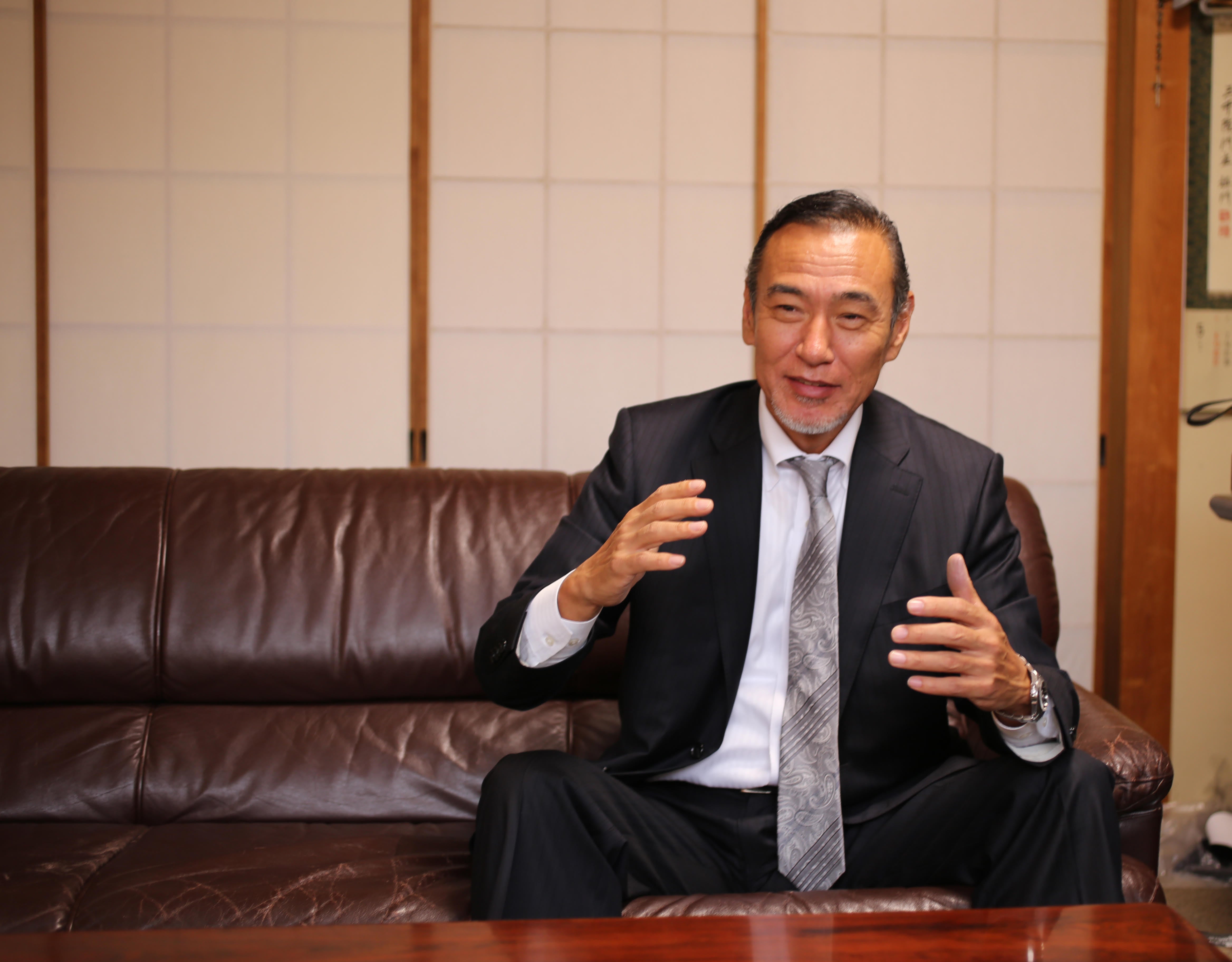
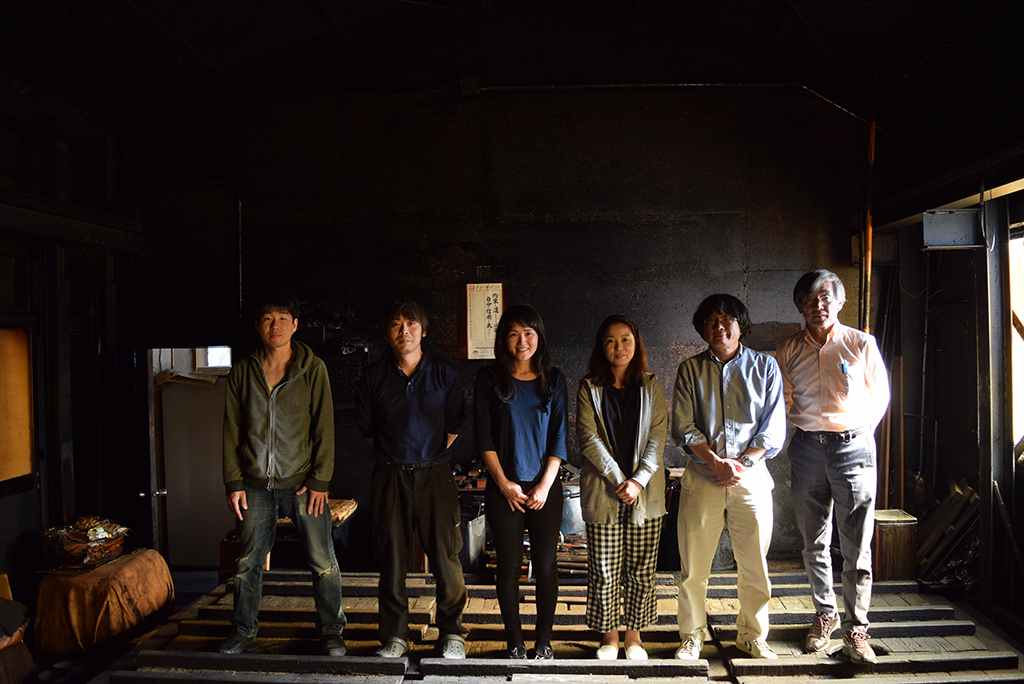
Hasegawa Chemical Industry Co., Ltd. Representative Director and Chairman Hasegawa Mr.
President and CEO, Toshikazu Hasegawa
Mr.
President and CEO, Toshikazu Hasegawa
A management philosophy that emphasizes change
—Could you tell us about the background of your founding? Chairman : "We started out by manufacturing materials for ski gliding surfaces. Innovation is important in anything. A company cannot survive if it continues doing the same thing for 100 years. We need to develop new fields and new products." -You develop a wide variety of products. Chairman : "A senior at Waseda University advised me to create a safe Sinai. It wasn't easy at first, but I didn't give up. I worked hard and managed to do it, and then I went into that field. Management should never stand still." -Are cooking utensils your main product now?
"Polyethylene Karugaru" used in school lunches and employee cafeterias
Chairman : "That's right. We had a lot of trouble developing this product as well. Just like the Carbon Sinai, it uses wood as the core material. This means it won't deform and is lightweight. We also designed it so that it can be used for different foods." —So you can use it for different purposes, such as using the pink one for cutting meat? Chairman : "That's right. This cutting board has three advantages: it can be color-coded, it's lightweight, and it doesn't deform. We marketed it based on this, but there was no need for it at the time, so no one took us seriously." -How did it become popular? Chairman : "Slowly but surely, sales began to drop for school lunches. Then the E. coli O-157 food poisoning incident occurred. As a result, the Ministry of Health, Labor and Welfare and the Ministry of Education, Culture, Sports, Science and Technology instructed schools to use different ingredients for different purposes, such as vegetables, meat and fish. After that, schools started buying them all at once." —The incident gave me a boost. Chairman : "That's right. Our knives sold well because they were the HASEGAWA brand. That's how they became our main source of income. There used to be 33 ski manufacturers, but now there are only two. Just like with kendo, the number of children is rapidly decreasing." -Chopping boards never go away. Chairman : "It's not for home use, but for commercial use, such as school lunches, hospitals, nursing homes, daycare centers, restaurants, hotels, and inns. Our company has now become the leader in commercial use." —What was the key to your success? Chairman : "We're making full use of the knowledge we have gained from making ski running surfaces and carbon fiberglass. Sales of this product are also growing overseas." —When you go to cooking product exhibitions overseas, you are often told, "That's HASEGAWA from Carbon Sinai, isn't it?" Chairman : "Originality is important in everything we do. We have to keep trying new things. It was difficult at one point. We built a factory in Togane, Chiba Prefecture, and hired staff, but sales of our cooking products were slow. Sales of our main business, ski products, were also declining. Our main business performance was steadily declining, and sales of our cooking products were slow, which increased our costs, so we were in a tight spot." How did you manage to make a comeback? Chairman : "Our cooking products grew just before we went under. We need to maintain our spirit of taking on new challenges."Why we decided to create Carbon Sinai
 —Could you tell us why you decided to create Carbon Sinai?
Chairman : "It all started when a member of the Waseda University Kendo Club, Mr. Araki, who passed away recently, was a grade above me and asked me to make a safe bamboo sword that even children could use. It was 15 years later that we actually succeeded.
No matter how hard I tried, it didn't work. I gave up, I remembered, and finally I was able to do it."
—Could you tell us why you decided to create Carbon Sinai?
Chairman : "It all started when a member of the Waseda University Kendo Club, Mr. Araki, who passed away recently, was a grade above me and asked me to make a safe bamboo sword that even children could use. It was 15 years later that we actually succeeded.
No matter how hard I tried, it didn't work. I gave up, I remembered, and finally I was able to do it."

The black part is carbon, and the middle contains wood as the core material.
Difficulties encountered during development
--What were some of the most difficult aspects of development? Chairman : "The part that breaks when struck needs to be made lighter. To prevent it from breaking, we put a wooden core inside and covered all four sides with carbon fiber, which made it stronger. That's why we made the cross section square." -So the shape is designed to withstand impacts. Chairman : "However, when we tested it by tapping it repeatedly on the shaft with a machine, it broke after 50 to 100 taps. Because it had a wooden core, it lasted for 50 to 100 taps, but it just couldn't go any further than that. So we were about to give up. However, by chance, I started to pay attention to the fibers of the wood. The key was the direction of the fibers. I changed all the vertical fibers to horizontal."
By changing the orientation of the core wood fibers horizontally, it has become more practical.
-So that was a breakthrough. Chairman : "Just by changing the orientation of the fibers, the material doesn't dent or break. We had previously been unable to overcome the hurdle of 100 to 200 mechanical tests, but now it has withstood 1,000! As a result, it didn't break even after 1,500 times. We thought it was safe, so we put it on sale." -So the key point was the direction of the fibers in the core material. Chairman : "It took time and money, but we arranged them horizontally instead of vertically. The problem was the beating part. If we had done this process for the entire Sinai, it would have been too expensive and the whole thing would have been too soft." -Are there any products similar to Carbon Sinai? Chairman : "When Carbon Sinai was first developed, other companies studied it because it was expensive. In the end, they couldn't solve the problem of it breaking. The patent has expired, so it would be easy to copy it, but no one has." -Just hearing your story, I can see that it would be difficult to recreate. Chairman : "It takes a lot of time and effort and requires technical skill. Companies without the technical skill won't take on the challenge, and companies with the technical skill won't enter the market because of the size (sales) of the kendo market." -I understand that due to cost and technical issues, this product was only possible because of your company.The road to official recognition
—Can Carbon Sinai be used in matches? President: "It's okay" Chairman : "At the time, Takeyasu sensei, head of the All Japan Kendo Federation, became the president of the Kendo Federation and said that we had created something good, not something dangerous like a bamboo shinai. Professor Takeyasu took the initiative to recommend it, and it was officially recognized. Two years had passed since its release. We received the Science and Technology Agency Director-General's Award and the Yellow Ribbon Medal as a recommendation from the Science and Technology Agency." —Your contribution to the kendo industry is great.
Chairman : "Unfortunately, it is not currently being used by those with high ranks, but fortunately, martial arts became a compulsory subject in junior high schools across the country from April 2012.
Carbon Sinai is a safe, secure and durable material for classroom use, and has been adopted by many junior high schools. We are grateful that it is still being used today to prevent accidents."
—Your contribution to the kendo industry is great.
Chairman : "Unfortunately, it is not currently being used by those with high ranks, but fortunately, martial arts became a compulsory subject in junior high schools across the country from April 2012.
Carbon Sinai is a safe, secure and durable material for classroom use, and has been adopted by many junior high schools. We are grateful that it is still being used today to prevent accidents."
When it was first released, it was said to be a scam.
President : "When we first released it, people said, 'Plastic Sinai is a scam and it's too expensive.'" Chairman : "When we released it for 20,000 yen, some people said, 'I can make something like that for 1,500 yen.'" President : "Because it's made of plastic, people think it's cheap. It takes dozens of steps to complete, and it's hard for people to understand that it's a finished product that requires a lot of effort and investment." Chairman : "We've had some of the leading teachers from the Kendo Federation come to tour our factory. They said, 'I can't believe it's 20,000 yen. Aren't they just making exorbitant profits?' But when they saw the factory, they said, 'There's no way they're making any money from this.' (laughs)" Is it because it takes too much effort? Chairman : "I never thought it would take so much effort to make this, and it's not going to be profitable." -Finally, please tell us about your future prospects. President : "Because we offer products in a variety of businesses, I think we can create products that are a little different from other kendo manufacturers. We hope to continue to utilize our company's technical capabilities to contribute to the kendo industry." -I understand that Carbon Sinai is a product that could only have been realized by your company. Thank you for today. Click here to see the product page of Hasegawa Chemical Industry, the company we interviewed this time! interviewer ◎ Representative Director: Go Ueshima Born in Sendai in 1987. While in the Sendai High School Kendo Club, he studied under Mitsunobu Sato and made it to the top eight of the Inter-High School Championships.
After graduating from university, he worked as the business development manager for a restaurant chain with 200 stores across the U.S. He worked in sales at a foreign internet advertising company and as the head of the sales department and president's office at Innova Co., Ltd., before founding Bushizo Inc. in January 2017.
◎ Director Yusuke Kudo
Born in Sendai in 1987. While in the Sendai High School Kendo Club, he studied under Mitsunobu Sato and made it to the top eight of the Inter-High School Championships.
After graduating from university, he worked as the business development manager for a restaurant chain with 200 stores across the U.S. He worked in sales at a foreign internet advertising company and as the head of the sales department and president's office at Innova Co., Ltd., before founding Bushizo Inc. in January 2017.
◎ Director Yusuke Kudo
 Born in Hokkaido in 1984. Graduated from Rikkyo University's Faculty of Law. While in school, he launched a free magazine and provided marketing support for an apparel brand. In 2008, he joined Yahoo Japan Corporation, where he worked in sales of advertising products such as search advertising and display advertising. In January 2017, he founded Bushizo Inc. He began practicing kendo at the age of six and continues to practice it to this day.