Armor Set
 面
面
 Kote
Kote
 胴
胴
 垂
垂
 Dogi
Dogi
 袴
袴
 bamboo sword
 wooden sword
 armor bag
 Bamboo sword bag
 Small items
 gift
gift
 Books/DVDs
 cleaning
 Armor repair
 Kendo mask
 Iaido
Iaido
 Japanese swords and art swords
 Mitsuboshi
 Tozando
 Matsukan
 Japan Kendo Equipment Factory
 West Japan Martial Arts Equipment
 Glory Martial Arts Equipment
 Nobutake
 Busougi
 Hakataya
 Shokodo
 Flag Ito
 メールお問い合わせ
 LINEお問い合わせ


 Value Set
 Armor Set
 面
面
 Kote
Kote
 胴
胴
 垂
垂
 Dogi
Dogi
 袴
袴
 bamboo sword
 wooden sword
 armor bag
 Bamboo sword bag
 Small items
 gift
gift
 Books/DVDs
 cleaning
 Armor repair
 Kendo mask
 Outlet
 Iaido
Iaido
 Japanese swords and art swords
 Mitsuboshi
 Tozando
 Matsukan
 Japan Kendo Equipment Factory
 West Japan Martial Arts Equipment
 Glory Martial Arts Equipment
 Nobutake
 Taiyo Industry
 Busougi
 Hakataya
 Shokodo
 Flag Ito
 Interviews Useful Articles
 Size Measurement Guide
 User Guide
 GLOBAL SHIPPING GUIDANCE
 Frequently Asked Questions Q&A
 Company Profile

Check out the products of Hakataya Budogu, a "contemporary master craftsman"!
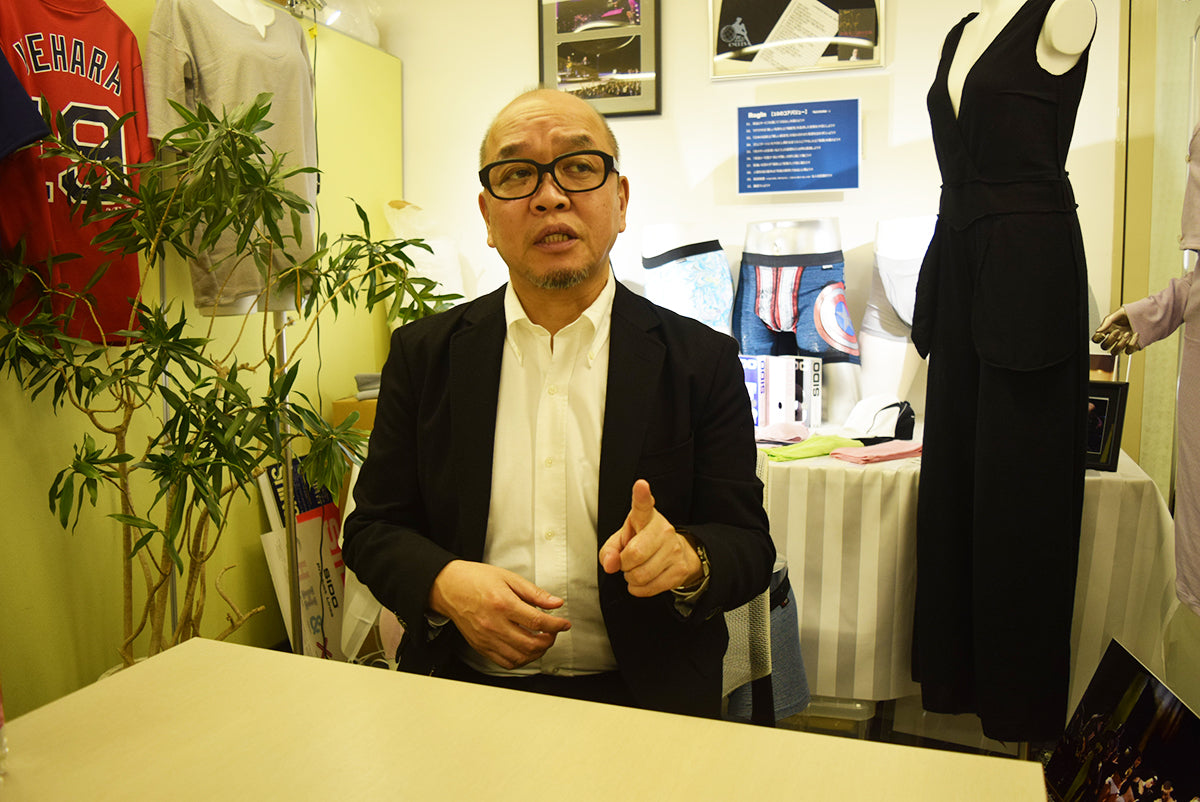
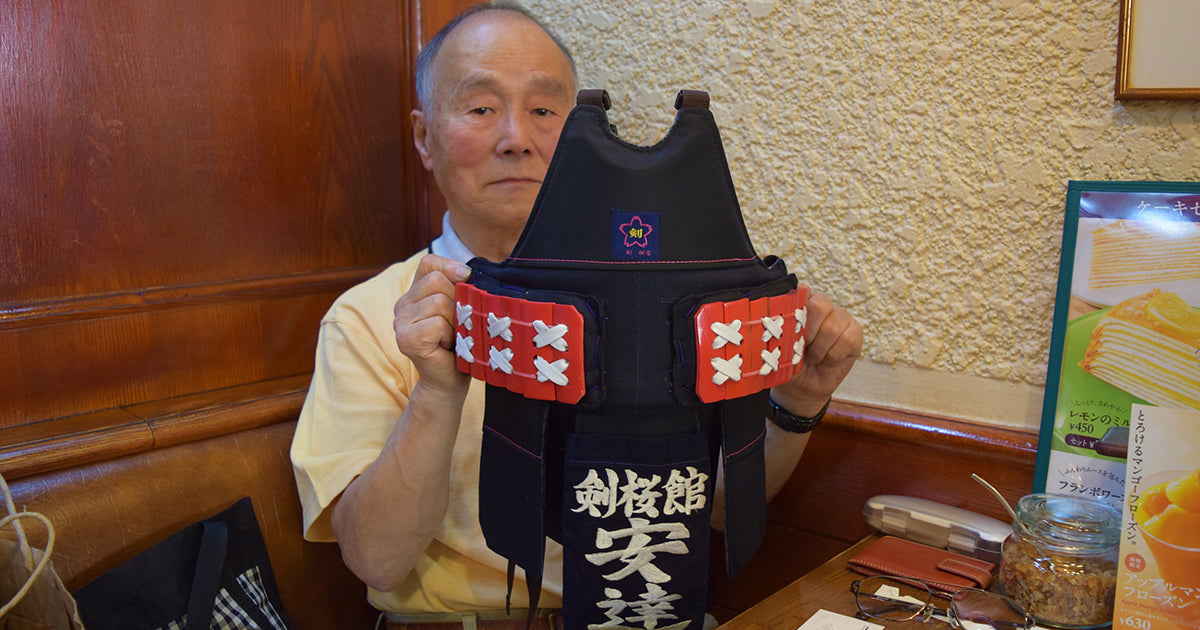
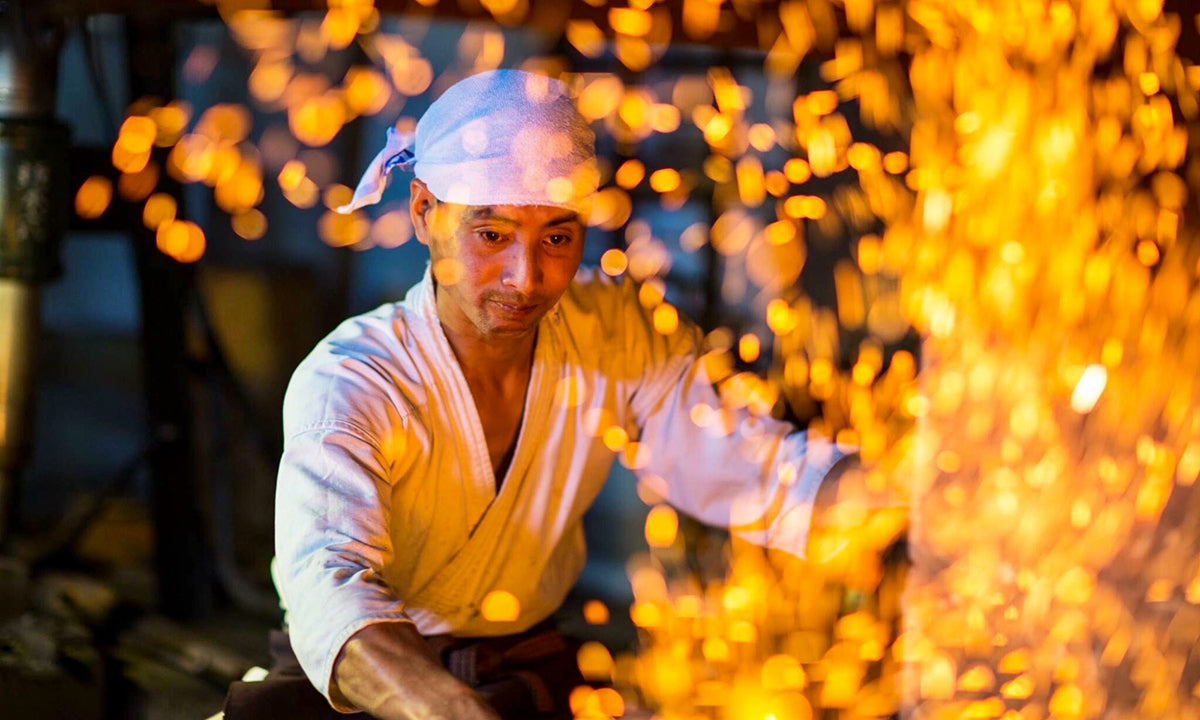
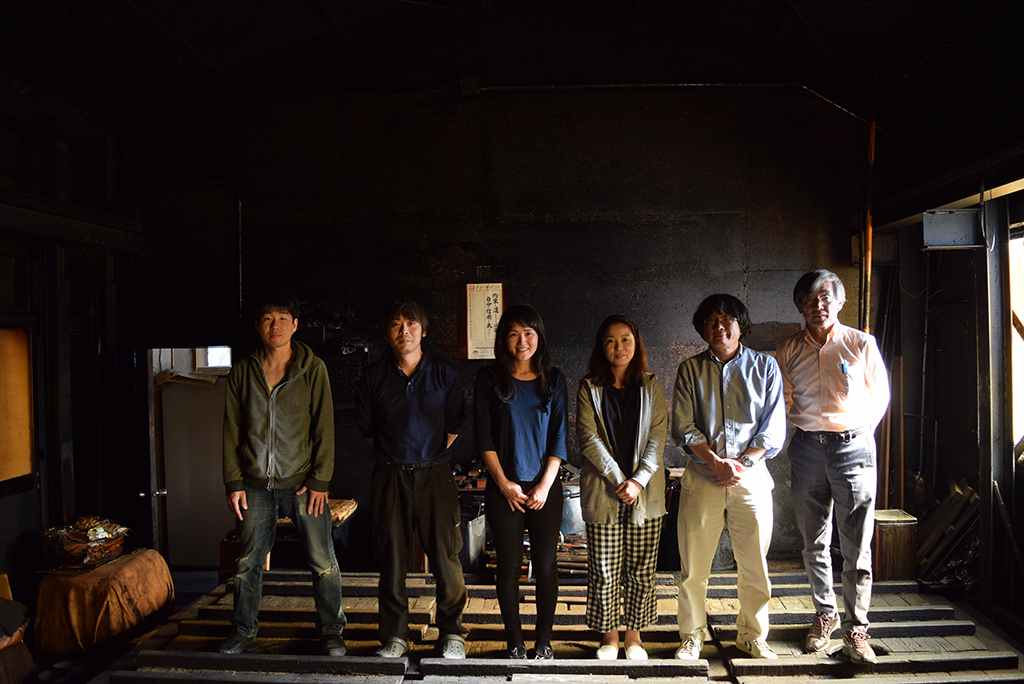
Left: Tesshin-ryu armor maker, Hakataya Toshiaki (titles omitted below)
In 1958, he joined Harima Takeyoshi Shoten, a martial arts equipment manufacturer and wholesaler, and became a disciple of Nishioka Tomezo (Tesshin-ryu) and began his career as a kendo armor craftsman.
After nine years of training, one will acquire the skills to make all the masks, do, kote and tare.
In 1992, he was awarded the Governor's Award by the Governor of Nagasaki Prefecture as an outstanding craftsman.
In 1998, he was awarded the Minister of Labor's Commendation for being an outstanding craftsman (Contemporary Master Craftsman), the first time in the kendo armor manufacturing industry that he was awarded this award.
(The first Japanese kendo equipment manufacturer to receive the award)
In the autumn of 2011, he was awarded the Yellow Ribbon Medal in recognition of his many years of diligence and outstanding achievements (he was the first Japanese kendo armor manufacturer to receive this award).
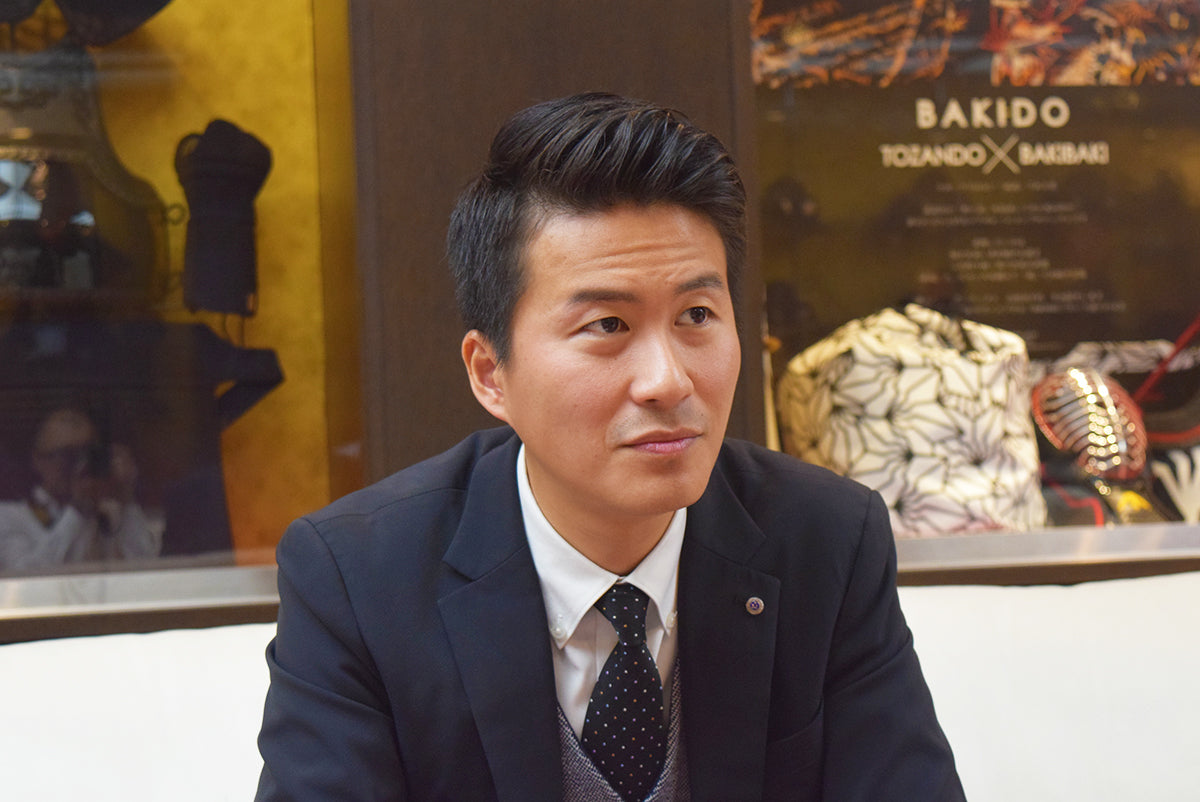
In the photo: Mr. Masaomi of Hakataya (titles omitted below)
Born in Nagasaki on November 9, 1973
In 1997, he became an apprentice to his father, Hakataya Toshiaki.
Modern Master Craftsman

Masaomi : "Our specialty is custom-made kendo armor, which is individually handmade by our craftsmen.
Our shop is a small one-man shop, but we have been doing business with kendo equipment manufacturers and retailers across the country for many years. We are also very fortunate to be used by kendo enthusiasts all over the country, and have been featured in many kendo magazines."
-We have received many inquiries in the past asking, "Do you sell Hakataya Budougu products?"
Toshiaki : In 1998, I was recognized as a "Contemporary Master Craftsman" and received the Minister of Labor's Award, the first time in the kendo armor manufacturing industry that I was awarded this honor.
Furthermore, in recognition of our many years of diligence and outstanding achievements, we were awarded the Yellow Ribbon Medal at the Autumn 2011 Decorations and Medals Awards. This is also the first time that a kendo armor manufacturer in Japan has received this award.
-I think your company is a treasure that Japan can be proud of on a global scale. While other martial arts equipment manufacturers are moving towards overseas production and the use of overseas materials, what is the reason that you are so committed to domestic production?
Toshiaki : "Our customers have different physiques and styles of swordsmanship, but we want to provide products that are truly suited to each individual. We create products that meet the opinions and requests of the users and then have them try them out. In order to create products with the utmost care, we needed to focus on domestic production."
-You also source the materials you use domestically, right?
Toshiaki: "I personally visit the manufacturing site and personally select the materials used in Takeaki's kendo armor."
Takeaki, the special material used for kendo armor
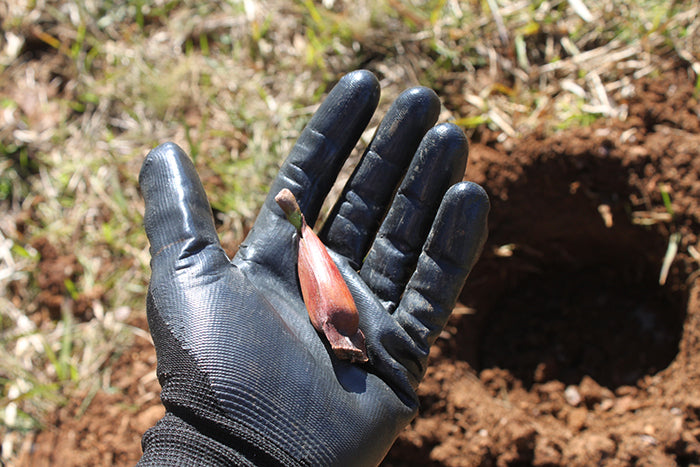
deerskin

Brown deer leather, navy deer leather, white deer leather
Toshiaki: "Deerskin is the most important material in making kendo armor. It is processed from raw hides through various processes into white, brown, and navy blue deerskin. In particular, the leather used for the kote-gashira (glove) of Takeaki's kote (shoulder guards) is made from the best part of the deer's back (only one pair of guards can be taken from one piece of deerskin)."

Toshiaki : "The brown deerskin we use is carefully selected for its flexibility and durability. Each step in the deerskin production process can be monotonous, but it is also labor-intensive and time-consuming. It takes at least a week to produce one piece of leather. (We make a batch of 10 or more pieces.)"

Toshiaki: "It requires the skills of a skilled craftsman, but due to the declining number of craftsmen and their aging, it is becoming increasingly difficult to produce high-quality products."


-The number of craftsmen who provide materials is decreasing and they are aging.
Toshiaki: "Without the provision of materials, we wouldn't be able to make armor. It will be too late once the craftsmen have disappeared, so I think we need to take action quickly."
Bay

Deer hair to be placed inside the kote (hand guard)
Toshiaki: "The deer hair is neatly cut (each strand is shaped like a pipe, which provides excellent breathability and shock absorption). As you use it, the deer hair breaks down and fits your hand even better. All of the kote (hand guards) made in our shop are made using only deer hair."
Check out the products of Hakataya Budogu, a "contemporary master craftsman"!
[Hakataya Budo Equipment] Takeaki Kote Satori (Sato) Hand-stitched 2.5mm Full Navy Leather
![[Hakataya Budo Equipment] Takeaki Kote Satori (Sato) Hand-stitched 2.5mm Full Navy Leather](https://bushizo.myshopify.com/cdn/shop/files/09171117_5f62c72346cc4.jpg?v=1702618601&width=1946)
BUSHIZO's impressions

Products made by top craftsmen using carefully selected materials are truly works of art. It's clear that they are meticulously selecting materials. Recently, we've received many inquiries from overseas swordsmen asking for armor made in Japan. As BUSHIZO, we confidently recommend Hakataya Budougu!
Thank you for today!