Armor Set
 面
面
 Kote
Kote
 胴
胴
 垂
垂
 Dogi
Dogi
 袴
袴
 bamboo sword
 wooden sword
 armor bag
 Bamboo sword bag
 Small items
 gift
gift
 Books/DVDs
 cleaning
 Armor repair
 Kendo mask
 Iaido
Iaido
 Japanese swords and art swords
 Mitsuboshi
 Tozando
 Matsukan
 Japan Kendo Equipment Factory
 West Japan Martial Arts Equipment
 Glory Martial Arts Equipment
 Nobutake
 Busougi
 Hakataya
 Shokodo
 Flag Ito
 メールお問い合わせ
 LINEお問い合わせ


 Value Set
 Armor Set
 面
面
 Kote
Kote
 胴
胴
 垂
垂
 Dogi
Dogi
 袴
袴
 bamboo sword
 wooden sword
 armor bag
 Bamboo sword bag
 Small items
 gift
gift
 Books/DVDs
 cleaning
 Armor repair
 Kendo mask
 Outlet
 Iaido
Iaido
 Japanese swords and art swords
 Mitsuboshi
 Tozando
 Matsukan
 Japan Kendo Equipment Factory
 West Japan Martial Arts Equipment
 Glory Martial Arts Equipment
 Nobutake
 Taiyo Industry
 Busougi
 Hakataya
 Shokodo
 Flag Ito
 Interviews Useful Articles
 Size Measurement Guide
 User Guide
 GLOBAL SHIPPING GUIDANCE
 Frequently Asked Questions Q&A
 Company Profile


Living National Treasure, Preserved Sword | Metalwork, Imperial Household Apprentice, Suzuki Chokichi, 2 shaku 1 sun 3 bu
Living National Treasure, Preserved Sword | Metalwork, Imperial Household Apprentice, Suzuki Chokichi, 2 shaku 1 sun 3 bu
 (セール終了時間)
Sold out
(セール終了時間)
Sold out

Couldn't load pickup availability
商品について


Chokichi Suzuki was a Japanese metalworker who was an important figure in the Meiji crafts world and was appointed an Imperial Household Artist, a title that was the precursor to the so-called Living National Treasure.
For metalworkers at the time, who were losing their jobs due to the sword ban and anti-Buddhist movement during the Meiji period, Suzuki Chokichi's skills and international recognition played an important role in demonstrating the value of traditional Japanese crafts to the world.
Many of his works are exhibited as important cultural properties at the Tokyo National Museum and other institutions.
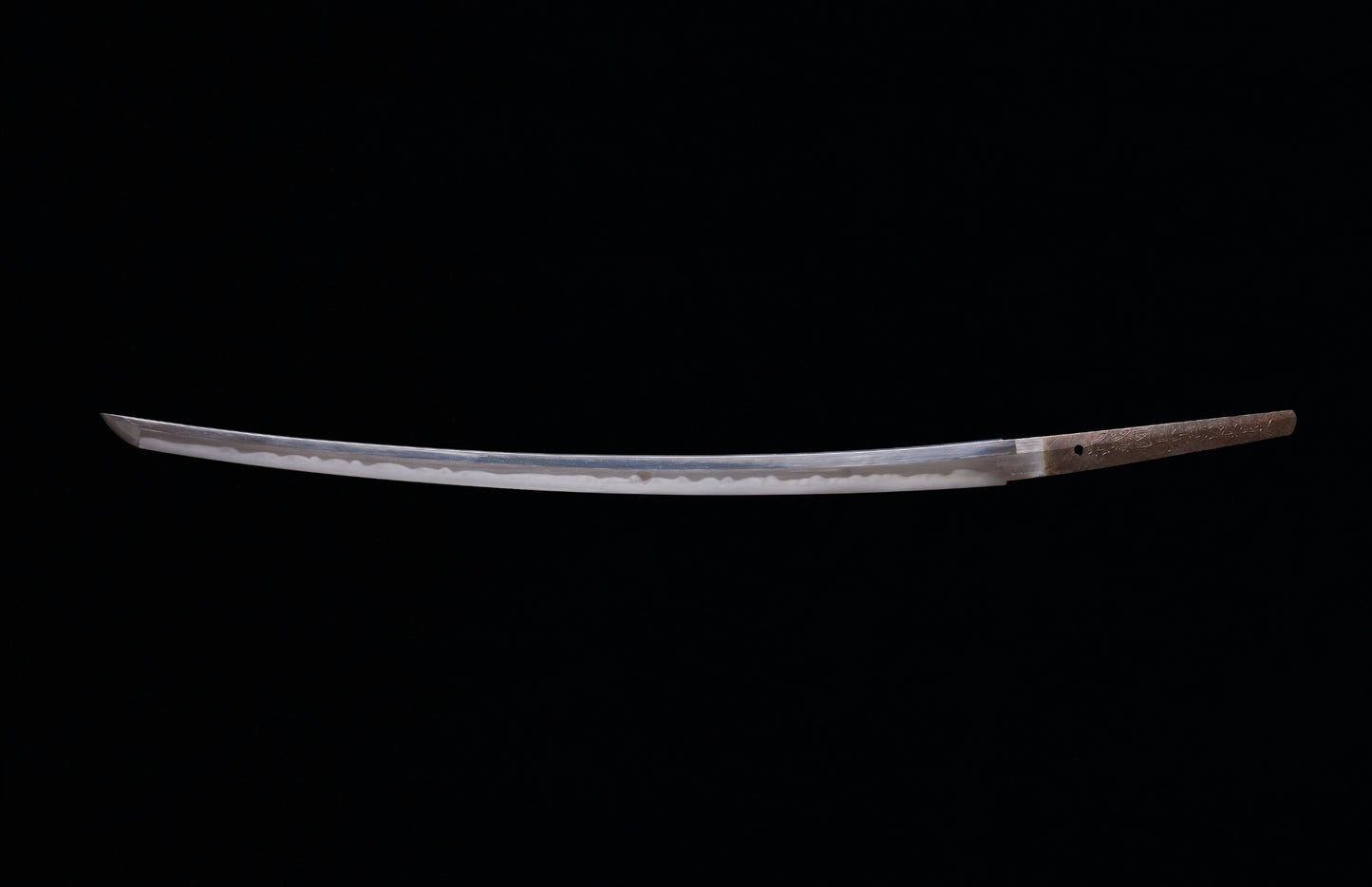
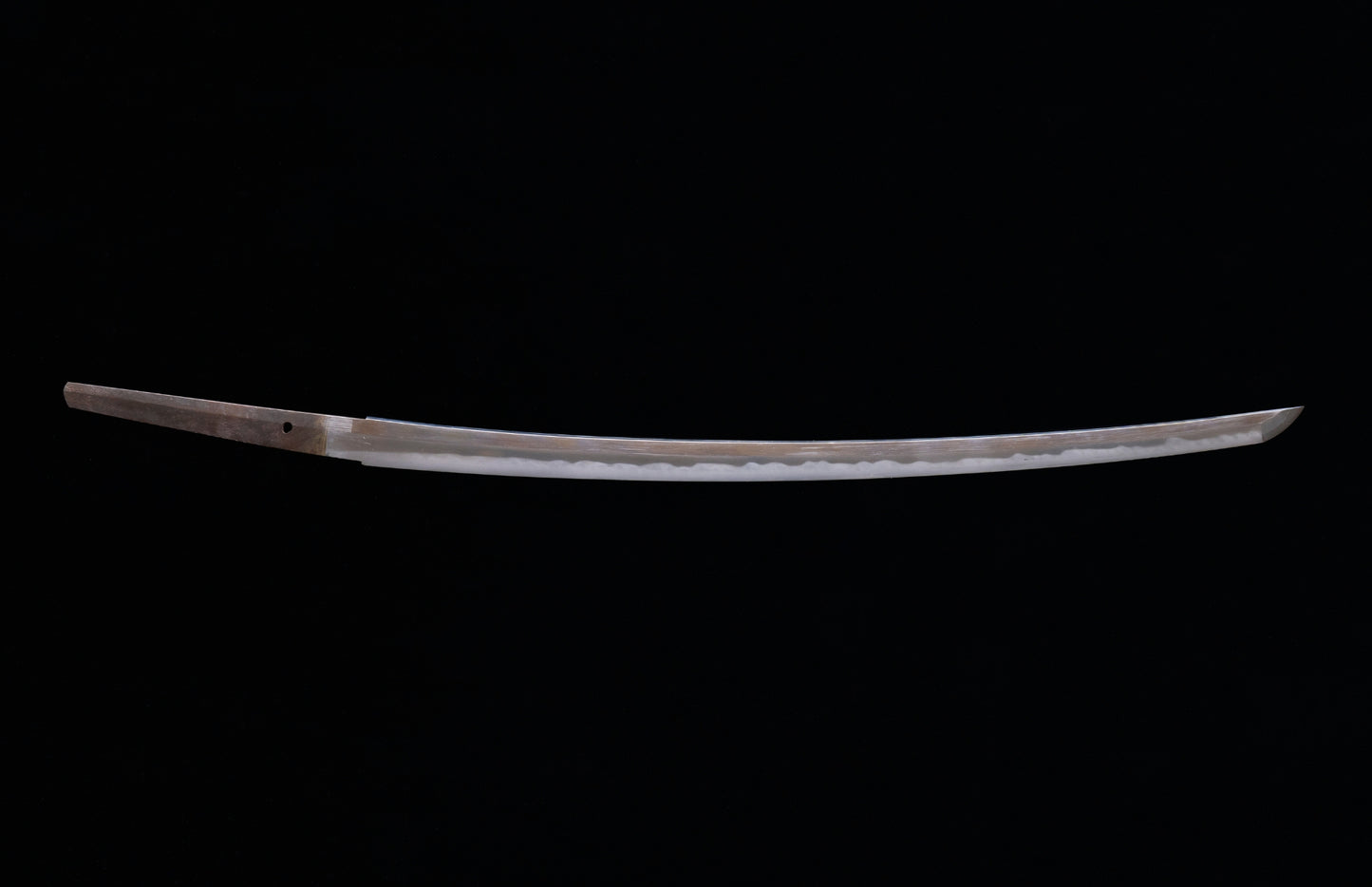
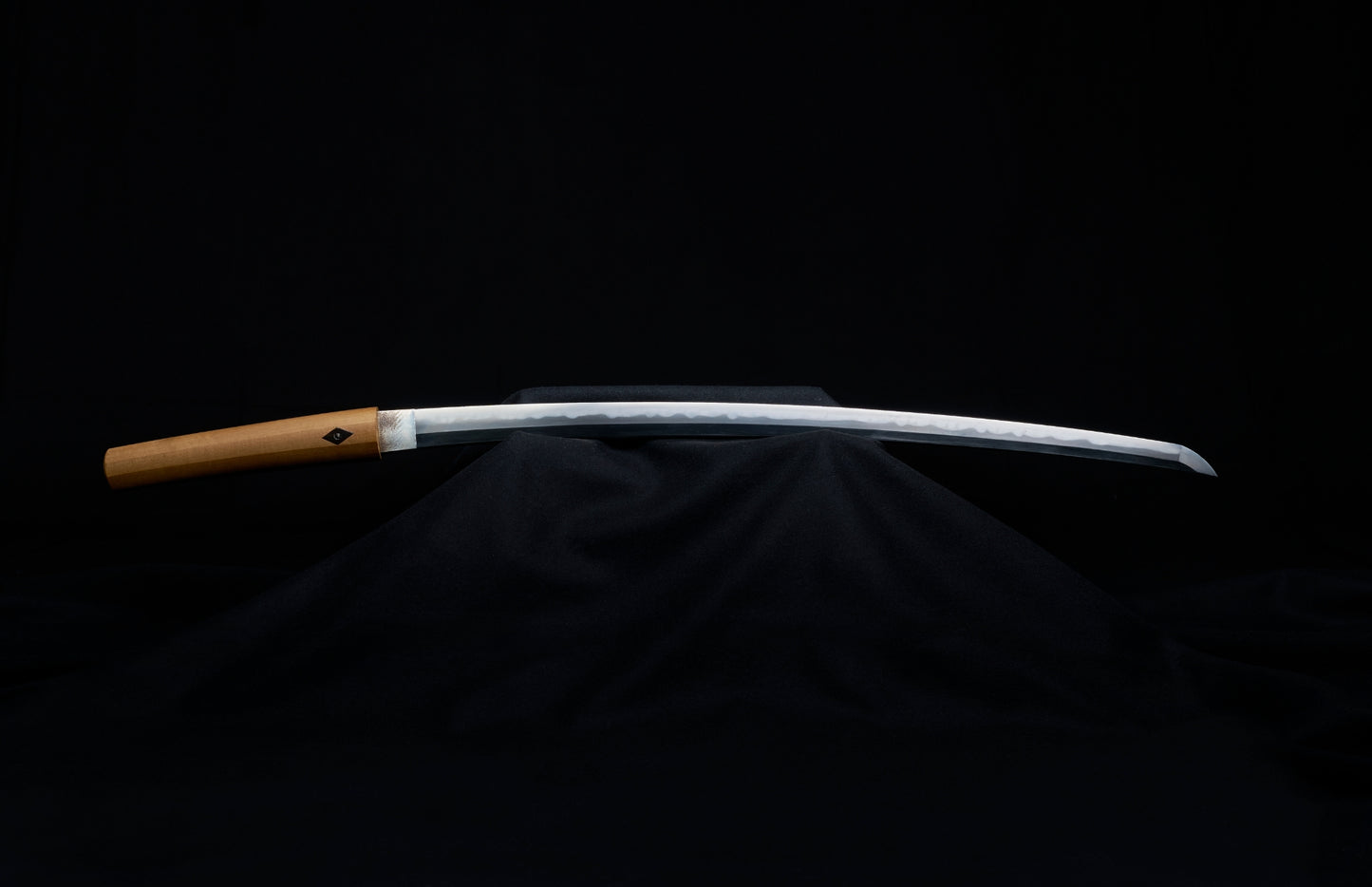
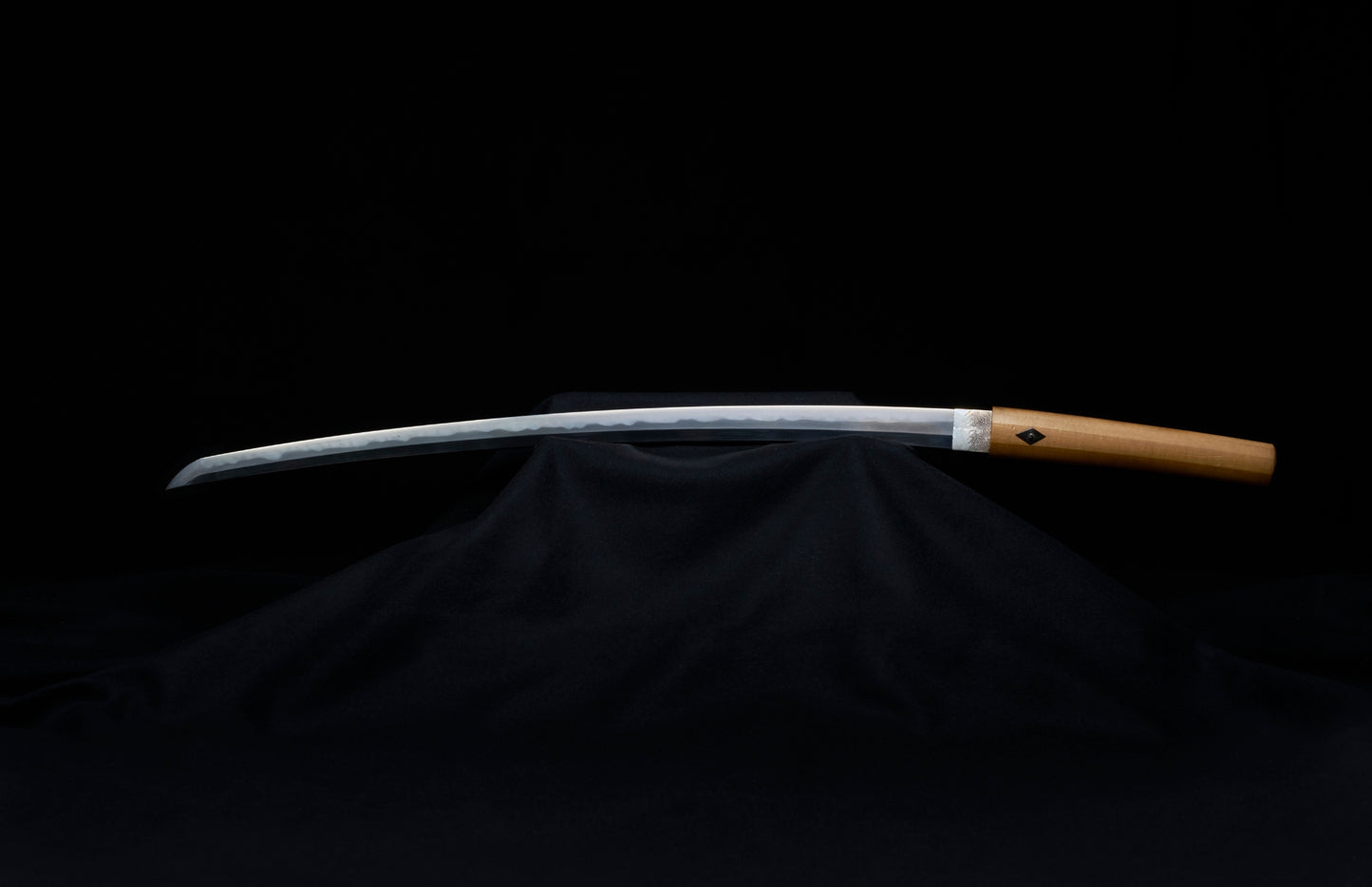
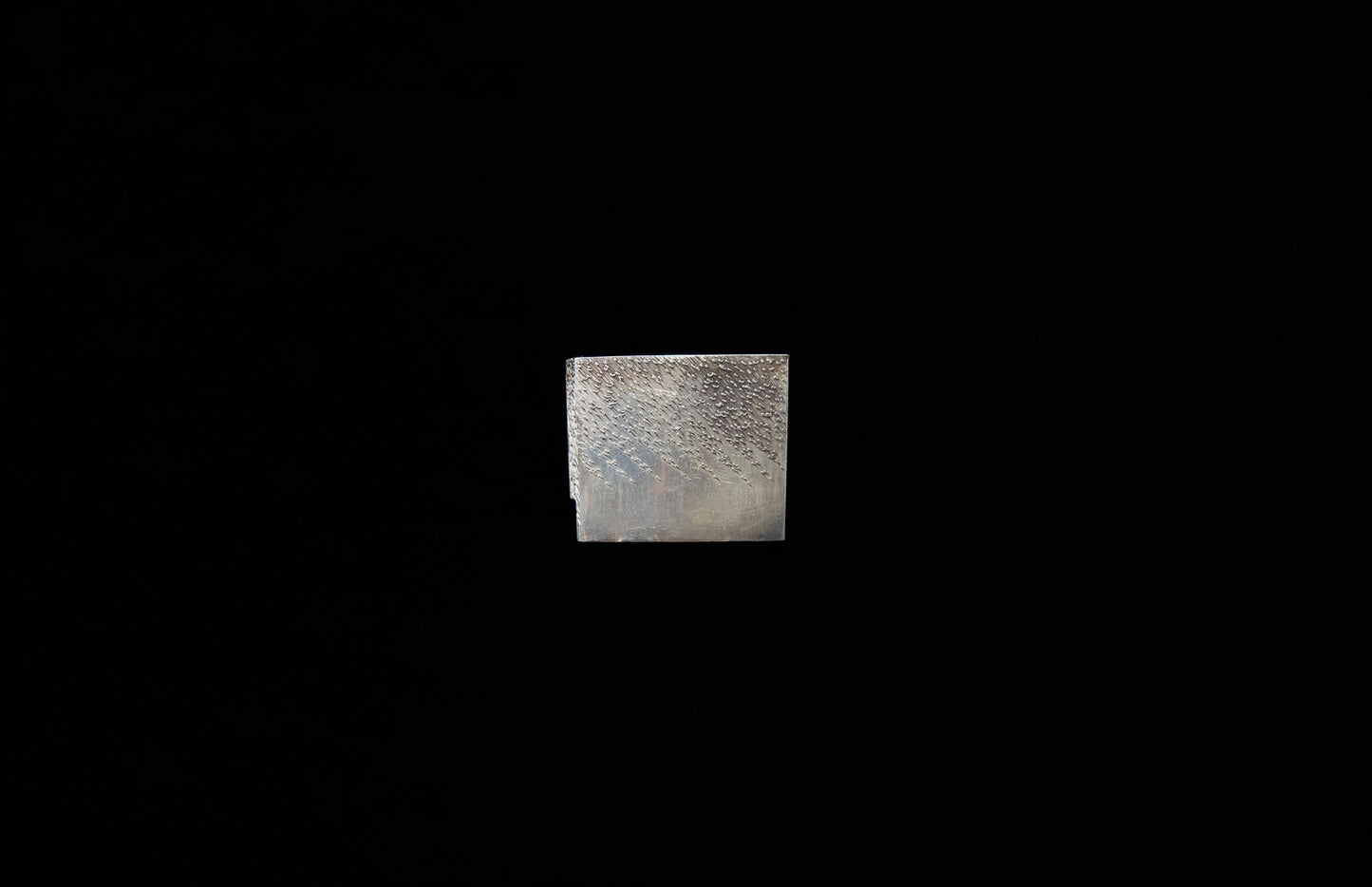
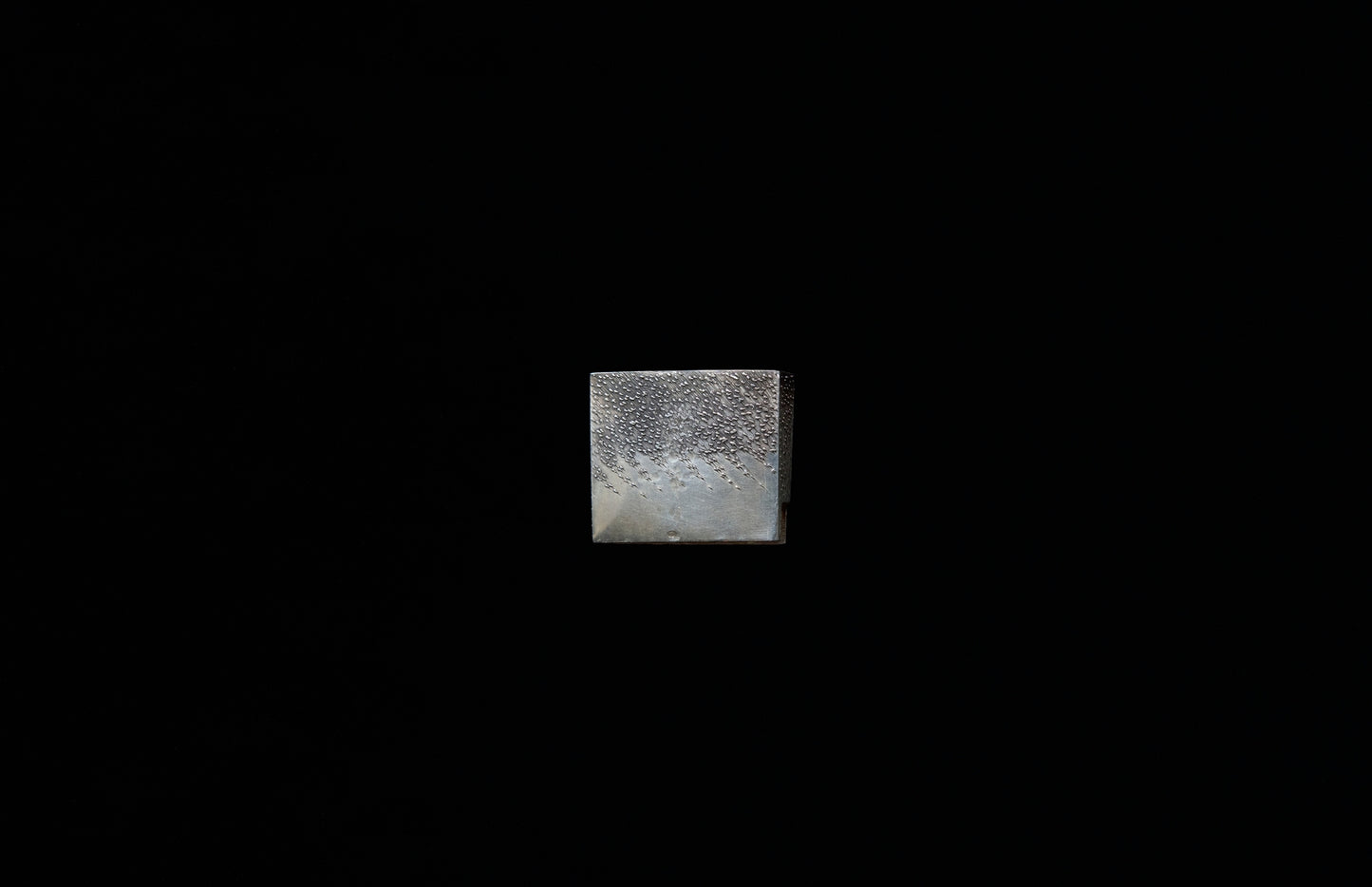
This is a very rare sword made by Suzuki Nagayoshi, who became an Imperial Household Artist as a Meiji metalworker, using the tsuba as a material.
Famous Imperial sword craftsmen of the same period, such as Miyamoto Kanenori and Gassan Sadakazu, are thought to have had technical exchanges with them.
It is likely that this is a masterpiece that was crafted many times over. It is also highly likely that it was crafted together with other swordsmiths with whom he had connections.
In Suzuki Chokichi's article, he also uses expressions that replace the smell of swords with that of other works of art, demonstrating his deep knowledge of swords.
There were many famous swordsmiths from the same period, but this sword also has a clear blade pattern and a firm appearance, demonstrating the skills of an Imperial craftsman.
In other words, what a master makes is proof that it is made with the skill of a master.
This sword is a precious masterpiece that demonstrates the fusion of Meiji era metalworking and sword-making techniques, and is valuable not only from a technical standpoint, but also from a historical and rarity standpoint.
It is unlikely that such a rare sword will ever be found again.
Please take this opportunity to purchase.
<Product details>
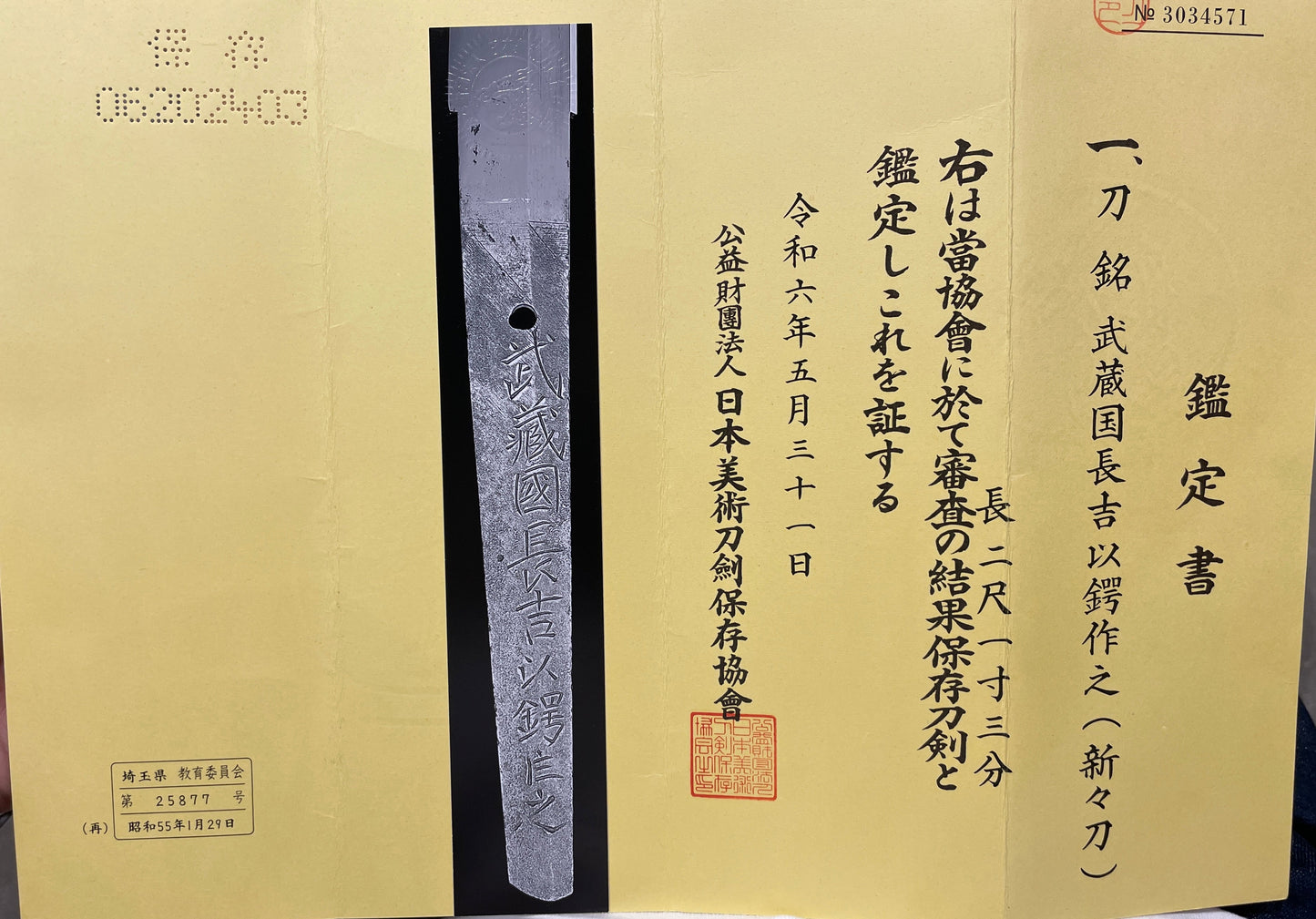
Inscription on the sword: Tsuba made by Nagayoshi of Musashi Province (front)
Length: 64.6cm Curvature: 2.0cm
Appraisal|Preservation certificate original width|33.7mm
Tip width|21.9mm
Motoshige|6.7mm
Tip weight|5.4mm
Weight: Blade 734g, Unsheathed 844g
The Life of Suzuki Chokichi
August 15, 1848 (September 12, 1848 - January 29, 1919)
・His pen name is Kakou (Yoshiyuki).
He was born in Ishii Village, Iruma County, Musashi Province (present-day Sakado City, Saitama Prefecture).
He studied wax casting under Okano Toryusai in Matsuyama, Hiki County for five years, and at the age of 18, he became independent and opened a shop in Edo.
・Suzuki Nagayoshi's precise metalworking skills were also demonstrated in the production of sword decorations and sword fittings such as tsuba (guards) and kozuka (small sword fittings).
For metalworkers at the time, who were losing their jobs due to the sword ban and anti-Buddhist movement during the Meiji period, Suzuki Chokichi's skills and international recognition played an important role in demonstrating the value of Japan's traditional crafts to the world.
Major achievements: Received the highest evaluation for the work exhibited at the Chicago World's Fair in 1893; Representative work "Twelve Hawks" (Collection of the National Museum of Modern Art, Tokyo, designated as an Important Cultural Property)

Quoted from the National Crafts Museum https://www.momat.go.jp/craft-museum/collection/mt0157
・"Ornamental Crab" (Tokyo National Museum, designated an Important Cultural Property in 2001)
・June 30, 1896: Becomes an Imperial Household Artist