Armor Set
 面
面
 Kote
Kote
 胴
胴
 垂
垂
 Dogi
Dogi
 袴
袴
 bamboo sword
 wooden sword
 armor bag
 Bamboo sword bag
 Small items
 gift
gift
 Books/DVDs
 cleaning
 Armor repair
 Kendo mask
 Iaido
Iaido
 Japanese swords and art swords
 Mitsuboshi
 Tozando
 Matsukan
 Japan Kendo Equipment Factory
 West Japan Martial Arts Equipment
 Glory Martial Arts Equipment
 Nobutake
 Busougi
 Hakataya
 Shokodo
 Flag Ito
 メールお問い合わせ
 LINEお問い合わせ


 Value Set
 Armor Set
 面
面
 Kote
Kote
 胴
胴
 垂
垂
 Dogi
Dogi
 袴
袴
 bamboo sword
 wooden sword
 armor bag
 Bamboo sword bag
 Small items
 gift
gift
 Books/DVDs
 cleaning
 Armor repair
 Kendo mask
 Outlet
 Iaido
Iaido
 Japanese swords and art swords
 Mitsuboshi
 Tozando
 Matsukan
 Japan Kendo Equipment Factory
 West Japan Martial Arts Equipment
 Glory Martial Arts Equipment
 Nobutake
 Taiyo Industry
 Busougi
 Hakataya
 Shokodo
 Flag Ito
 Interviews Useful Articles
 Size Measurement Guide
 User Guide
 GLOBAL SHIPPING GUIDANCE
 Frequently Asked Questions Q&A
 Company Profile

📅 Release date: September 25, 2025 | Last updated: December 6, 2025
✍️ Author: Kudo (Manager of BUSHIZO Shibuya Showroom)
[2025 Complete Edition] 35 Kendo Promotion Examination Questions and Sample Answers for 2nd, 3rd, 4th, and 5th Dan
Are you fully prepared for the written exam and promotion examination for kendo from 2nd to 5th dan?
What kind of questions will be asked in the promotion examination?
How should I write an example answer?
"What are the key points to pass?"
In kendo promotion examinations, not only practical skills but also written tests are important evaluation items. Particularly for second dan and above, a wide range of knowledge is required, from kendo philosophy to technical theory, training methods, teaching methods, and refereeing methods . For fourth and fifth dan, a leader's perspective and deep understanding are required.
In this article, I will introduce 35 questions and sample answers that are suitable for ranks 2-5 , based on my experience as the manager of the BUSHIZO Shibuya showroom and having supported many swordsmen in their promotion examinations. I will guide you through the shortest route to passing the examination.
What you will learn in this article
- ✓ 35 questions frequently asked in 2nd to 5th dan examinations
- ✓ Sample answers based on All Japan Kendo Federation standards
- ✓ Examination points for each rank
- ✓ Specific measures to pass
- ✓ A coach's perspective (4th and 5th dan)
⚠️ Important <br>The question format varies depending on the prefecture (questions on the day or a report submitted in advance). Be sure to check the requirements for the area where you are taking the exam. There may also be questions for the first dan level .
📑 Table of Contents
- The philosophy and spirit of kendo (Questions 1-3)
- Basic Movements and Equipment (Questions 4-6)
- Technical system (Question 7-11)
- Principles of striking (Questions 12-18)
- Training Methods (Questions 19-22)
- Japanese Kendo Kata (Questions 23-24)
- Matches and Referees (Questions 25-28)
- Teaching Methods (for 4th and 5th Dan) (Questions 29-32)
- History of Kendo and Old Styles (for 4th and 5th Dan) (Questions 33-35)
- Key points for exam preparation by rank
1. Questions about the principles and spirit of Kendo
[Question 1] Write about the "Philosophy of Kendo"
[Answer example]
Kendo is a path to character development through the training of the principles of the sword.
💡 This is the most important thing for all ranks. You must memorize every word accurately.
[Question 2] What are some things to be careful of before starting kendo practice?
[Answer example]
It is important to check your own physical condition, keep your fingernails and toenails short, and do plenty of warm-up exercises. Check the condition of the tip leather, middle knot, and bamboo pieces of your shinai, and make sure that the strings and leather of your kendo equipment are not torn. Check your hakama and gi for tears and adjust your attire accordingly.
[Question 3] Write about the physical and mental aspects that kendo cultivates.
[Answer example]
(Physical) Full-body exercise stimulates metabolism, improves muscle strength, maintains good posture, strengthens cardiopulmonary function, and increases agility.
(Mental) Through interpersonal competition, we cultivate mental strength such as politeness, fortitude, determination, perseverance, and stamina. We develop a spirit of self-discipline that makes the most of people.

2. Questions about basic movements and equipment
[Question 4] Write down the key points to consider when inspecting a bamboo sword.
[Answer example]
- Is the tip of the leather torn?
- Is the knot broken or loose? Is it located about 1/4 of the way from the tip?
- Are the strings loose?
- Are there any splinters or cracks in the bamboo pieces? Are there any exposed fibers in the carbon bamboo swords?
[Question 5] Explain the necessity of turning around
[Answer example]
Kirigaeshi combines front strikes with successive left and right face strikes, and is a comprehensive exercise that practices the fundamentals of tegara, distance, footwork, and spirit. Its objectives include learning correct posture, blade line, and breathing techniques, cultivating physical and mental strength, and mastering striking with the unity of spirit, sword, and body. It is always performed at the beginning and end of training, and also serves as a warm-up and cool-down exercise.
[Question 6] Explain the correct tsuba-zeriai and points to be careful of.
[Answer example]
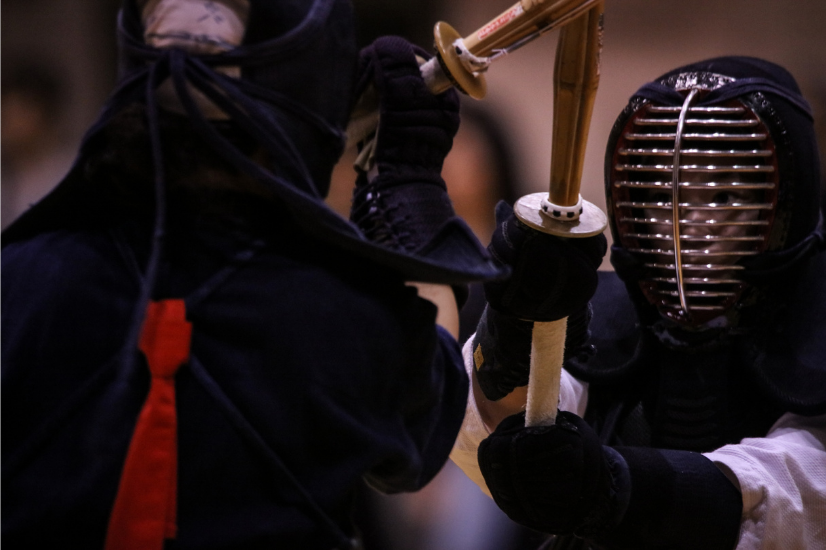
Tsuba-zeriai is when the distance between the two swords is close and the swords are clashing. The bamboo sword is held diagonally to the right, the grip is lowered, and the body is centered by applying force to the lower abdomen.
Points to note: 1. Lower your hands and straighten your waist. 2. Keep your neck straight. 3. Make sure the tsuba touch each other. 4. Don't put the shinai on your shoulders or body. 5. Don't strain yourself too much and don't let your guard down. 6. This determines whether you will use your technique aggressively or not.

3. Questions about technology systems
[Question 7] Explain "ipponuchi no waza" and write down the main techniques.
[Answer example]
A one-strike technique is when the tip or hand of your opponent's sword changes in response to your attack, creating an opening and allowing you to strike immediately.
Main techniques: 1. The tip of the sword goes down → Men, Tsuki 2. The tip of the sword goes up → Kote 3. The hand goes up → Do 4. The tip of the sword opens to the left → Men, Tsuki 5. The tip of the sword opens to the right → Kote, Men, Tsuki
[Question 8] Explain "Ni-san-dan Waza" and write down the main techniques.
[Answer example]
Second and third stage techniques are used when the opponent changes position after the first strike, creating an opening, or when you create an opening from a distance, breaking their stance and then striking the vulnerable part of the body.
Two-stage techniques: Kote → Men, Kote → Do, Men → Men, Men → Tai-tari Pull Men, etc.
Sandan-waza: Kote → Men → Do, Kote → Men → Men, Tsuki → Men → Do, etc.
[Question 9] Explain "Debana techniques" and list the main techniques.
[Answer example]
Debana techniques are techniques that involve capturing the initial movement of the opponent when they are about to attack or strike and then striking them.
Main techniques: Debana Men, Debana Kote, Debana Tsuki
[Question 10] Explain "sweeping techniques" and list the main techniques.
[Answer example]
A sweeping technique is when there is no opening in the opponent's stance, and you sweep or sweep down the opponent's bamboo sword to the right or left to disrupt their stance and then strike.
Main techniques: Swai Men, Swai Kote, Swai Do, Swai Tsuki
[Question 11] Explain "Hikiwaza" and list the main techniques.
[Answer example]
Pulling techniques involve disrupting the opponent's posture by slamming into them or clashing swords, capturing the change in their hand, and striking while pulling back.
Main techniques: Body attack → Hikimen, Body attack → Hikido, Body attack → Hikikote, Tsuba zeriai → Hikimen, Tsuba zeriai → Hikido, Tsuba zeriai → Hikikote
4. Questions about the principles of striking
[Question 12] Write down three things you should not do when striking.
[Answer example]
- Debana: When the opponent starts to perform the technique
- Blocked: When the opponent blocks your technique
- When the technique runs out: After consecutive strikes or when the technique runs out
[Question 13] Write about Zanshin in Kendo.
[Answer example]
Zanshin is the posture and mental state that allows you to remain alert even after striking and respond to your opponent's counterattack at any time. 1. After striking, take distance to prepare for a counterattack. 2. If you cannot take the appropriate distance, place the tip of your sword in the center of your opponent. 3. A strike without zanshin is not considered a valid strike.
[Question 14] Explain the three killing techniques of kendo.
[Answer example]
The Three Killing Techniques are ways to control your opponent.
Killing the Shinai: Pressing, sweeping, and rolling the sword to move the tip away from the center
Kill the technique: Attack first and don't give your opponent any time to launch a technique.
Kill the enemy's spirit: Overwhelm them with willpower, seize the opportunity, and crush their spirit.
[Question 15] Explain the metsuke technique in kendo.
[Answer example]
Metsuke is where you look. Basically, you pay attention to your whole body while looking into the other person's eyes.
"The eyes of a distant mountain" and "The eyes of autumn leaves": Look at the whole picture, focusing on the other person's eyes, as if looking at a distant mountain or autumn leaves.
"Two eyes of observation and insight": Miyamoto Musashi's teaching: "Strong eyes of observation, weak eyes of seeing." Emphasis on essential insight over superficial observation
[Question 16] Explain "good opportunity for striking."
[Answer example]
A good opportunity to strike is one where you can seize a gap or change in your opponent's stance or posture and turn it into an effective strike.
Main opportunities: ① Debana ② When the technique is exhausted ③ When the opponent settles in ④ Hikihana ⑤ When the opponent receives a block ⑥ When the opponent takes a deep breath
[Question 17] Explain "abort"
[Answer example]
To slash means to carefully observe and judge your opponent's actions, and as soon as you spot an opening, strike immediately, throwing away any thought of winning or losing and striking with all your might.
[Question 18] Please write down "Things to be careful of when practicing basic strikes and techniques."
[Answer example]
- With the right posture, players can boost their energy and attack each other.
- Seize the opportunity to strike from the appropriate distance and strike with a big move
- Make sure that each strike is an effective strike that is the unity of spirit, sword, and body.
- After striking, regain your composure and prepare for the next strike.

5. Questions about training methods
[Question 19] What is the difference between uchikomi training and kakeri training?
[Answer example]
Uchikomi training: A training method in which the person striking catches the strike point delivered by the motodachi and strikes, mastering basic striking techniques.
Kakari training: A training method in which the attacking side actively attacks and breaks down the motodachi to create opportunities for striking, and then uses all their willpower and physical strength to strike in a short amount of time.
[Question 20] What should the motodachi be careful of during practice?
[Answer example]
- Never let your guard down, always respond to your opponent with Aikido
- Strike from the appropriate distance
- Providing the right opportunity to strike and highlighting correct strikes
- Mix and match single attacks, combos, body slams, and pull attacks to create a variety of responses.
[Question 21] What should the motodachi be careful of during kakeri training?
[Answer example]
- It always becomes Aikido, and when the person's energy is waning, it gives rise to rage.
- Be aware of distance and opportunities to strike
- When you see a lack of balance or mismatch in the spirit, sword, and body, you need to find a creative way to deal with it.
- Remain calm and do not take any reckless actions.
[Question 22] What is the difference between "mitori" and "kendo"?
[Answer example]
Mitori-gakurei is observing kendo, but it is not just observing; it is valued as a part of kendo training. You observe from all angles the attire, posture, how to hold the bamboo sword, stance, how to use your feet, how to attack, how to execute techniques, spirit, and style, and compare it with your own kendo to use as material for study and reflection.

6. Questions about Japanese Kendo Kata
[Question 23] Describe the five stances used in Japanese kendo kata.
[Answer example]
- Middle stance: "Hito no Kamae" (Human stance) or "Usual stance". The foundation of all stances, ideal for offense and defense.
- Upper stance: "Heaven's stance" or "Fire's stance." An aggressive stance in which the sword is raised above the head.
- Lower stance: "Earth stance" or "Defense stance." Lower the tip of the sword to defend and then move to attack.
- Hasso no Kamae: "Kage no Kamae." Hold the sword on your right shoulder and watch your opponent's movements.
- Wakigamae: "Yang Kamae" (Yang stance). Hold the sword at your right side with your body half-turned.
[Question 24] What should you pay attention to in terms of footwork when performing Japanese kendo kata?
[Answer example]
- All footwork is done with "suriashi" (sliding feet), and "fumikomi-ashi" (stepping feet) is not used.
- When moving forward, the movement starts with the front foot, and when moving backward, the movement starts with the back foot.
- When striking, do not leave your back leg behind, but pull it towards your front leg

7. Questions about matches and referees
[Question 25] Explain the purpose and effect of the game.
[Answer example]
A match is a way to demonstrate the techniques, willpower, stamina, and attitude acquired through daily training, and through competition, to examine the content of training and explore the future direction of Kendo. The experience of facing challenges on one's own is valuable for character development, generating a strong desire to win and cultivating the spirit to endure intense training.
[Question 26] Explain the conditions for a valid strike.
[Answer example]
Conditions for a valid strike:
- Full of energy: Full of energy and the ability to overwhelm the opponent.
- Proper posture: The direction of the strike with the bamboo sword and the posture of the body are in harmony, and the dynamic posture is stable.
- Striking section: Striking with a bamboo sword
- Correct striking point: The striking direction and the cutting edge direction are aligned.
- Zanshin: Shows the mindset and posture after the strike
💡 A strike that combines the spirit, sword, and body. All conditions must be met.
[Question 27] Explain the three principles of refereeing (for 4th and 5th dan players)
[Answer example]
The three principles of judging are fairness, accuracy, and speed.
Fairness: Making fair judgments without bias or prejudice
Accurate: Correctly understand the conditions for a valid strike and make accurate judgments.
Speed: Don't miss the moment of the strike and make a quick decision
[Question 28] What are the prohibited acts in the Kendo match and refereeing rules? (For 4th and 5th dan)
[Answer example]
Prohibited acts include: 1) any act that endangers the opponent, 2) dropping the bamboo sword, 3) leaving the ring, 4) wasting time, 5) making unreasonable requests to stop, 6) insulting words or actions towards the opponent, etc. Penalties will be applied to prohibited acts, such as "one foul" or "two fouls = one point for the opponent."
8. Questions about teaching methods (for 4th and 5th dan)
[Question 29] What is the most important thing to remember when teaching beginners?
[Answer example]
When teaching beginners, the most important thing is to make them feel the joy of kendo and to motivate them to continue. We carefully teach the basics, such as correct etiquette, basic posture, and suburi, while taking safety into consideration. We also convey the philosophy and spirit of kendo and help them understand that it is a path to character development. It is important to cultivate not only technique, but also courtesy and gratitude.
[Question 30] What should you pay attention to when teaching junior kendo?
[Answer example]
When teaching kendo to young children, it is necessary to provide instruction that is appropriate to their stage of development and is not too demanding. 1. Safety must come first. 2. Repeat and carefully teach the basic movements. 3. Don't focus too much on winning or losing. 4. Be mindful of teaching that encourages growth through praise. 5. Emphasize character development through kendo. 6. Never use corporal punishment. 7. Value cooperation with parents.
[Question 31] What is the mindset of a motodachi?
[Answer example]
The motodachi plays an important role in nurturing his opponent. 1. Respond according to the opponent's skill. 2. Provide appropriate opportunities for striking. 3. Enhance correct striking. 4. Always remain alert and respond with aikido. 5. Make efforts to encourage the opponent's growth. As the one teaching, it is important for the motodachi to not take a position of superiority over the opponent, but to practice and grow together.
[Question 32] What should we keep in mind to promote and develop kendo?
[Answer example]
In order to spread and develop kendo, it is most important to set an example yourself. 1) Practice correct kendo and set an example. 2) Strive to train the next generation. 3) Hold kendo classes in local communities and schools. 4) Widely spread the appeal of kendo. 5) Create a safe teaching environment. 6) Properly inherit the principles and spirit of kendo. As instructors, 4th and 5th dan holders have a responsibility to contribute to the development of the kendo world as a whole.

9. Questions about the history and ancient styles of kendo (for 4th and 5th dan)
[Question 33] Describe the process by which modern kendo was established.
[Answer example]
Modern kendo began when various schools of swordsmanship in the Edo period developed the bamboo sword training methods. After the sword ban was imposed in the Meiji period, kendo continued through kendo performances and adoption by the police. The Dai Nippon Butokukai (established in 1895) contributed to the unification and development of kendo, and the All Japan Kendo Federation was founded in 1952, establishing the foundations of modern kendo. In 1975, the "Philosophy of Kendo" was established, clarifying its character as a path for character development.
[Question 34] What is the purpose of establishing the Japanese Kendo Kata?
[Answer example]
Japanese Kendo Kata was established in 1912 (the first year of the Taisho era). Its objectives are: 1) to integrate and pass on the outstanding techniques of each school; 2) to learn the correct principles of swordsmanship, body control, and breathing; 3) to cultivate dignity and elegance in the tense atmosphere of using a real sword; and 4) to understand the principles that form the basis of shinai kendo. Currently, there are 10 kata in total, including 7 kata for tachi and 3 kata for kodachi.
[Question 35] Explain the concept of "shu-ha-ri" in kendo.
[Answer example]
"Shu-ha-ri" is a term that indicates the stages of kendo training.
Shu: The stage where you faithfully follow the teacher's teachings and thoroughly master the basics
Ha: The stage where you develop your technique by adding your own ingenuity based on the basics
Ri: The stage where you break away from kata and reach your own unique state. Through this process, you grow from form to essence, from imitation to creation. Fourth and fifth dan are the transitional stages from "ha" to "ri," and are important times for establishing your own kendo.

10. Key points for exam preparation by rank
📝 Required level for each rank
| Dan rank | Required content |
|---|---|
| two tiers | Understanding the fundamental principles of Kendo. Mastering basic techniques. |
| 3rd tier | Understanding the principles of Kendo. Ability to apply techniques. Understanding training methods. |
| Four steps | A leader's perspective. Understanding refereeing methods. A deeper kendo philosophy. |
| 5th dan | Understanding the history and culture of Kendo. Practical teaching skills. Embodying character development. |
✅ Checklist for success
- ✓ Check the exam format for your region (on the day or submit in advance)
- ✓Reread and understand the 35 questions in this article
- ✓ Memorize important keywords (Kendo principles, Ki-Ken-Tai-Ittai, etc.)
- ✓Check the questions for the first dan level
- ✓ For 4th and 5th dan players, be aware of answers from a teacher's perspective
- ✓ Deepen your understanding by linking practice and theory
🎯 What to know on the day of the audition
| item | point |
|---|---|
| Time Allocation | Plan to answer all questions and leave time to review |
| The neatness of the writing | Write in legible handwriting. Messy handwriting leaves a bad impression. |
| Writing ideas | Keep it concise and to the point. Include important keywords. |
| Depth according to rank | Fourth and fifth dan levels include the perspective of a leader |

Summary: Three steps to successful review
1. Understanding
Instead of memorizing it, try to understand why it is so and what it means. If you understand it, you can explain it correctly even if the wording is slightly different.
2. Connecting with practice
It is important not only to study theory, but also to be aware of it in your daily practice and understand it with your body. What you learned in the written exam will also come in handy in the practical examination.
3. Deep understanding according to rank
Fourth and fifth dans require a leader's perspective. Deepen your understanding of not only your own kendo, but also your role as a teacher and a propagator of kendo.
All of us at BUSHIZO sincerely hope that you all pass your promotion examinations.
Are you prepared for the review?
BUSHIZO stocks all the necessary kendo equipment for the judging.
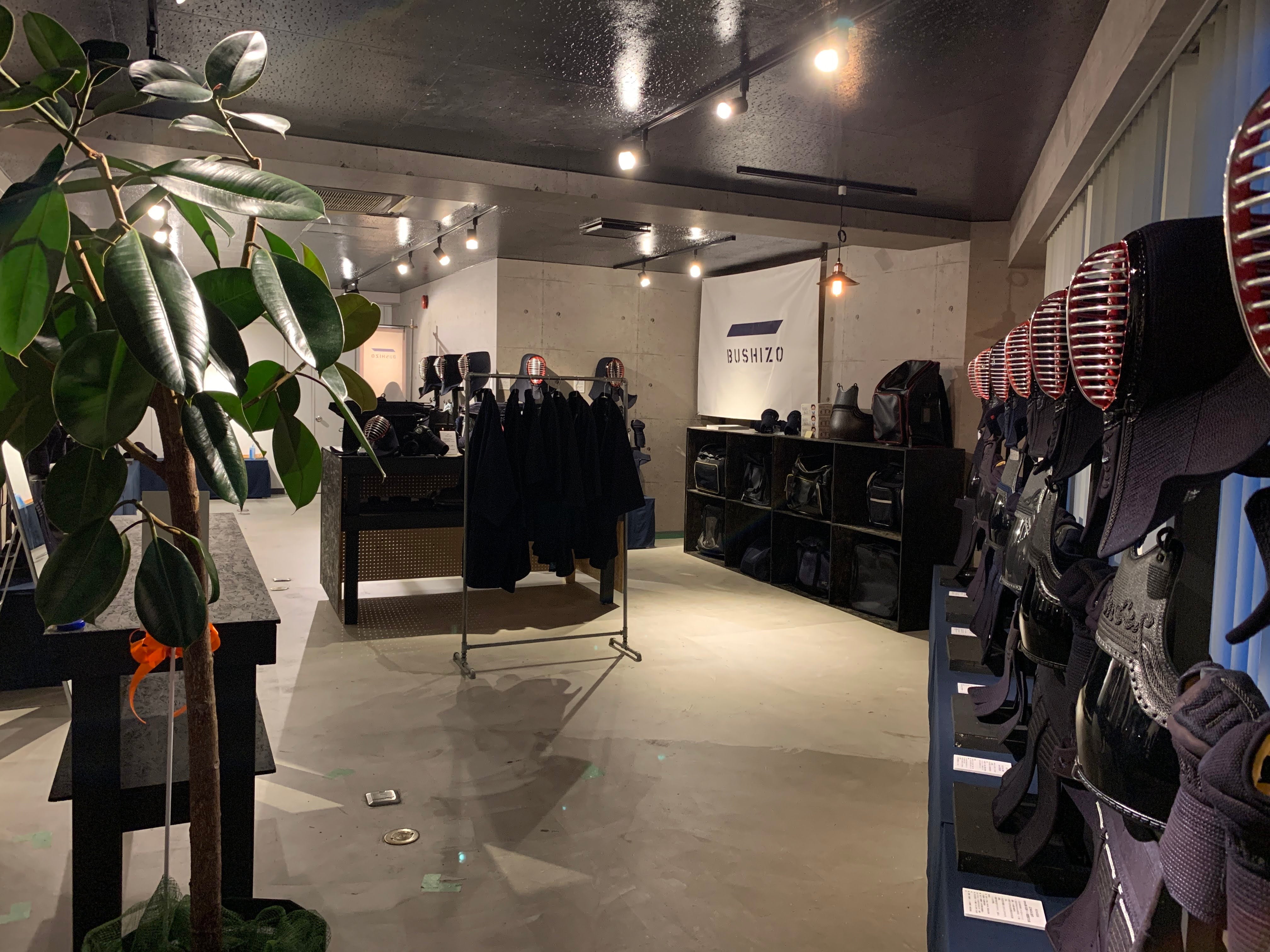
You can see the products in person at our online shop, as well as at our showrooms in Shibuya and Sendai.
If you have any questions, please feel free to contact us.
Our experienced staff will provide you with careful support, from exam preparation to choosing protective gear.
Related articles
First Dan Examination Questions and Sample Answers
For those who are about to take the 1st Dan examination, please click here. 1st Dan questions may also be asked in the higher dan levels.
Judging equipment set
We have a wide variety of protective gear sets available that are suitable for promotion examinations.
Judge's uniform and hakama
Appearance is also important during the examination, so please wear a neat uniform and hakama.
About the Author
BUSHIZO Shibuya Showroom Manager Kudo
I am the manager of the Shibuya showroom of the kendo specialty store BUSHIZO. Every day, I help many kendo practitioners with choosing protective gear and giving advice on training, and I also receive many inquiries about promotion examinations.
The examinations for 2nd dan to 5th dan require different levels of understanding. For 4th dan and 5th dan in particular, the perspective of an instructor is emphasized. We hope this article will be helpful in your examination preparations.
BUSHIZO Shibuya Showroom
📍Shibuya TY Building 7F, 1-27-10 Higashi, Shibuya-ku, Tokyo
・10 minutes walk from the East Exit (C2 Exit) of Shibuya Station on the JR Line and Tokyu Toyoko Line
・12 minutes walk from the west exit of Ebisu Station on the JR and Hibiya lines
・10 minutes walk from Daikanyama Station on the Tokyu Toyoko Line
⏰ Business hours: Saturday and Sunday: "No reservation required" Free walk-in service 11:00-18:00
Mondays, Thursdays, and Fridays: Advance reservations required (at least one day in advance)
(Closed on Tuesdays and Wednesdays)
🔗More details here