Armor Set
 面
面
 Kote
Kote
 胴
胴
 垂
垂
 Dogi
Dogi
 袴
袴
 bamboo sword
 wooden sword
 armor bag
 Bamboo sword bag
 Small items
 gift
gift
 Books/DVDs
 cleaning
 Armor repair
 Kendo mask
 Iaido
Iaido
 Japanese swords and art swords
 Mitsuboshi
 Tozando
 Matsukan
 Japan Kendo Equipment Factory
 West Japan Martial Arts Equipment
 Glory Martial Arts Equipment
 Nobutake
 Busougi
 Hakataya
 Shokodo
 Flag Ito
 メールお問い合わせ
 LINEお問い合わせ


 Value Set
 Armor Set
 面
面
 Kote
Kote
 胴
胴
 垂
垂
 Dogi
Dogi
 袴
袴
 bamboo sword
 wooden sword
 armor bag
 Bamboo sword bag
 Small items
 gift
gift
 Books/DVDs
 cleaning
 Armor repair
 Kendo mask
 Outlet
 Iaido
Iaido
 Japanese swords and art swords
 Mitsuboshi
 Tozando
 Matsukan
 Japan Kendo Equipment Factory
 West Japan Martial Arts Equipment
 Glory Martial Arts Equipment
 Nobutake
 Taiyo Industry
 Busougi
 Hakataya
 Shokodo
 Flag Ito
 Interviews Useful Articles
 Size Measurement Guide
 User Guide
 GLOBAL SHIPPING GUIDANCE
 Frequently Asked Questions Q&A
 Company Profile

At first glance, all bamboo swords look the same, but in fact there are many differences between them, such as length, center of gravity, handle shape, and material .
If you use a bamboo sword that does not fit you, it will be difficult to swing and your striking will be less stable, which will have a major impact on your performance.
In this article, we will explain the key points to consider when choosing the perfect bamboo sword for you , in an easy-to-understand manner even for beginners.
table of contents
-
table of contents
-
About the Shinai
-
Names of the various parts of the bamboo sword
-
Official match regulations
-
Types of bamboo swords
-
By age and gender
-
By center of gravity
-
By pattern type
-
By handle length
-
By pattern thickness
-
By material
-
-
summary
-
What is a bamboo sword?
The shinai (bamboo sword) is called a "yotsuwari shinai" and is made by joining four pieces of bamboo together with a leather part .
Originally, bamboo was the mainstream material, but recently carbon fiber shinai have also become popular, and are more durable and easier to maintain.

Structural parts

① Handle leather ② Tip leather ③ Tip rubber ④ Knot ⑤ String puller ⑥ String

Names and Functions of Each Part of the Shinai
A shinai is made up of many parts. It is important to understand the role of each part.
-
Tsuka : The part of the shinai that you hold. The white leather part is called "tsuka leather."
-
Tsukashira : The tip of the handle.
-
Tsuba : The part that protects the fist. It can be made of plastic or leather.
-
Tsuba-dome : A part used to secure the tsuba. Generally made of rubber.
-
String : The string that is threaded through the back of the shinai. Tetoron is the most flexible and popular.
-
Nakayui : A leather string that ties the string in halfway. It maintains the strength of the shinai.
-
Monouchi : The central part of the strike. It is the area from the tip of the sword to the middle knot.
-
Sakigawa : The leather that covers the tip of the shinai. Deerskin is the most common.
-
Kensaki : The tip of the bamboo sword. This is an important part to ensure safety.
Regulations for Shinai in Official Matches
The All Japan Kendo Federation's "Kendo Match and Refereeing Rules" specify in detail the length, weight, and thickness of the bamboo sword.
Bamboo swords that do not meet the standards may be rejected during the weigh-in process for a match.
(The main criteria are listed below.)
| classification | length | Weight (male) | Weight (female) |
|---|---|---|---|
| junior high school students | 3 shaku 7 sun or less | Over 440g | Over 400g |
| high school student | 3 shaku 8 sun or less | 480g or more | Over 420g |
| University students/General | 3 shaku 9 sun or less | 510g or more | Over 440g |

Shinai that do not meet the standards set out above will be rejected during the weighing process before the match. The length is the total length (cm) of the finished product including any attachments, and the weight is the weight (g) of the finished product excluding the tsuba (guard).
How to choose the right type and size of bamboo sword

The size of a bamboo sword varies depending on the player's build, age, and level of competition.
Elementary school student
Use a length of approximately 3 shaku 0 sun to 3 shaku 6 sun depending on your height.
Generally speaking, the length should be the same as the height from your feet to the midpoint between your armpit and shoulder.

junior high school students
Bamboo swords measuring 3 shaku 7 sun or less are the norm.
The weight and thickness standards differ between men and women, so be sure to check the specifications before purchasing a match helmet.
high school student
Use a bamboo sword that is 3 shaku 8 sun or less.
They are heavier than those for junior high school students and the thickness standards are slightly higher.
University students/General
The standard is 3 shaku 9 sun or less.
Once you have become accustomed to using the Shinai, choose the center of gravity and handle shape that suits your style of swordsmanship.
Characteristics of Shinai due to differences in center of gravity
Shinai are divided into three types depending on the position of the center of gravity.
■ General type (popular type)
This is the most standard type of bamboo sword, with the center of gravity located near the center.
It is highly durable and ideal for beginners and practice.
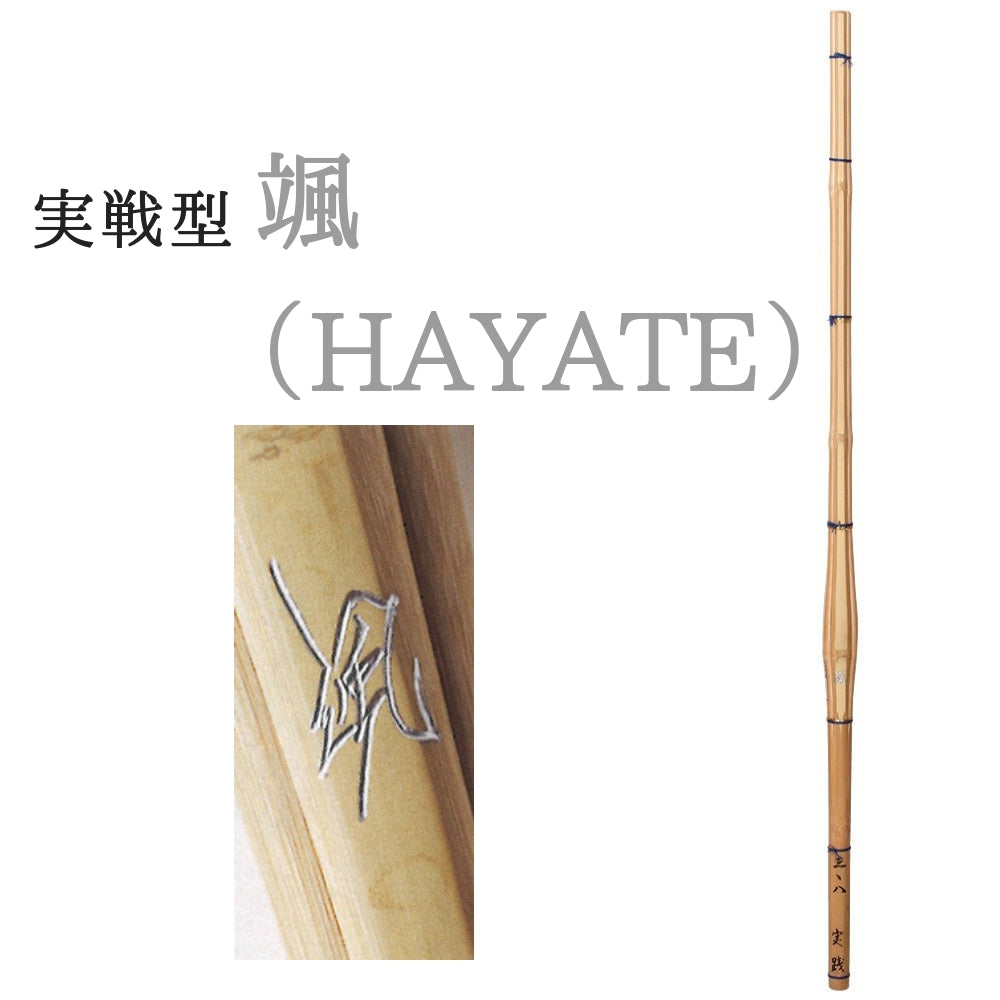
■ Body type/Combat type
A bamboo sword with the center of gravity closer to the hand.
It feels light, making it easy to perform combos and pull moves.
The combat model is lighter and more suitable for matches, but is less durable.
■ Antique sword type
A bamboo sword with the center of gravity closer to the tip.
The swing feels heavy, but the impact is powerful and stable.
Differences in the shape of the handle
There are several different shapes for the handle of the shinai.
-
Round type : Most common. Easy to handle and highly versatile.
-
Oval : An oval shape similar to a bokuto. It allows you to naturally grip it correctly, making it recommended for beginners.
-
Regular octagonal type : The octagonal cross section makes it easy to operate, but it is rare and expensive.
-
Octagonal oval : A hybrid of an octagon and an oval. It makes it easier to be aware of the cutting edge, and is suitable for advanced users.
Choosing the handle length
Hold the shinai upright by the base of the tsuba in your right hand, and when you bend your elbow, the length of the tsuba should be such that the handle is at your elbow .
However, the ideal length varies depending on the school and style of swordsmanship.
-
Short handle type : Suitable for long-distance men and thrusting techniques.
-
Long handle type : Highly maneuverable at close range, suitable for small hand and pulling techniques.
Differences in pattern thickness
The thickness also affects how easy it is to use the bamboo sword.
-
Standard : Diameter approximately 25mm. This thickness is recommended for starters.
-
Thin : For women and people with small hands. The tip feels a little heavy.
-
Thick : For people with large hands and strong grip. Makes swinging feel lighter.
Differences depending on the material
There are six main types of bamboo sword materials, each with its own characteristics.
| material | Features |
|---|---|
| Keichiku | The most common. Hard and durable, but prone to splinters. |
| Madake (Madake bamboo) | The fibers are dense, soft, and resistant to cracking. Expensive and rare. |
| green bamboo | Dry naturally in the shade. Sticky and not easily broken. |
| Bamboo and green bamboo | The bamboo is dried naturally over a long period of time. Popular among advanced craftsmen. |
| Smoked bamboo | Smoked to enhance durability, it has a unique color and aroma. |
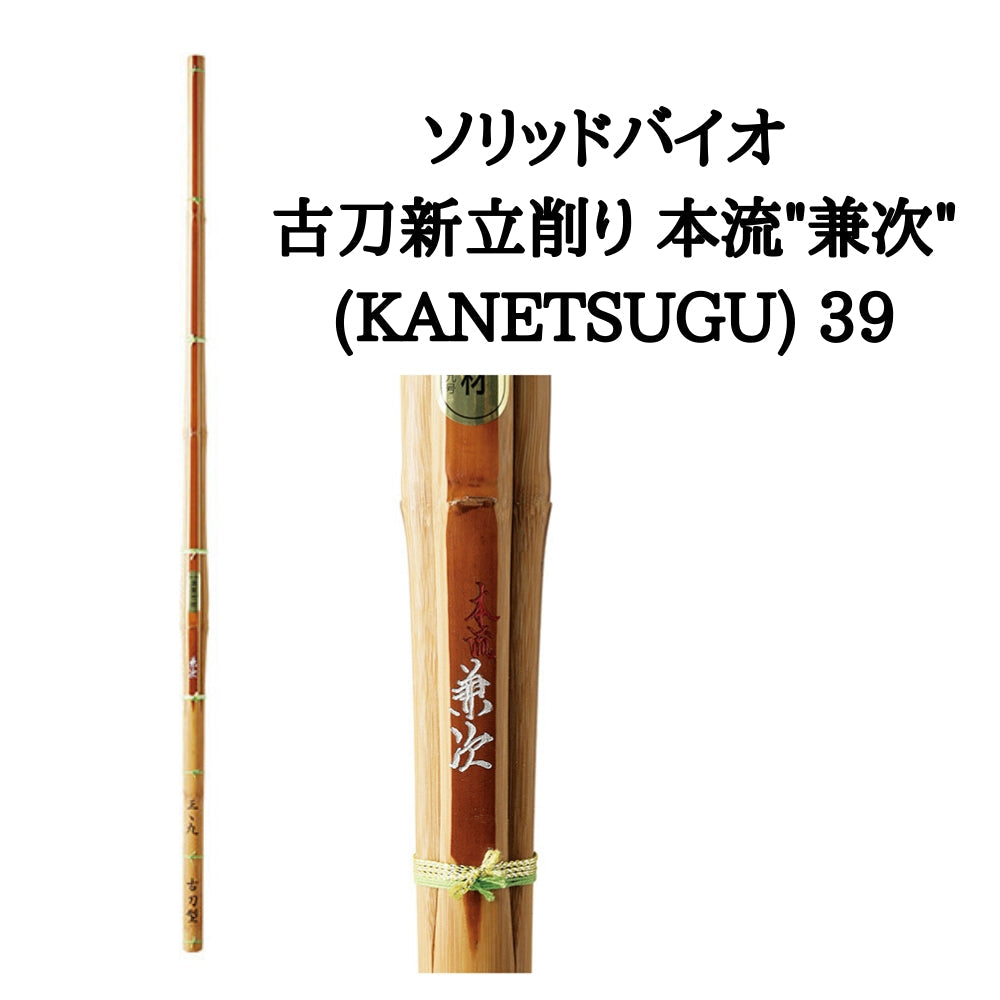
| Solid Bio | Heat treatment improves elasticity and durability, and is also highly safe. |
Summary | Find the Shinai that's right for you
The characteristics of a bamboo sword vary depending on various factors such as its shape, center of gravity, and material.
Once you find the one that's right for you, you'll be able to use it naturally, as if it were an extension of your arm.
First, clarify your physique and purpose (for practice or competition),
Let's find one that makes you think, "This is it!"