[2026 Edition] Complete Guide to Measuring and Choosing Kendo Armor | Tips for Measuring Correctly
If you buy in-store, a professional will measure your size for you, but if you buy online, you will need to measure yourself accurately.
Armor that doesn't fit properly not only makes it difficult to move and reduces safety, but also makes you look unattractive.
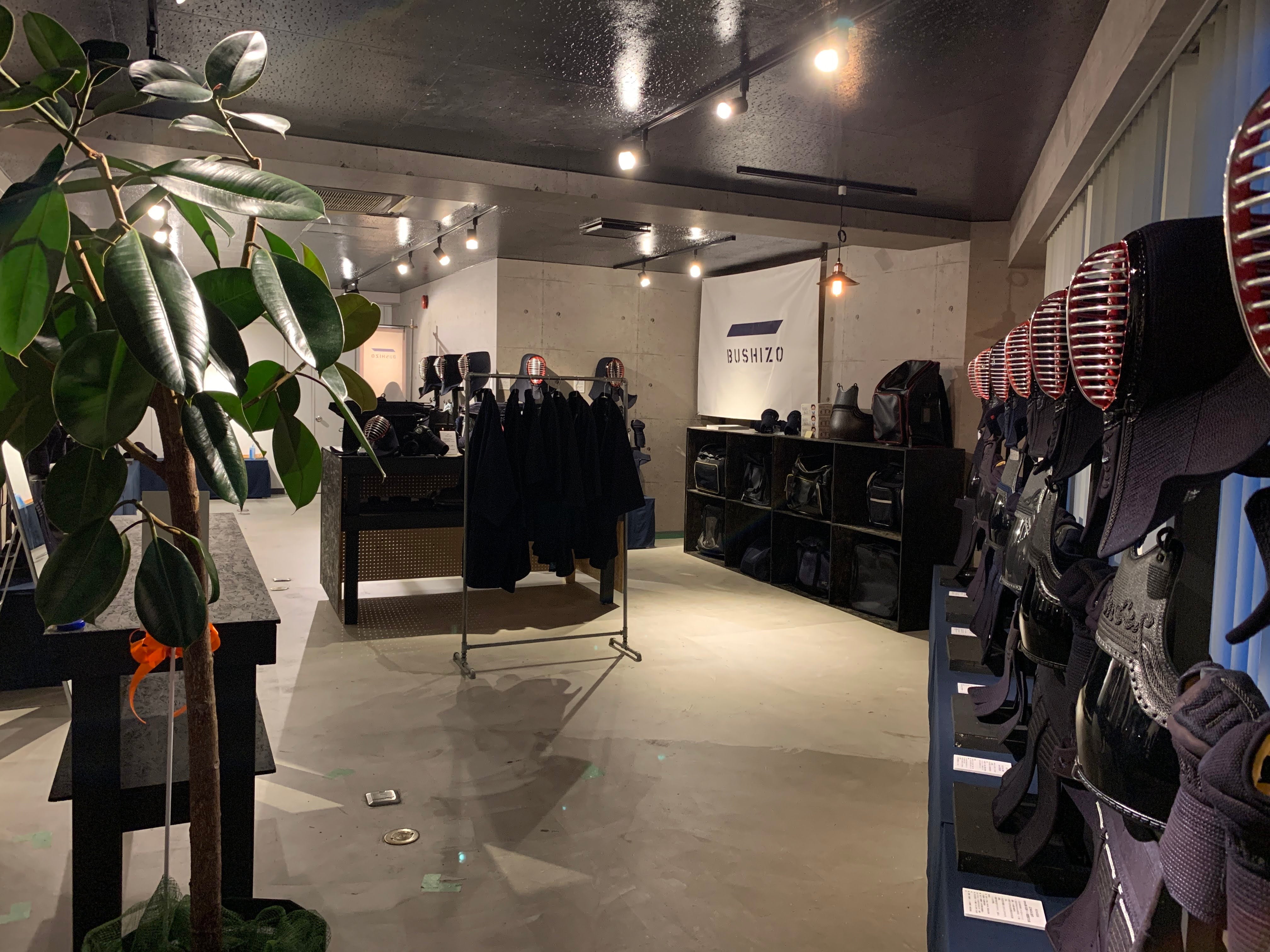
In this article, the manager of the BUSHIZO Shibuya showroom will provide a thorough explanation based on his more than 20 years of experience, from how to accurately measure the men, kote, do and tare to tips on how to choose the right one.
What you'll learn in this article
- How to measure the correct size of kendo armor (men, kote, do, tare)
- Precautions to take when measuring and common mistakes
- Tips for choosing based on age and build
- Frequently asked questions about armor sizes
- Size adjustment method and aftercare
Basics of measuring kendo armor size | What you need to know before measuring
Accuracy is crucial when measuring the size of kendo armor.
Even an error of just 1cm can have a significant impact on comfort and safety.
First, let's cover some basic principles of measurement that apply to all protective gear.
Tools required for measurement
What you need
- Sewing tape measure (fabric) - Flexible and adaptable to your body for accurate measurements
- ruler - Used to measure the height from the chin to the pupil of the face
- Measurement assistant - Essential for measuring areas that are difficult to measure alone (especially the head)
- Recording notes - Record your measurements immediately so you don't forget them
[Items that should never be used]
- ❌ Metal tape measure - It is hard and doesn't fit well to the body, resulting in a large margin of error
- ❌ String or ribbon - stretchy and difficult to measure accurately
- ❌ Tape measure (construction grade) - Coarse markings make it difficult to measure subtle differences in size
Important points to note when measuring
-
Keep the tape measure at a consistent tension
Measure with just the right amount of tension, not too tight or too loose. -
Always check that the measurement line does not shift
Double-check with your assistant to make sure the tape measure is not tilted or slips off along the way. -
Measure in a natural posture
The measurement should be taken in a relaxed state, without straining or slouching. -
Measure multiple times and take the average
Don't decide based on one measurement, measure two or three times and use the most accurate value.
How to measure the size of a noodle | Three measurement points
The size of the men requires the most complex measurements of all the kendo equipment.
Because head shape varies greatly from person to person, it is important to measure all three measurements (dimensions A, B, and C) accurately.
A dimension: The circumference from the top of the head to the tip of the chin (vertical length)

*In this case, 68cm
-
Extend the tape measure to about 70-80cm and place it in front of the subject's left ear.
-
Left cheek → chin → right cheek → top of the head
The person measuring should hold the tape measure with their fingers at the tip of their chin to prevent it from slipping.
-
Return to the area in front of the left ear
Read the 0cm position on the tape measure.
[Approximate size of A dimension]
| Target | A size (cm) | サイズ区分 | Number of mengane |
|---|---|---|---|
| Children (Kindergarten to early elementary school) | 57~60 | for children | 12 |
| Boys (middle to upper grades of elementary school) | 61-63 (64) | For boys | 13 |
| Junior and senior high school students and adult women (small heads) | 64~66 | M(中) | 14 |
| Junior and senior high school students and adult men (standard) | 67~72 | L(大) | 14 |
| Adult male (large head) | 73 and over | LL (extra large) | 14 |
B dimension: circumference of headband position (horizontal length)
*In this case, 57cm
-
Check the measurement position
The reference position is slightly above the ear, around the middle of the forehead. -
Forehead → temporal region → back of head, horizontally around the head
Keep the tape measure horizontal so that it does not move up or down. For the back of the head, make sure it passes through the most protruding part. -
Reading the number on your forehead
The number where the tape measure intersects is the measured value of dimension B.
Calculation formula for B dimension and points to note
B size = A size - approx. 9-12cm
This is a general guideline. For an adult male, if dimension A is 69cm, dimension B will be approximately 58cm.
note:If the B dimension is significantly different from this guideline, it may be that your head has an unusual shape (such as a protruding back or sides).
In that case, please contact the BUSHIZO Shibuya showroom before purchasing. Custom orders are also available.
C dimension: Height from chin to pupil
*In this case, it is about 12cm
-
Keep your head straight and rest your chin on the table
Adjust your posture so that your face is level. -
Place the ruler perpendicular to the table surface
Align the ruler with the height of the outer corner of your eye. -
Read the vertical distance from the table surface to the pupil
For adult men, the typical size is about 11 to 13 cm.
[Measurement tips]
A ruler is more accurate than a cloth tape measure for measuring dimension C. Check in a mirror to make sure your face is level.
Points to check when selecting a surface
After selecting the surface based on the measurements, actually wear it and check the following:
- Are the forehead and the bottom of the inner ring in contact at the same time? - If only one of them fits, the size is incorrect.
- Is your chin resting firmly under the inner ring? - If it is floating, the surface is too small
- Does it wobble when you move it up and down? - If it wobbles, the surface is too large
- Is the back of your head protruding from the futon? - If it sticks out too much, it's dangerous.
- Is there sufficient visibility? - Check that the faceplate is in the correct position
How to adjust the size
If the surface is a little larger,Surface cushion (surface adjustment futon)You can adjust the size by using
The face cushions come in two types: thin (approximately 1cm) and thick (approximately 2cm), and can be easily attached by simply placing them between the face cushion at the top of your head and the inner ring.
It also has the effect of cushioning the impact on the face, so it is especially recommended for growing children.
How to measure your hand size | Two measurement points
Because there is a large amount of individual variation in the shape of the hand, it is important to accurately measure the two measurements (D and E dimensions) of the kote.
In particular, choose the size carefully as it will directly affect the way you grip the bamboo sword.
D dimension: Length from tip of middle finger to wrist crease
*In this case, it is difficult to see due to the angle, but it is 18cm
-
Extend your arms straight out
Relax and let it be natural. -
Measure from the top crease of your wrist to the tip of your middle finger
Place the tape measure along the palm of your hand to get an accurate measurement.
E dimension: Around the base of the four fingers excluding the thumb
*In this case, 22cm
-
Start measuring from the base of the inner thumb
Measure around the base of your four fingers, not including your thumb. -
Go around the most protruding part of your hand
Wrap the tape measure horizontally around your palm and adjust it so that you can measure the maximum value. -
Read the number with the base of your thumb
Always measure using only four fingers, as including the thumb will result in an error.
[Guideline for hand size]
| Small hand size | D dimension (cm) | E size (cm) | Target target |
|---|---|---|---|
| SS | 12~14 | ~ 16 | Preschool to early elementary school |
| S | 14~16 | 16~18 | Upper elementary school to junior high school girls |
| M | 16~18 | 17~20 | Junior and senior high school girls and adult women |
| L | 18~20 | 19~22 | Junior and senior high school boys and adult men (standard) |
| LL | 20~22 | 21~24 | Adult male (large hands) |
| XL | 22~ | 24~ | Adult male (extra large) |
Points to check when choosing a glove
Things to check when actually wearing it
- Can you make a rock-paper-scissors smoothly? - It is important to be able to open and close your hands freely.
- Is it easy to grip the bamboo sword? - Try holding the bamboo sword and check if it feels comfortable.
- Does your wrist move freely? - Check whether your wrist rotation is free
- Is there enough room for your fingertips? - Ideally, there should be enough room for your fingers to rest without hitting anything.
- Is there any restriction in thumb movement? - Make sure your thumb moves freely
[Common mistakes]
- ❌ Kote that is too tight → Poor circulation and numbness in the hands after long periods of training
- ❌ Kote that is too loose → The shinai is not stable and accurate strikes cannot be made
- ❌ Too much finger space → Fine control is not possible
Since the size of the gloves varies greatly from person to person, if the actual fit differs from the guideline in the table, please feel free to contact the BUSHIZO Shibuya showroom.
How to measure your waist size | Choose by height, weight, and waist
The torso size is determined based on three pieces of information: height, weight, and waist.
If you already have a torso you are using, measuring its height and back width will help you choose a more accurate size.
Information needed to measure your waist size
- Height (cm) - Accurate height measurement
- Weight (kg) - Measure your current weight
- Waist size (cm) - Measure the circumference around your belly button
- If there is an existing trunk: trunk height and back width - Measured as a reference value
[Torso size guide]
| Size | Height (cm) | Waist (cm) | Target target |
|---|---|---|---|
| SS | 120~135 | 50~60 | Lower elementary school |
| S | 135~155 | 55~65 | Elementary school upper grades |
| M | 150 to 165 | 70 ~ | Junior high school/high school girls/adult women |
| L | 160~180 | 80 ~ | High school boys and adult men (standard) |
| LL | 175~185 | 90~ | Adult male (large build) |
| XL | 185 and over | 100 and over | Adult male (extra large) |
*The above is a guideline. The optimal size may vary depending on your body type.
Points to check when choosing a body
Ideal condition when worn
There must be enough space on both sides to fit half a fist (approximately 5-7cm)
This is the most important point. Because of this gap:
- When you raise your arms, your torso does not touch your chest.
- The swing down motion can be done smoothly
- Breathing becomes easier
- Less fatigue even during long practice sessions
[Examples of poor size selection]
- ❌ Too large a torso → When you extend your arms, your chest gets in the way, making it difficult to swing down. Your defensive power is also reduced.
- ❌ Too small torso → There is a gap between the chest and torso, which makes it difficult to absorb the impact of a strike. This reduces safety.
How to check if the torso is attached
-
Put on the torso and assume the stance
Check the posture in the same way as in actual practice. -
Raise your arms and check for tightness in your chest
Make sure your chest is not compressed when you swing back. -
Perform a downward swing motion to check ease of movement
Try moving around to make sure the torso doesn't restrict movement. -
Try to adopt a sitting posture
Make sure your torso is not compressing your body when you sit.
How to measure your waist size | Choose by height and waist
Like the torso, the tare is selected based on height, weight, and waist size.
The tare directly affects stance and footwork, so it is important to strike a balance between ease of movement and appearance.
Information needed to measure the size of the tape
- Height (cm) - Accurate height measurement
- Weight (kg) - Measure your current weight
- Waist size (cm) - Measure around the top of your hip bones (just below your belly button)
[Tare size guide]
| Size | Height (cm) | Waist (cm) | Odare length (cm) |
|---|---|---|---|
| SS | 120~135 | 50~60 | Approx. 25 to 28 hrs |
| S | 135~155 | 55~65 | Approx. 28 to 31 hrs |
| M | 150 to 165 | 70 ~ | Approx. 31 to 34 hrs |
| L | 160~180 | 80 ~ | Approx. 34 to 37 hrs |
| LL | 175~185 | 90 ~ | Approx. 37 to 40 hrs |
Points to check when choosing a tare
Ideal hanging position
- The side of the Oodare comes above the hip bones - This is the most important criterion
- The lining is not visible from the front - If you can see it, it's too big
- A length that doesn't hinder footwork - It is important to be able to walk and push off smoothly.
- It's in a natural position when you take aim. - Make sure it doesn't move or float unnaturally.
How to check if the tare is attached
-
Put on the tare and assume the kamae posture
Check to see if there is any discomfort in your actual stance. -
Check your footwork and ease of movement
Perform sliding and forward steps to check that the hanging part does not hinder movement. -
Check the position of the side otare in the mirror
Check in the mirror to make sure it is positioned correctly over your hip bones.
How to choose protective gear for children | Selecting sizes that take growth into consideration
When choosing protective gear for growing children, many parents think, "I want to buy something bigger so that they can use it for a long time."
Armor that doesn't fit properly makes it difficult to move and reduces safety.
Choosing the right size for your child is the quickest way to improve and the basis for safe practice.
Basic principles for choosing protective gear for children
Important points to keep in mind
- Choose the size that best suits your current body type - Avoid large purchases because you can use them again next year.
- Safety comes first - Poor mobility hinders skill acquisition and increases the risk of injury
- Check the size regularly - Check the size about once every six months to make sure it's the right size.
Only the face is adjustable
Regarding the surface,Surface cushion (surface adjustment futon)By using
Can be adjusted by about one size.
The benefits of a face cushion include:
- The size of the surface can be adjusted by 1 to 2 cm.
- It has the effect of cushioning the impact on the surface
- It can be easily attached by simply placing it between the head cushion and the inner ring.
- Choose from two types: thin (approx. 1 cm) and thick (approx. 2 cm)
[Advice for growing children]
Children grow quickly from the early to middle grades of elementary school, so you may need to replace your child's clothes about once a year.
However, growth slows after middle school, so if you choose the right size, it can often be used for 2 to 3 years.
At the BUSHIZO Shibuya showroom, we also offer advice on choosing the right size to suit your child's growth.
Please feel free to contact us for more information.
How to choose protective gear for women | Selecting sizes that take into account differences in physique
Since general kendo equipment is unisex, women of the same height but different builds may
You need to choose your size more carefully.
Points that women should pay attention to when choosing protective gear
Signs that the size is not right
- ❌ The mask is loose and slips down during practice
- ❌ The kote is too big and it is difficult to grip the shinai
- ❌ I have a large chest and cannot stretch my arms, or I find it difficult to bow.
- ❌ The hem is too long, making it difficult to put your feet out
If you have these symptoms, your protective gear doesn't fit your body properly.
For women, choosing a size smaller than the standard size for men is often easier for movement.
Recommended size selection for women
- Consider not only height but also shoulder width and chest circumference - Women tend to have narrower shoulders than men.
- The size chart for ready-made products is for reference only. - It's important to actually wear it and check the ease of movement.
- Choose a smaller size to prioritize fit - Ease of movement and safety
- Consider a women's model - Some manufacturers also sell protective gear specifically for women.
[Advice from BUSHIZO]
When choosing protective gear for women, there are large individual differences in physique, so we recommend trying it on in a physical store if possible.
If you are purchasing online, please provide your detailed measurements.
Our expert staff will advise you on the best size.
At the BUSHIZO Shibuya showroom, we also offer size consultations for female customers.
Frequently Asked Questions (FAQ) about Kendo Armor Sizes

Q1. How often should I check my armor size?
Children in their growing years: Once every six months
Elementary school students in particular grow quickly, so be sure to check their size every six months.
Junior and senior high school students: Once a year
Growth will slow down, but you should still check it once a year.
Adults: Once every 2-3 years or when body shape changes
If your weight has changed by more than 5kg, check your size.
Q2. If I purchase from the online shop, can I exchange it if the size doesn't fit?
At BUSHIZO, you can exchange or return unused and unopened products within 7 days of receiving the product.
However, if the exchange is due to customer convenience, the shipping costs will be borne by the customer.
If you are unsure about sizing, we recommend contacting us before purchasing.
For more information, please see each product page orUser Guide.
Q3. If my measurements are on the borderline of the size chart, which size should I choose?
General recommendations:
Men and Kote: slightly tight (small)
Since a snug fit is important, we recommend choosing a slightly tight fit.
However, for children who are still growing, the mask can be adjusted with the mask cushion, so it is okay to use one size larger.
Body and tail: slightly large
Choose a size that is slightly loose, taking into consideration ease of movement and breathing.
If you have any questions, please contact the BUSHIZO Shibuya showroom.
Q4. I don't know the size of my existing armor. How can I measure it?
surface:Dimension A is measured from the top of the head to the tip of the chin, and dimension B is measured around the headband.
Kote:From the tip of the middle finger to the crease of the wrist (D dimension) and around the base of the four fingers (E dimension)
Torso:Measure the height of the torso (from the top to the bottom of the torso base) and the width at the back
Drop:Measure the length of the obi (from the waist to the bottom of the obi)
Please refer to the measurement section for each piece of equipment for detailed measurement instructions.
Q5. If the size is a little bit off, is there a way to adjust it myself?
surface:The surface can be adjusted by 1 to 2 cm by using a surface cushion (surface adjustment futon).
Kote:The glove-shaped inner lining allows for slight size adjustment.
Do and Tate:Although it is possible to adjust the fit slightly by tying the laces, we generally recommend replacing the shoes.
If significant size adjustments are required, we recommend purchasing new protective gear of the appropriate size for safety reasons.
Q6. My hands are different sizes. What should I do about the size of the glove?
If the size is different between your dominant and non-dominant hands,Purchase different sizes of gloves for each handI recommend that.
At BUSHIZO, we also sell left and right kote in different sizes.
When purchasing, please write "Right hand: L, Left hand: M" in the comments section.
Alternatively, please contact the BUSHIZO Shibuya showroom for more information.
Q7. Can the measurement be performed by one person?
Possible for one person:
・D and E dimensions of the hand
・Waist size (for torso and drape)
Requires 2 people:
- A and B dimensions of the surface (A dimension in particular cannot be measured accurately by one person)
・C dimension of the surface (it will be more accurate if you have an assistant)
We recommend that two people take the measurement if possible.
Accurate measurements are the first step to choosing the right size.
Summary: Choosing the right size of protective gear is the basis for safety and improvement
Important points for measuring and choosing kendo armor size
[Measurement basics]
- Always use a cloth sewing tape measure
- Two people measure the temperature multiple times and take the average value.
- Keep the tape measure at a consistent tension
- Record the measurements immediately
[How to select a face]
- The most important dimension is A (the circumference from the top of the head to the tip of the chin)
- The standard for dimension B is dimension A minus 10cm.
- Make sure that the forehead and the bottom of the inner ring are in contact at the same time.
- If it is a little large, you can adjust it with the surface cushion.
[How to choose a glove]
- Measure the D dimension (length of the palm) and the E dimension (palm excluding the thumb)
- Make sure you can do the rock-paper-scissors smoothly
- Choose a size that is easy to grip
- Since there are large individual differences, we place importance on the actual fit.
[How to choose a body and a tare]
- Select based on height, weight, and waist size
- The ideal torso is to have a gap of half a fist on both sides.
- Make sure that the side of the tare is placed on top of the hip bone.
- It is important that the length does not hinder footwork.
[Points by age and gender]
- Children: Choose a size that fits their current body type (too big is dangerous)
- Women: Choose a smaller size than men for easier movement.
- Adults: Check size regularly as your body changes
Conclusion: Properly sized bogu will ensure a safe and fulfilling training experience
Choosing the right size for your kendo gear is an important factor that directly affects your safety and improvement.
Irregularly sized protective gear not only makes it difficult to move and increases the risk of injury,
It also hinders the acquisition of technology.
Please refer to the measurement methods and selection points introduced in this article.
Choose the protective gear that fits your body perfectly.
If you are unsure about which size to choose, please feel free to contact us.
At the BUSHIZO Shibuya showroom, our specialized staff will carefully measure your size,
We offer the best protective gear for each customer.
If you are considering purchasing online, please contact us in advance.
We will provide you with detailed measuring instructions and advice on choosing the right size.
[Contact]
BUSHIZO Shibuya Showroom
Address: Shibuya Ward, Tokyo
Phone: 03-4577-2025 (Hours: Weekdays 10:00-19:00)
E-mail:Contact
LINE:LINE official account
*Business hours and holidays may change, so please check in advance before visiting.
[Learn through video] How to measure your protective gear size
For more detailed measurement methods,BUSHIZO TVIt is also introduced in the video.
Related article
Buy it for under 10 yen! 7 Best Value Protective Gear
Size Measurement Guide (Official Page)
Armor set list
Support/FAQ
Bogu set
surface
Hand
Torso
Tare
Road
Hakama
bamboo sword
Wooden sword
armor bag
Shinai bag
Accessories
Gift
Books/DVDs
cleaning
Armor repair
Kendo mask
Outlet
Iaido
Japanese swords and art swords
Mitsuboshi
Tozando
Matsukan
Japan Kendo Equipment Factory
西日本武道具
Glory Martial Arts
Nobutake
Busougi
Hakataya
Shokodo
Flag Ito

Value set
Bogu set
surface
Hand
Torso
Tare
Road
Hakama
bamboo sword
Wooden sword
armor bag
Shinai bag
Accessories
Gift
Books/DVDs
cleaning
Armor repair
Kendo mask
Outlet
Iaido
Japanese swords and art swords
Mitsuboshi
Tozando
Matsukan
Japan Kendo Equipment Factory
西日本武道具
Glory Martial Arts
Nobutake
Taiyo Industry
Busougi
Hakataya
Shokodo
Flag Ito
Interviews Useful Articles
Size Measurement Guide
GLOBAL SHIPPING GUIDANCE