Armor Set
 面
面
 Kote
Kote
 胴
胴
 垂
垂
 Dogi
Dogi
 袴
袴
 bamboo sword
 wooden sword
 armor bag
 Bamboo sword bag
 Small items
 gift
gift
 Books/DVDs
 cleaning
 Armor repair
 Kendo mask
 Iaido
Iaido
 Japanese swords and art swords
 Mitsuboshi
 Tozando
 Matsukan
 Japan Kendo Equipment Factory
 West Japan Martial Arts Equipment
 Glory Martial Arts Equipment
 Nobutake
 Busougi
 Hakataya
 Shokodo
 Flag Ito
 メールお問い合わせ
 LINEお問い合わせ


 Value Set
 Armor Set
 面
面
 Kote
Kote
 胴
胴
 垂
垂
 Dogi
Dogi
 袴
袴
 bamboo sword
 wooden sword
 armor bag
 Bamboo sword bag
 Small items
 gift
gift
 Books/DVDs
 cleaning
 Armor repair
 Kendo mask
 Outlet
 Iaido
Iaido
 Japanese swords and art swords
 Mitsuboshi
 Tozando
 Matsukan
 Japan Kendo Equipment Factory
 West Japan Martial Arts Equipment
 Glory Martial Arts Equipment
 Nobutake
 Taiyo Industry
 Busougi
 Hakataya
 Shokodo
 Flag Ito
 Interviews Useful Articles
 Size Measurement Guide
 User Guide
 GLOBAL SHIPPING GUIDANCE
 Frequently Asked Questions Q&A
 Company Profile

We use kendo equipment every day, but we often don't know the names of its parts.
This time, we have compiled the names of each part of kendo equipment. Let's learn more about kendo equipment together.
table of contents
Learn the names of kendo equipment and deepen your appreciation for it 
About Kendo Armor
What is Kendo equipment?
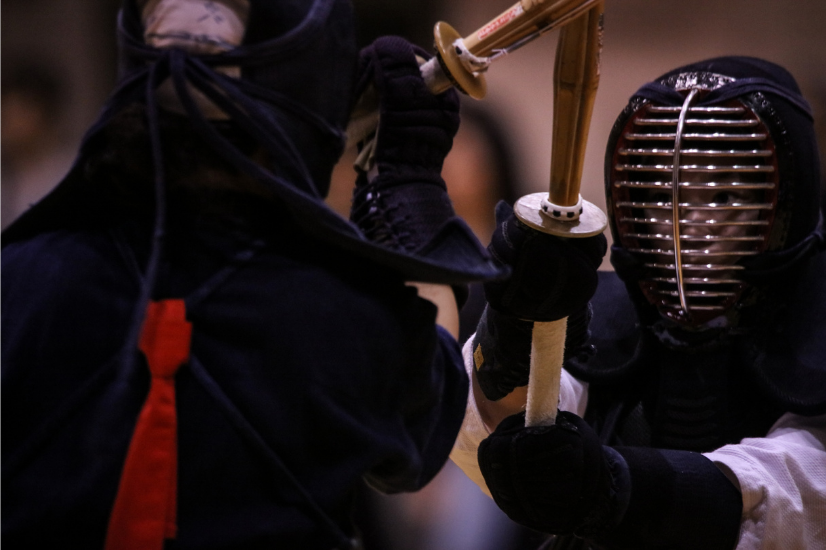
Kendo equipment refers to the equipment used to protect the body from strikes during kendo. According to the All Japan Kendo Federation regulations, the official name is kendo equipment (kendougu). (The Ministry of Education, Culture, Sports, Science and Technology calls it bogu.)
Kendo equipment consists of four parts: the men (men), kote (also written as kote, kote, or kote), do (do), and tare (tare).
Additionally, depending on the stitching method used, futons can be divided into two types: hand stitching and machine (sewing machine) stitching, and the stitching method can be broadly divided into three types: eye stitching, cross stitching, and diagonal stitching.
・Men: Protects the head and throat. From the top of the head to the shoulders, it is covered with a single piece of sashiko (men cushion), and the face is made of a lattice-like metal (mengane) to prevent the face from being injured by the bamboo sword.
-Protects the hand from the forearm to the forearm. It is mainly made of a kote head (protecting the fist area) made of deerskin or synthetic leather, and a kote futon (protecting the arm) made of tubular sashiko stitching.
- Protects the torso, chest, abdomen, and armpits. It is mainly made of a torso (protecting the chest area) with a hard core covered in cowhide, and a torso base (protecting the abdomen and armpits) made of fiber, resin, bamboo, etc.
- A garment that protects the waist and private parts. The entire garment is made of sashiko stitching and consists of a hanging obi, three large hanging pieces, and two small hanging pieces.
Terms you should know
・Futon This is the basic fabric for kendo equipment, made from a core material, navy blue cloth, and navy blue leather, and is used to cushion the impact of strikes.
・Core material: This is what is placed inside the futon to increase its strength. Materials such as wool, silk floss, and nonwoven fabric are used.
Recently, some products have deodorizing properties and are made from shape-memory materials.
・Indigo- dyed cotton. Numbers such as 7,000 are called counts and indicate the fineness of the fabric.
The larger the count, the finer and heavier the fabric will be.
-Navy blue leather: Tanned deerskin dyed with indigo .
・Hand stitching : This is literally a method of stitching by hand. It takes time and effort, so it is more difficult than machine stitching.
It is expensive. It is often worn by high rank practitioners and for matches and examinations. The stab width is 1 minute.
It is expressed as 5 rin, and the smaller the number, the finer the unit.
- Machine stitching: This is a method of stitching using a sewing machine. It is less time-consuming than hand stitching, so it is inexpensive.
Among machine stitches, the pitch stitch, which uses a long needle, is similar to hand stitching.
The stitch width for machine stitching is expressed as 6 mm.
Similarly, the smaller the number, the finer the stitch width.
(1) Noodles

| ① Menfuton (mask futon) |
| ② Mask metal (base ring) |
| ② Face metal (vertical metal) |
| ② Face metal (horizontal metal) |
| ③ Lookout |
| ④ Tsukidare (tender nose) and chin |
| ⑤ Chin restraint leather and latch |
| ⑥ Mask strings |
| ⑦ Face milk leather |
| ⑧ Ear leather and power leather |
| ⑨ Edge |

| ⑩ Fan |
| ⑪ Heaven |
| ⑫ Earth |
| ⑬ Caution tape |
A blanket that covers from the shoulders to the top of the head.
② Face metal (base ring, vertical metal, horizontal metal)
It consists of a ring around the outside, one vertical metal bar, and 14 horizontal metal bars (13 for boys), and is curved to fit the contours of the face. In the past, iron, stainless steel, and nickel silver were used, but in recent years, weight reduction has led to the main use of duralumin (light alloy), titanium, and all-titanium.
③ Lookout
To ensure visibility, the spacing between the horizontal bars is wider than in other swords. It is located between the sixth and seventh bars from the top of the menkane (horizontal bar) (between the fifth and sixth bars for boys).
④ Tsukidare (tender nose) and chin
This is the part that protects the throat. It is made especially strong because it receives thrusts.
⑤ Chin restraint leather and latch
Leather strings to attach the face cushion and tsukitare.
⑥ Mask strings
A string that secures the mask to the head when wearing it.
⑦ Face milk leather
Leather for attaching the men-himo cords. Generally, one is attached to each side of the fourth or fifth horizontal metal bar from the bottom, and one men-himo cord is attached to each.
⑧ Ear leather and power leather
Leather used to reinforce chin fasteners and latches.
⑨ Edge
This is the part that covers the connection between the mengane and the menfuton. It is made of buffalo leather and is often painted red on the inside and black on the outside to let in light and widen the field of view.
⑩ Fan
This is the round ring about 5 cm wide on the inside of the mask that surrounds the mask metal.
⑪ Heaven
The part on the inside of the mask that touches the forehead.
⑫ Earth
The part on the inside of the face that rests on the chin.
⑬ Caution tape
Located behind the tsukidare, this part cushions the impact of the thrust and protects the neck and throat if the thrust escapes from the tsukidare.
(2) Kote (hand guard)

| ① Kotegashira |
| ② Kera |
| ③ Kote futon
Kote (hand guard) futon (futon) |
| ④ Tube |
| ⑤ Snow ring |
| ⑥ In the palm of your hand |
| ⑦ Kote string |
① Kotegashira
This protects the knuckle. It is made of materials such as deerskin, synthetic leather, and woven embroidery, and the interior cushioning is made of deerskin and synthetic leather. The tip of the glove is separated from the area for the thumb and other fingers.
② Kera (baby)
The raised part between the kote-gashira and the tsubo. It is made harder to protect the wrist. It is not found in those for boys, and there are one-tier and two-tier types.
③ Kote futon
This is the arm part of the kote, which is the striking point. It is made by folding a single futon into a cylindrical shape.
④ Tube
The wrist part that connects the kote head and the kote futon. It is made softer than other parts because it needs to be flexible, but its strength is increased by using decorative threads.
⑤ Snow ring
Leather sewn onto the area where the tsuba (hand guard) of the shinai touches, such as between the thumb and index finger and at the fingertips, to reinforce the area.
⑥ In the palm of your hand
The palm area is made of flexible and durable thin leather such as synthetic leather or Clarino, in order to grip the shinai.
⑦ Kote string
A string that connects the kote futon into a cylindrical shape, ensuring mobility of the wrist.
(3) Do (body)

| ② Breast leather |
| ① Torso and chest |
| 3. Dawn and Light |
| ④ Chest ornament |
| ⑤ Small breasts |
| ⑥ Body and breast leather
・Four breast leather |
| ⑦ Dodai |
| ⑧ Edge leather |
| ⑨ Body string |
| ⑩ Leather binding |
| ⑤ Feet |

| ⑪ Nakawa |
① Torso and chest
This refers to the chest part of the body. It is made of a hard core covered with cowhide or deerskin.
② Chest leather
These are leather loops attached to the upper chest, one on each side, to tie the waist straps through when attaching the torso.
③Dawn and Light
This refers to the embroidered pattern in the center of the torso, featuring traditional motifs such as diamonds and hemp leaves.
④ Chest ornament
A string ornament that surrounds the light of dawn (Shokkou) (Shokkou). It serves as a non-slip stopper for the tip of the sword.
⑤Small chest and legs
The komune is the part of the torso chest that protects the flanks. The legs are decorations placed in the komune. If there are two legs, they are called two legs. There are usually one to three legs.
⑥ Body and breast leather / Four breast leather
Two leather loops attached to the ends of the dodai, one on each side, through which the dohitsu cord is passed to secure it in place.
⑦ Dodai
The abdominal part of the torso. It protects the abdomen and underarms from blows. It is made from fiber, resin, bamboo, etc.
⑧ Edge leather
This is the leather that covers the sides and bottom of the dodai when the dodai and torso are joined together. It protects the edges of the dodai from wear and tear. There are two types: a folded edge, where the leather is finished, and a raw edge, where the leather is left as is.
⑨ Body string
The strings that secure the torso to the body. There are two on each side, one long on top and one short on the bottom.
⑩ Leather binding
Leather used to bind edge leather.
⑪ Nakawa
These rings were used in the past to hang all the armor together. Nowadays, armor is no longer hung up and is instead placed in lockers or on shelves, so they are now used to attach amulets.
(4) Tare

| ① Front belt (maeobi) and abdominal belt (haraobi) |
| ② Hanging cords and hanging sashes |
| 3. Mountain path |
| ④ Decoration |
| ⑤ Odare |
| ⑥ Kotare (small hanging rope) |
① Front belt (maeobi) and abdominal belt (haraobi)
The part that wraps around the waist.
② Hanging cords and hanging sashes
The string used to tighten the obi.
3. Mountain path
A decorative thread that connects the front obi (belly band) to the otare and kotare.
④ Decoration
Decorative thread sewn onto the top of the odare.
⑤ Odare
Of the five hanging panels, the three largest are at the front.
⑥ Kotare
Of the five hanging pieces, these are the two smaller ones at the back.
Learn the names of kendo equipment and deepen your appreciation for it
For example, when you go to a store selling armor, it's best to be able to correctly name the part you want. Getting to know the equipment you use properly is the first step to taking good care of it. When you learn the names and carefully examine the details, you'll be struck by the meticulous traditional techniques used by Japanese craftsmen, and you'll feel an even deeper attachment to your kendo equipment, don't you?